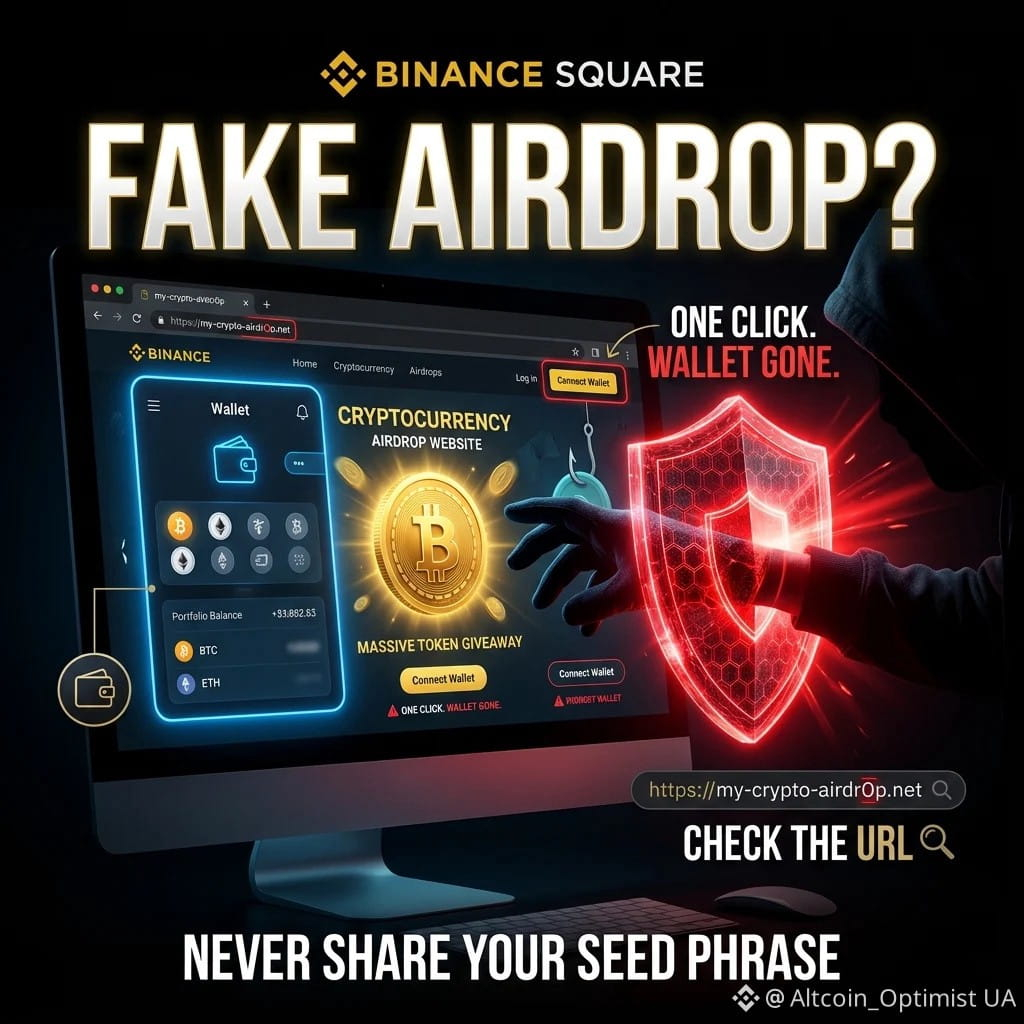
THAT FREE AIRDROP COULD COST YOU YOUR ENTIRE WALLET.
A fake airdrop website doesn't need to look suspicious. Sometimes it copies a real project's branding, uses an almost identical domain, and even promotes a convincing giveaway through fake social media accounts.
Here’s how I check an airdrop before touching it:
🔎 1. Check the domain letter by letter.
Scammers use lookalike URLs, extra characters, hyphens, or strange domain endings. One small difference can lead to a completely different website.
🌐 2. Find the link yourself.
Don't trust links in random comments, DMs, emails, or sponsored search results. Visit the project's known official website and follow its airdrop announcement from there.
📢 3. Confirm the announcement.
Look for the same campaign on the project's official social accounts and documentation. A screenshot or repost is not proof.
🔐 4. Never enter your seed phrase.
No legitimate airdrop needs your recovery phrase or private key. If a website asks for either, close it. Immediately.
✍️ 5. Don't sign blindly.
Connecting a wallet is not the same as approving a transaction. Read every signature and transaction request. Unknown token approvals can give a malicious contract permission to move your assets.
🪂 6. Use a separate wallet.
Keep your main holdings away from experimental airdrops. A dedicated wallet with limited funds can reduce the damage if something goes wrong.
And one more thing: unsolicited tokens or NFTs are not invitations to claim free money. Don't follow links hidden in their names or descriptions.
My rule is simple: verify first, connect later. A few minutes of checking are worth more than a thousand free tokens that never existed.
Have you ever spotted a fake airdrop website? Share the red flags you noticed — your experience might save someone else's wallet.
I'll prepare deeper research on the opportunities that get the most interest. If this topic deserves a full investigation, let me know through likes and comments.
#crypto #Airdrop #Web3 #AirDropSafetyGuideline