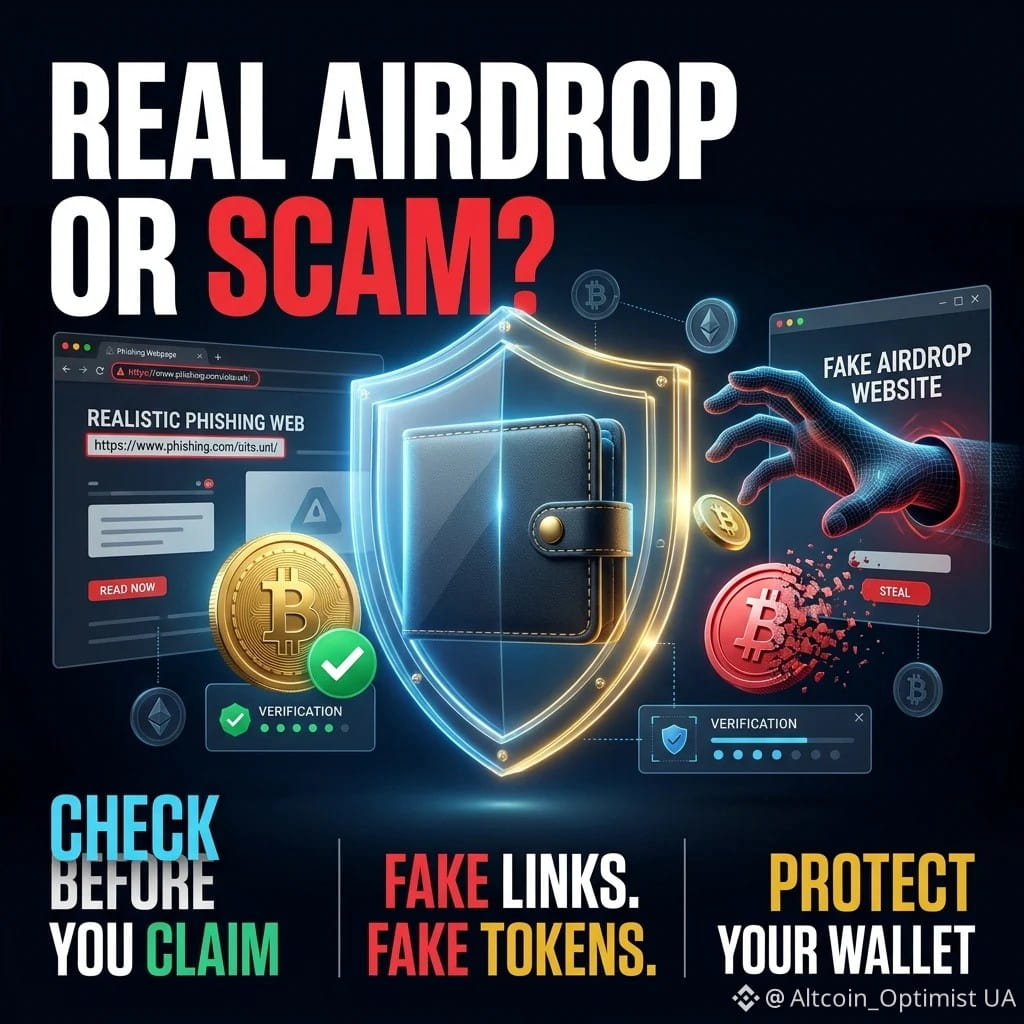
FREE CRYPTO… OR A VERY EXPENSIVE MISTAKE? 🪂
A fake airdrop can look more convincing than a real one. A familiar logo, thousands of followers, a countdown timer — and suddenly you're one click away from giving scammers access to your wallet.
Before chasing free tokens, run through this checklist:
🔎 1. Find the announcement yourself.
Don't trust a random DM, comment, or forwarded link. Open the project's official website and check its verified social accounts. Look for the airdrop announcement there.
🌐 2. Check the website address.
Scammers copy real websites and change just a few characters in the URL. Don't click first and inspect later.
🧩 3. Verify the token contract.
If a token is already announced, compare its contract address with the one published by the project's official channels. A familiar token name or ticker proves nothing.
👥 4. Look beyond follower counts.
Check whether the project has a real history, meaningful updates, active discussions, and a team or contributors you can verify. Big numbers can be bought.
🔐 5. Watch what your wallet is being asked to do.
Read every transaction and approval. Never reveal your seed phrase or private key. Never send crypto to “unlock” a supposedly free reward.
🚩 6. Don't fall for urgency.
“Claim in 5 minutes or lose everything” is a pressure tactic, not proof of a genuine opportunity.
My rule is simple: if the reward requires you to trust a mysterious link more than the project's own official channels, walk away.
Airdrops can help build your first crypto capital. Just make sure you're collecting tokens — not donating your wallet to a stranger.
What's the biggest red flag you've seen in a fake airdrop?
I'll prepare deeper research on the opportunities that get the most interest. If this topic deserves a full investigation, let me know through likes and comments.
#AirDropSafetyGuideline #Web3 #AirdropAlert