


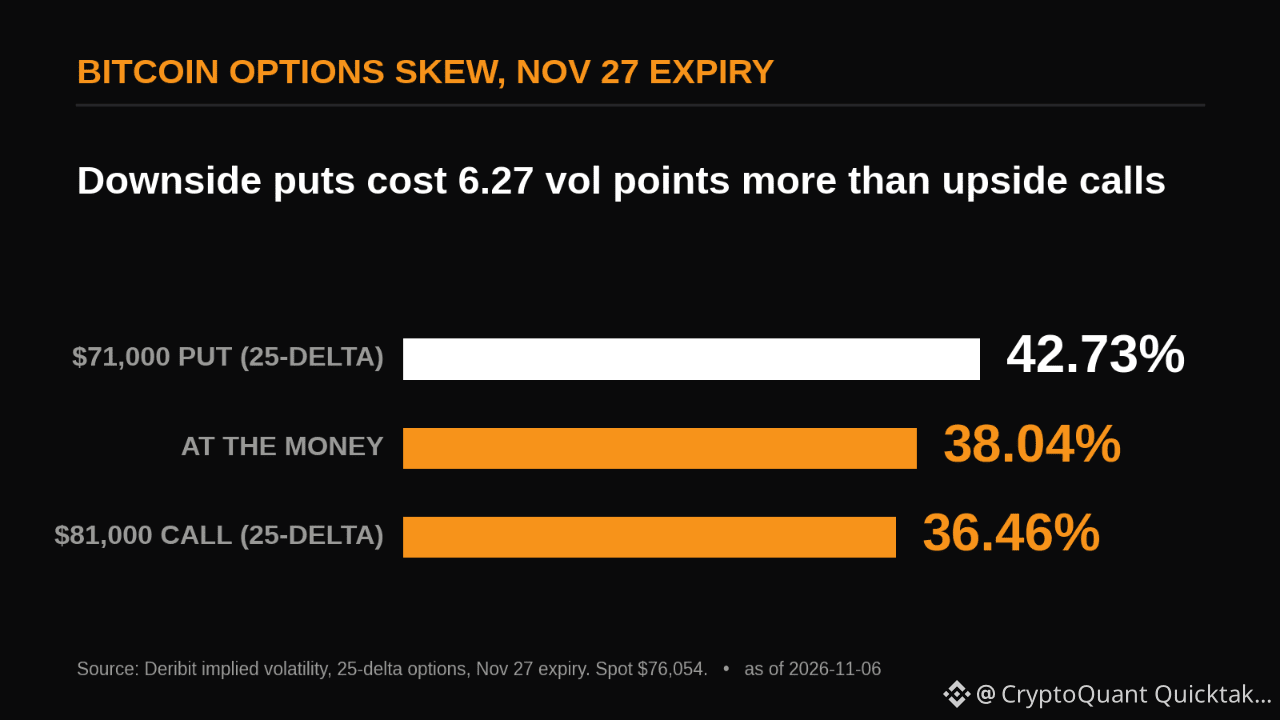
Bitcoin's 25-delta risk reversal on Deribit sits at -6.27 vol points for the November 27 expiry. The $71,000 put trades 6.27 points of implied volatility above the $81,000 call, with spot at $76,054. Traders are paying up for downside protection.
For that number to print, demand for puts has to outrun demand for calls at the same distance from spot. Friday gives them a reason. Options price a 2.12% move, about $1,613, over the window that holds the payrolls report, with forward implied vol at 46.8% against 27.9% for the window after it.
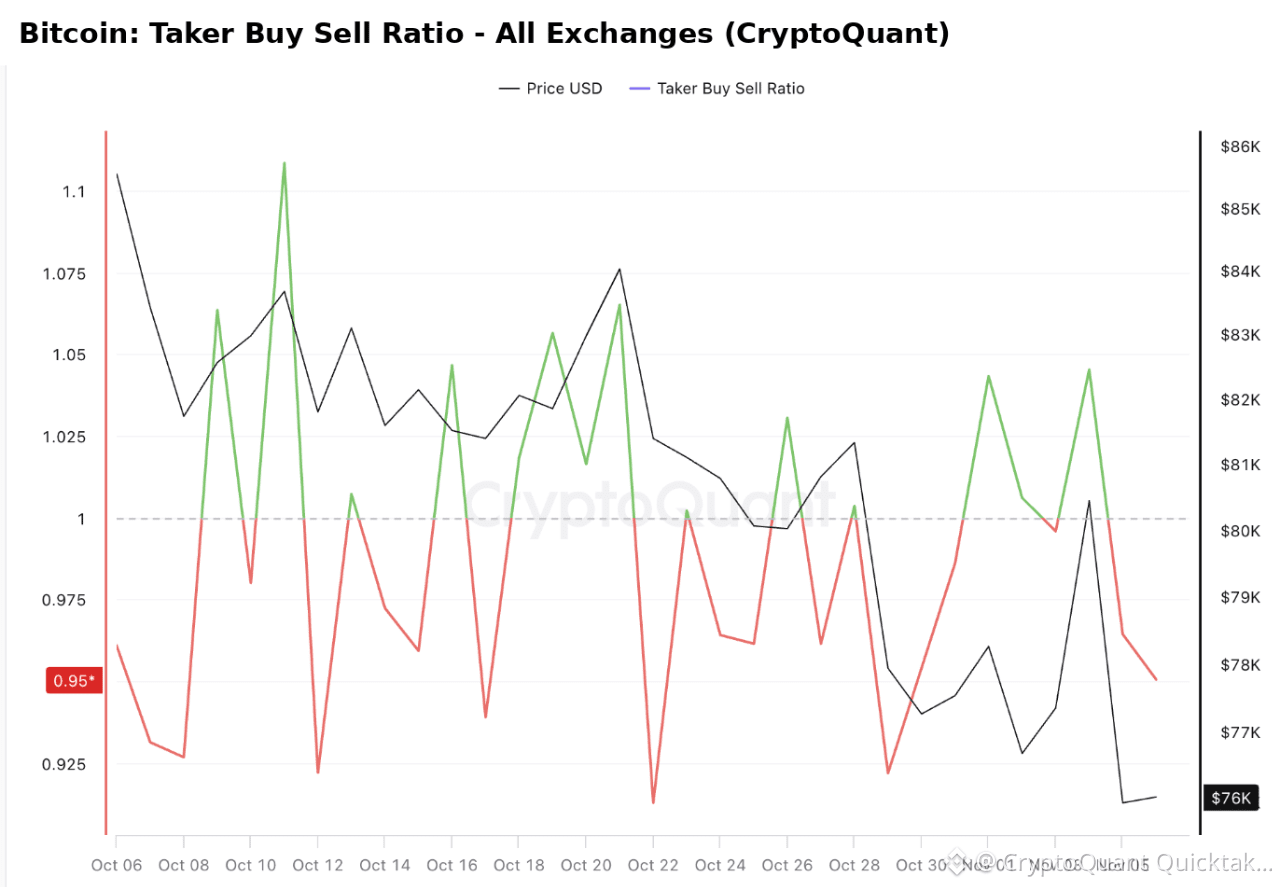
Order flow points the same way. CryptoQuant's all-exchange Taker Buy Sell Ratio printed 1.045 on November 4, fell to 0.964 on November 5, and the partial November 6 bar sits near 0.95. Below 1.0, market sellers are hitting bids harder than buyers are lifting offers.
The caveat comes early: skew measures what protection costs, not where price goes. A put premium this size often reflects holders hedging a long position they intend to keep.
The weekly expiry adds a twist. About $2.6 billion settles at 08:00 UTC Friday with a put/call open interest ratio of 0.37, a call-heavy book. Max pain sits at $79,000, the price where option holders collectively lose most, not a price target.
The options market is charging more to insure against a drop than to bet on a rebound.
What reverses the read: the risk reversal climbing back above -2 and the Taker Buy Sell Ratio closing above 1.0 after payrolls. What hardens it: a payrolls move larger than the 2.12% priced, to the downside, with skew deeper than -8 by November 13.
Written by The Daily Digits