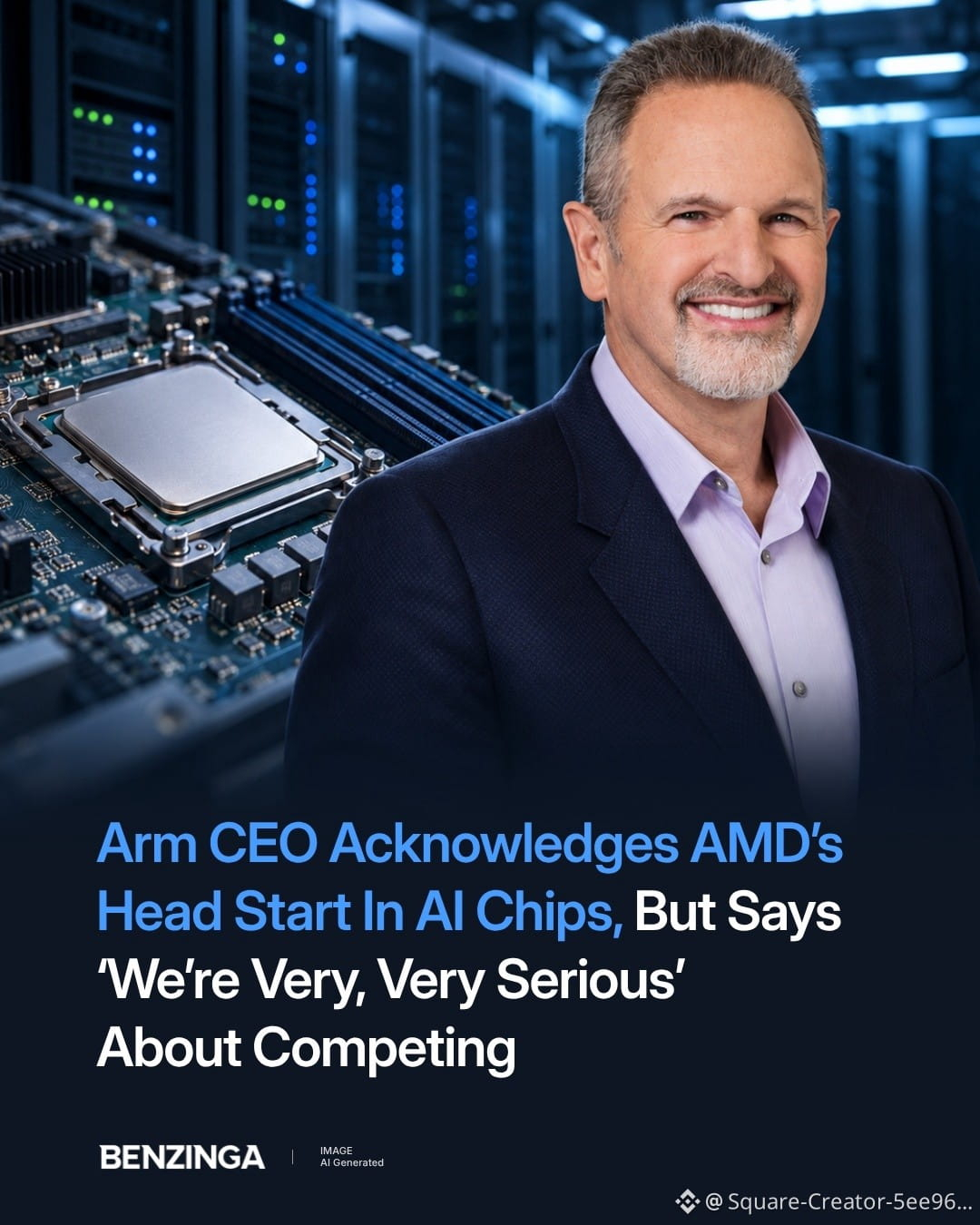
Arm ($ARM) is raising its ambitions for its first data center chip while acknowledging the challenge of competing with AMD ($AMD). CEO Rene Haas (@renehaas237) said the company is serious about building the supply relationships needed to compete.
The company now expects up to $2 billion in revenue from its AGI CPU across fiscal 2027 and 2028, compared with the more than $1 billion discussed last quarter. Purchase orders from multiple customers extend through calendar 2027, and initial commercial deliveries remain scheduled for its fiscal fourth quarter.
Haas identified Meta ($META) as the main customer. Oracle ($ORCL) plans to offer cloud instances using the chip in 2027. These commitments support Arm's expansion from licensing technology to supplying processors directly.
Supply remains a central constraint. Haas acknowledged AMD's long history of buying manufacturing capacity and said Arm's effort would require work across the supply chain over five to ten years. Arm's longstanding industry relationships provide a starting point, but scaling a new chip business requires dependable production capacity.
The broader business reported revenue of $1.44 billion, up 27%, and adjusted earnings of 52 cents a share. Licensing and other revenue increased 50%, while royalties rose 8%.
Arm's opportunity now spans both its established intellectual-property business and its new silicon products. Delivering on the larger chip target will test whether customer interest can translate into shipments on schedule.