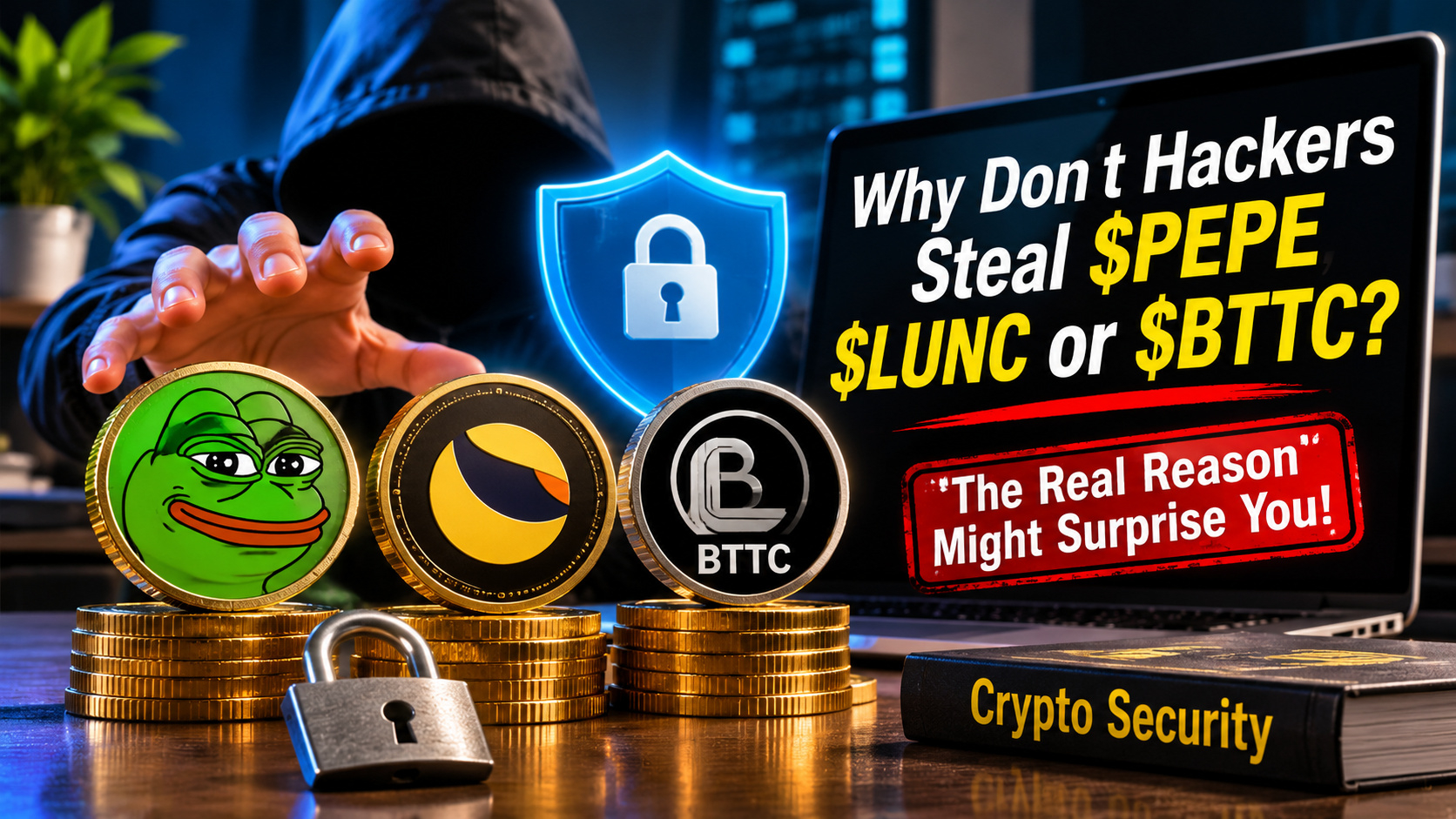
🚨 "WHY DON'T HACKERS STEAL $PEPE, $LUNC OR $BTTC?"
I saw this question on the feed recently, and it highlights a major misconception about how crypto theft actually works.
Here's the truth: Hackers don't need to hack a token's name or ticker. They target the systems, permissions and infrastructure that control access to it.
If an attacker compromises a wallet holding $PEPE, $LUNC or $BTTC, those tokens can be stolen just like BTC or ETH. The coin's name offers zero protection.
🔓 WHERE DO THE REAL SECURITY BREACHES HAPPEN?
1️⃣ Wallet Approvals & Phishing
A malicious approval or transaction can give an attacker permission to move your tokens—even without obtaining your seed phrase.
2️⃣ Cross-Chain Bridges
Bridge vulnerabilities can expose assets locked or controlled by bridge infrastructure, potentially resulting in massive losses.
3️⃣ Exchange Hot Wallets
Compromised private keys, internal systems or operational controls can put exchange-held customer assets at risk.
4️⃣ Smart Contract Vulnerabilities
Flawed contract logic or compromised admin privileges can enable unauthorized transfers, minting or liquidity drains.
🎯 THE BOTTOM LINE
A token isn't safe simply because it hasn't suffered a headline exploit.
Crypto security isn't just about WHICH coin you hold. It's also about WHERE you store it, WHAT permissions you grant and WHICH platforms you trust.
💬 YOUR TURN:
What's the biggest security threat facing retail crypto traders today?
🟢 Phishing & malicious approvals
🔴 Centralized exchange exploits
🟡 Smart contract & bridge vulnerabilities
Drop your thoughts below. Let's discuss real security, not assumptions.
Follow @Crypto Nakamoto Official for practical crypto insights and security updates.
#CryptoSecurity #blockchain #pepe #LUNC✅ #BTTC #BinanceSquare
I saw this question on the feed recently, and it highlights a major misconception about how crypto theft actually works.
Here's the truth: Hackers don't need to hack a token's name or ticker. They target the systems, permissions and infrastructure that control access to it.
If an attacker compromises a wallet holding $PEPE, $LUNC or $BTTC, those tokens can be stolen just like BTC or ETH. The coin's name offers zero protection.
🔓 WHERE DO THE REAL SECURITY BREACHES HAPPEN?
1️⃣ Wallet Approvals & Phishing
A malicious approval or transaction can give an attacker permission to move your tokens—even without obtaining your seed phrase.
2️⃣ Cross-Chain Bridges
Bridge vulnerabilities can expose assets locked or controlled by bridge infrastructure, potentially resulting in massive losses.
3️⃣ Exchange Hot Wallets
Compromised private keys, internal systems or operational controls can put exchange-held customer assets at risk.
4️⃣ Smart Contract Vulnerabilities
Flawed contract logic or compromised admin privileges can enable unauthorized transfers, minting or liquidity drains.
🎯 THE BOTTOM LINE
A token isn't safe simply because it hasn't suffered a headline exploit.
Crypto security isn't just about WHICH coin you hold. It's also about WHERE you store it, WHAT permissions you grant and WHICH platforms you trust.
💬 YOUR TURN:
What's the biggest security threat facing retail crypto traders today?
🟢 Phishing & malicious approvals
🔴 Centralized exchange exploits
🟡 Smart contract & bridge vulnerabilities
Drop your thoughts below. Let's discuss real security, not assumptions.
Follow @Crypto Nakamoto Official for practical crypto insights and security updates.
#CryptoSecurity #blockchain #pepe #LUNC✅ #BTTC #BinanceSquare