Ethereum's Stablecoin Lead Meets Tokenized Growth
🚀 Ethereum is strengthening its position in the financial infrastructure of the crypto market.
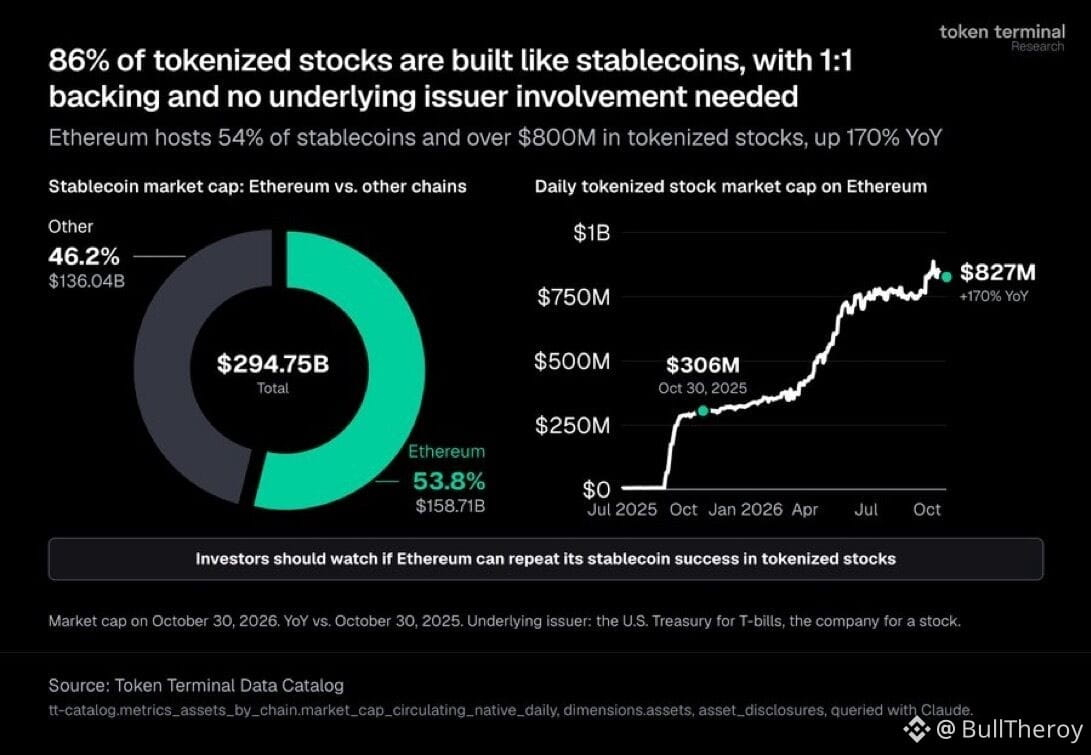
Ethereum continues to lead stablecoin issuance, accounting for approximately 54.1% of stablecoins issued across 47 blockchain networks as of late October 2026. This represents roughly $162.5–163 billion in stablecoin issuance.
But stablecoins aren't the only area attracting attention.
📈 Tokenized Stocks Are Growing
Ethereum's tokenized stock market has expanded approximately 170% year over year, reaching around $827 million–$841 million.
This growth highlights increasing interest in bringing traditional financial assets onto blockchain networks. Tokenized equities could eventually create new opportunities for around-the-clock trading, improved accessibility and more efficient settlement.
💵 Why Stablecoins Matter
Stablecoins remain one of Ethereum's strongest advantages. They support trading, DeFi liquidity, payments and transfers across the ecosystem.
However, Ethereum isn't leading every category. BNB Chain has moved ahead in the broader tokenized-stock market, showing that competition between blockchain ecosystems is intensifying.
🔎 What Should Investors Watch?
• Ethereum's stablecoin issuance and liquidity.
• Growth in tokenized stocks and real-world assets.
• Institutional adoption of blockchain-based financial products.
• Competition from BNB Chain, Solana and other networks.
My Take: Ethereum's biggest opportunity may be its expanding role in connecting traditional finance with decentralized infrastructure. Stablecoins provide the foundation, while tokenized equities represent another potential growth opportunity.
The real question is whether this growth can translate into stronger network activity and long-term value for ETH.
$ETH
#Ethereum #ETH #Stablecoins #RWA #crypto