


#FBIConfirmsNorthKoreaIsResponsibleForBinanceCrypto
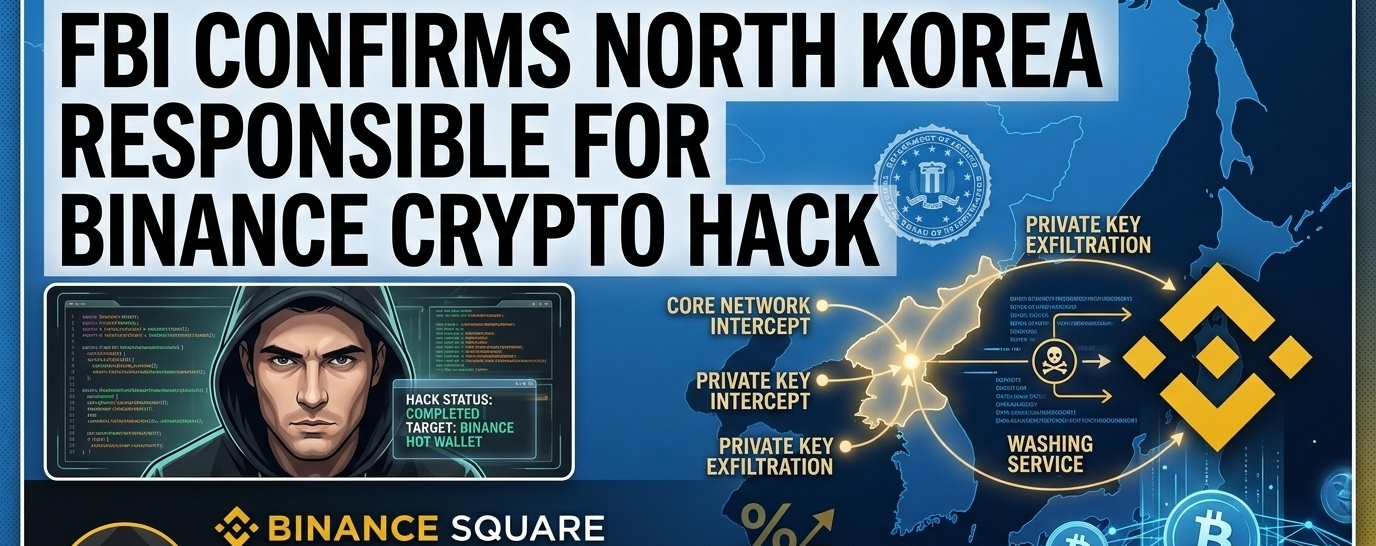
The crypto space just witnessed history, but not the kind we usually celebrate. The U.S. Federal Bureau of Investigation (FBI) officially confirmed that state-sponsored North Korean cybercriminals—specifically the TraderTraitor group—were behind the massive Binance breach.
This single exploit has gone down as one of the largest digital heists in financial history. Here is a complete breakdown of how it happened, where the funds stand, and what it means for your assets on Binance.
🔍 How Did the Hack Happen?
Contrary to initial rumors, this wasn't a breach of core blockchain cryptography. Instead, it was an attack on internal signing infrastructure:
Infrastructure Hijack: The attackers compromised internal transaction signing systems—effectively taking control of the mechanism that approves hot-wallet transfers without altering the underlying code.
Speed Execution: Substantial crypto assets (predominantly USDT, BTC, USDC, and ETH) were siphoned within a brief, highly organized window.
Automated Laundering: Blockchain analytics firms noted that the hackers immediately utilized automated cross-chain bridges, mixers, and timed-sliced token sales to conceal the trail.
🛡️ Binance’s Rapid Response & User Safety
If there is one key takeaway for Binance users, it is how the exchange responded to the crisis:
Funds Backing: Binance announced it has leveraged internal treasury reserves to ensure user assets remain backed at a minimum 1:1 ratio.
SAFU & Proof of Reserves: Binance maintains that user accounts remain safe, and updated Proof of Reserves reports are being published to verify balance sheet integrity.
Global Blacklisting: The FBI and private analytics firms published tagged wallet addresses, leading stablecoin issuers to blacklist millions in stolen funds on-chain.
💡 Key Takeaways for Traders
Cold Storage is King: While top exchanges have deep SAFU reserves to make users whole, keeping your long-term holdings in self-custody hardware wallets remains the best security practice.
Regulatory Impact: As government agencies step in, expect tighter global regulatory pressure and surveillance surrounding cross-chain bridges and decentralized mixers.
💬 What are your thoughts on how Binance handled the situation? Are you keeping your funds on exchanges or moving to self-custody? Drop your comments below! 👇
#FBIConfirmsNorthKoreaIsResponsibleForBinanceCrypto #Binance #CryptoSecurity #Web3