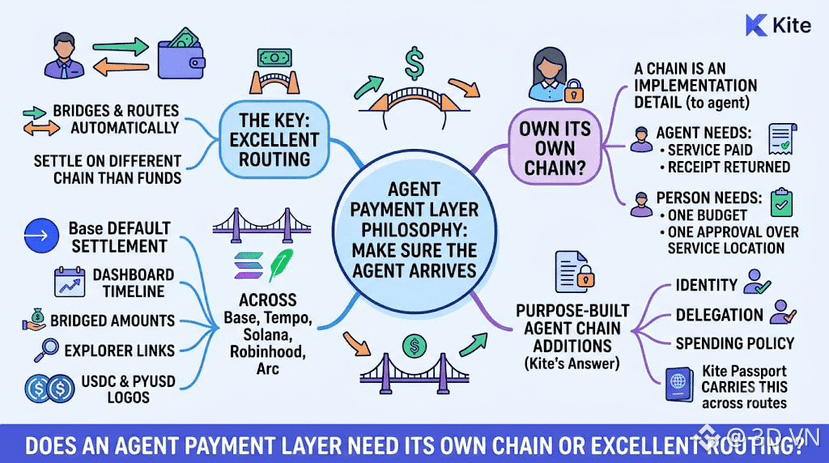
A payments layer for agents does not have to own the road. It has to make sure the agent arrives.
Kite Passport's release notes show that philosophy at work. Since July 2026, an x402 payment can settle on a different chain than the one holding your funds: Passport bridges and routes automatically across Base, Tempo and Solana, and Base is now the default settlement chain. The dashboard draws a route timeline for each routed payment, with bridged amounts, explorer links and token logos for USDC and PYUSD. Later releases added Robinhood Chain support and Arc mainnet.
To an agent, a chain is an implementation detail. It needs a service paid and a receipt returned. To the person behind it, one budget and one approval should cover wherever the service happens to live.
If settlement happens on the most liquid networks, what does a purpose-built agent chain add? Kite's answer centers on identity, delegation and spending policy, the layer Passport carries across every route it takes.
Does an agent payment layer need its own chain, or just excellent routing?
#KiteBBW $KITE