



#BinanceAwareness 🌍 #PositiveMindsGlobalResults | Positivity Without Borders
Invest, Learn, Grow, Together | Binance Square
Stay positive. Stay informed. Stay secure! 💛
📅 October 31, 2026
Protect Your Assets. Verify Every Message. Never Let Fear Control Your Decisions.
🌐 INTRODUCTION: SECURITY BEGINS WITH AWARENESS
The cryptocurrency industry is facing serious cybersecurity concerns following reports of a major security incident involving approximately $6.3 billion in assets associated with Binance.
According to information reported on October 30, 2026, Binance stated that it was working with blockchain partners and law enforcement to investigate the incident and trace affected funds. Approximately $3 billion in assets were reportedly frozen on-chain, and Binance committed to covering losses using its Secure Asset Fund for Users (SAFU) and company funds.
These figures and claims reflect the reported situation at the time of the announcement. Users should consult official announcements and independent reporting for confirmation of subsequent developments.
The most important lesson is clear: protecting cryptocurrency requires more than a strong password. It requires awareness, secure devices, careful verification, and responsible decisions.

🔍 1. HOW CAN A SECURITY BREACH HAPPEN?
Initial reports described a possible compromise involving an employee's device and access to internal systems. The investigation reportedly found no evidence, at that stage, that wallet private keys had been leaked.
This highlights an important cybersecurity principle: attackers may attempt to exploit weaknesses in devices, software, employee accounts, permissions, or transaction approval systems without directly stealing private keys.
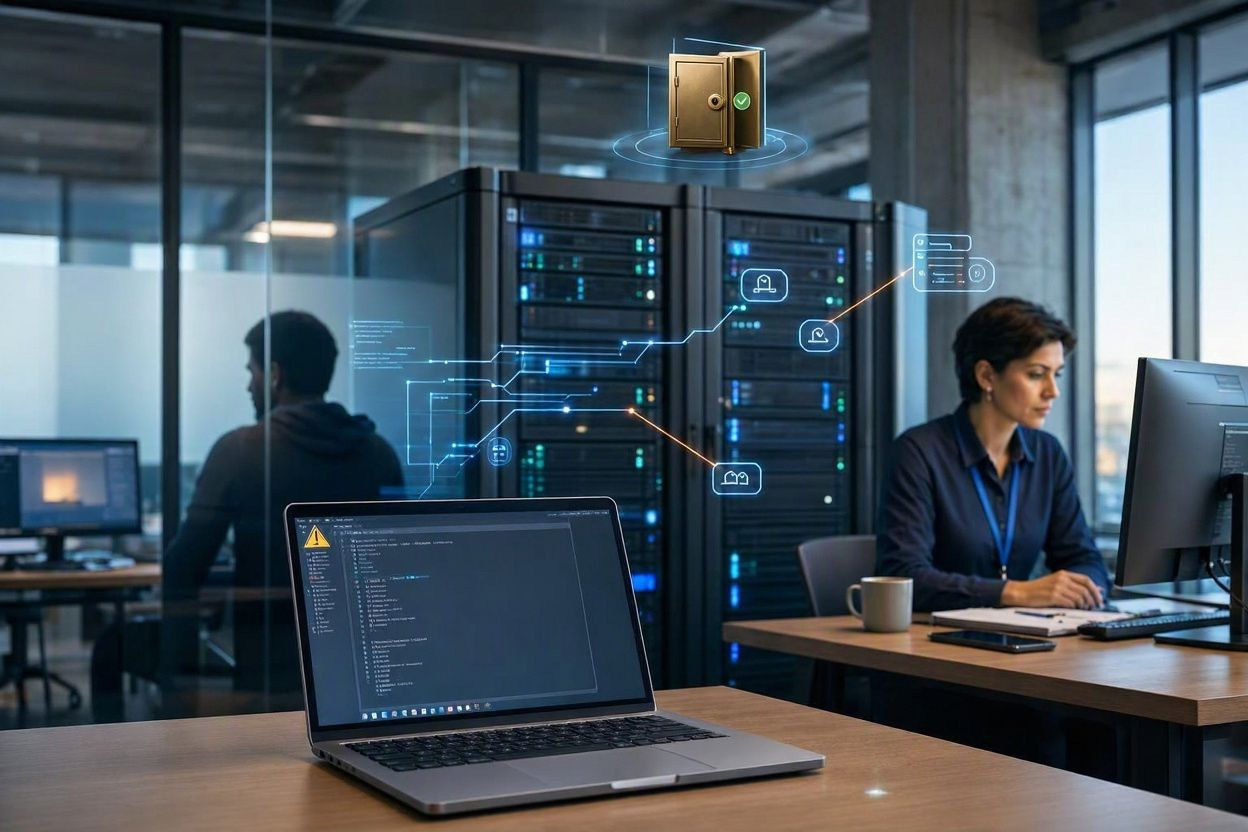
Even sophisticated platforms must continuously strengthen their defenses.
Security is not a single feature. It is a complete system of protection.
🛡️ 2. SEVEN ESSENTIAL SECURITY RULES EVERY BINANCE USER SHOULD FOLLOW
1️⃣ Never trust unexpected links.
Avoid clicking links in unexpected emails, text messages, or direct messages, even when they appear to come from people or organizations you recognize.
2️⃣ Never download suspicious attachments.
Malicious files can compromise devices and expose sensitive information. Verify unexpected attachments independently before opening them.
3️⃣ Strengthen your account protection.
Use a unique password, enable strong two-factor authentication or a passkey where supported, and secure the email account connected to your exchange account.
4️⃣ Never share confidential credentials.
Your password, authentication codes, private keys, and wallet recovery phrase must remain private. Never disclose them to someone claiming to be customer support.
5️⃣ Review account activity regularly.
Check active sessions, authorized devices, API keys, withdrawal settings, and unfamiliar account activity. Remove access you no longer need.
6️⃣ Beware of fake recovery services.
Scammers may exploit security incidents by promising to recover stolen cryptocurrency for an upfront fee or by asking for your recovery phrase. Verify support channels independently and never trust guaranteed recovery promises.
7️⃣ Verify before taking action.
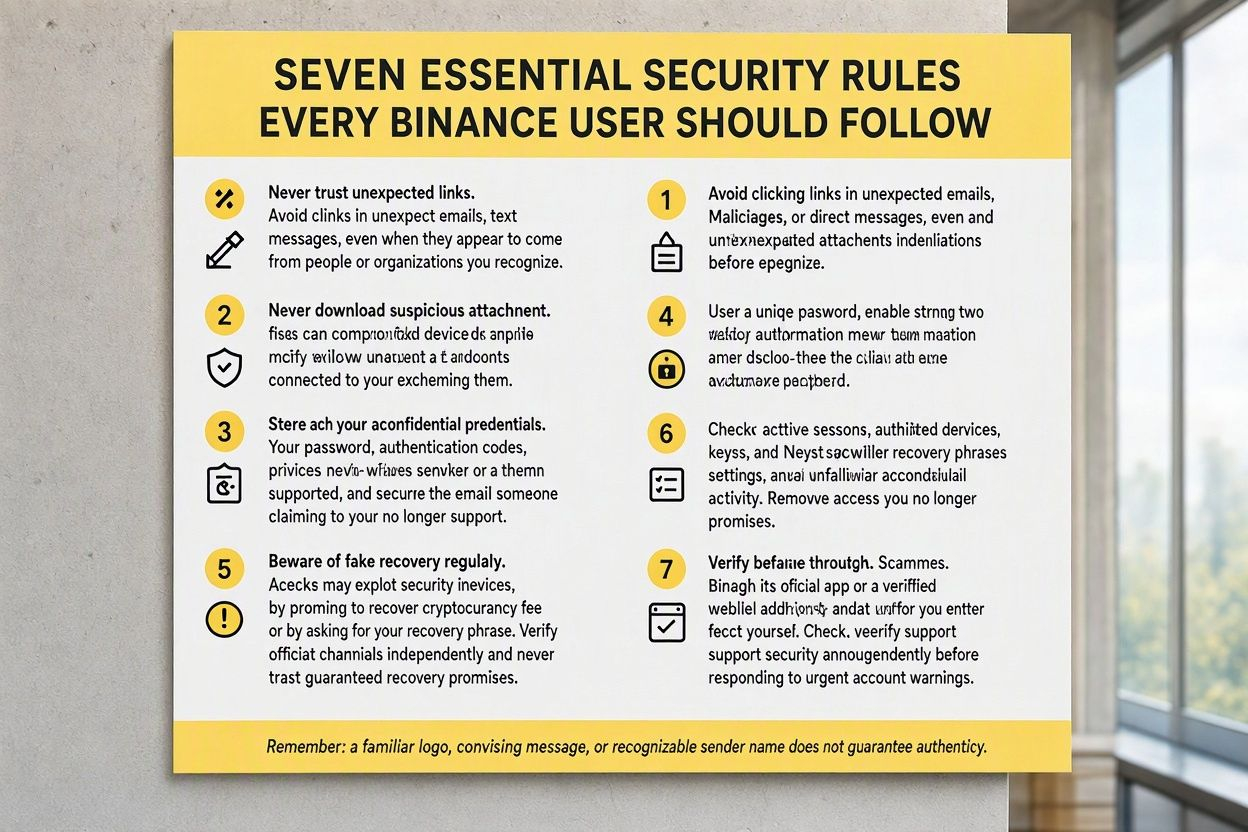
Access Binance through its official app or a verified website address you enter yourself. Check official security announcements before responding to urgent account warnings.
Remember: a familiar logo, convincing message, or recognizable sender name does not guarantee authenticity.
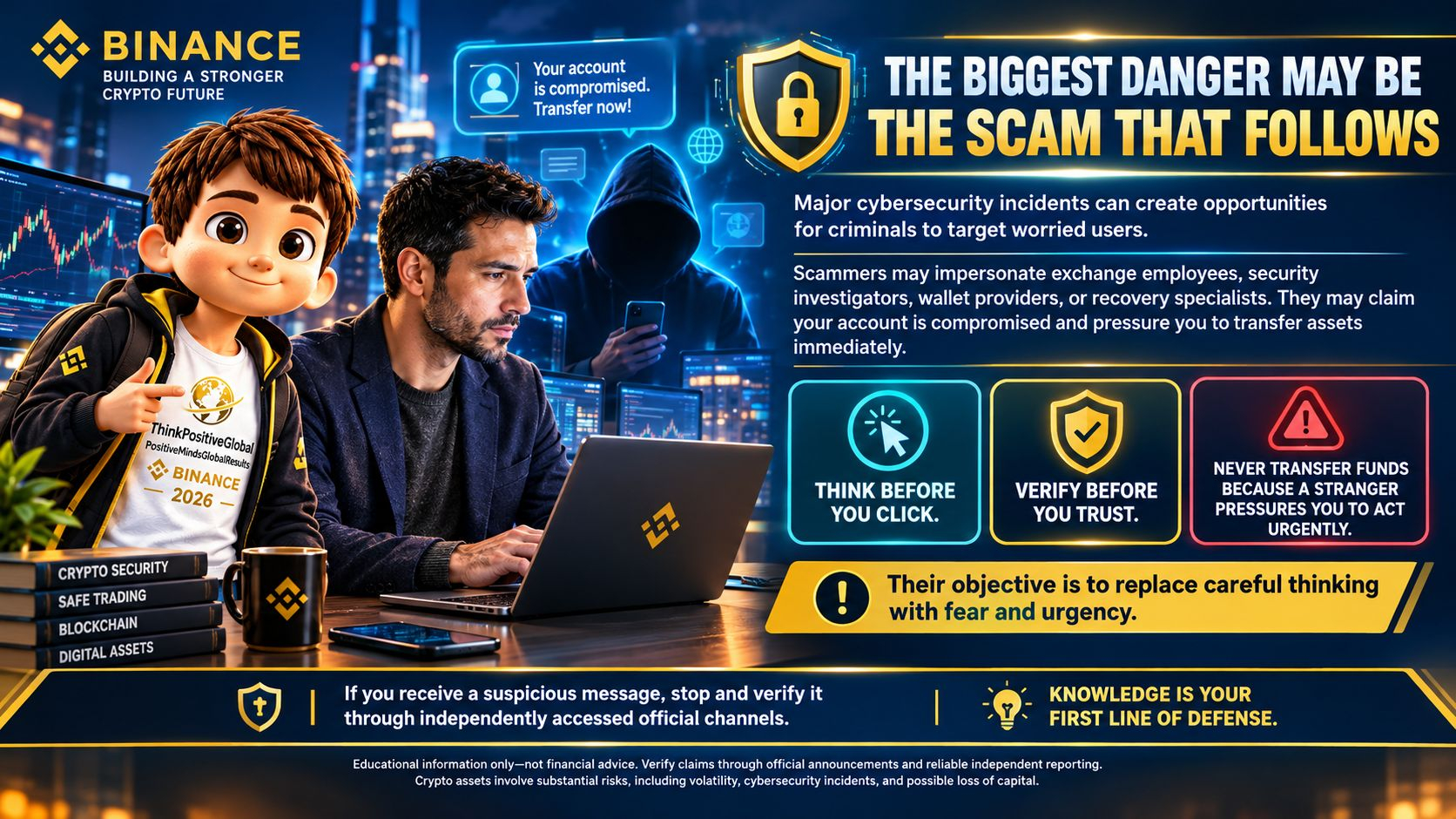
⚠️ 3. THE BIGGEST DANGER MAY BE THE SCAM THAT FOLLOWS
Major cybersecurity incidents often create opportunities for criminals to target worried users.
Fraudsters may impersonate exchange employees, security investigators, wallet providers, or recovery specialists. They may claim that your account is compromised and pressure you to transfer assets immediately.
Their objective is to replace careful thinking with fear and urgency.
Protect yourself by following three simple principles:
🔐 Think before you click.
🔎 Verify before you trust.
🛑 Never transfer funds because a stranger pressures you to act urgently.
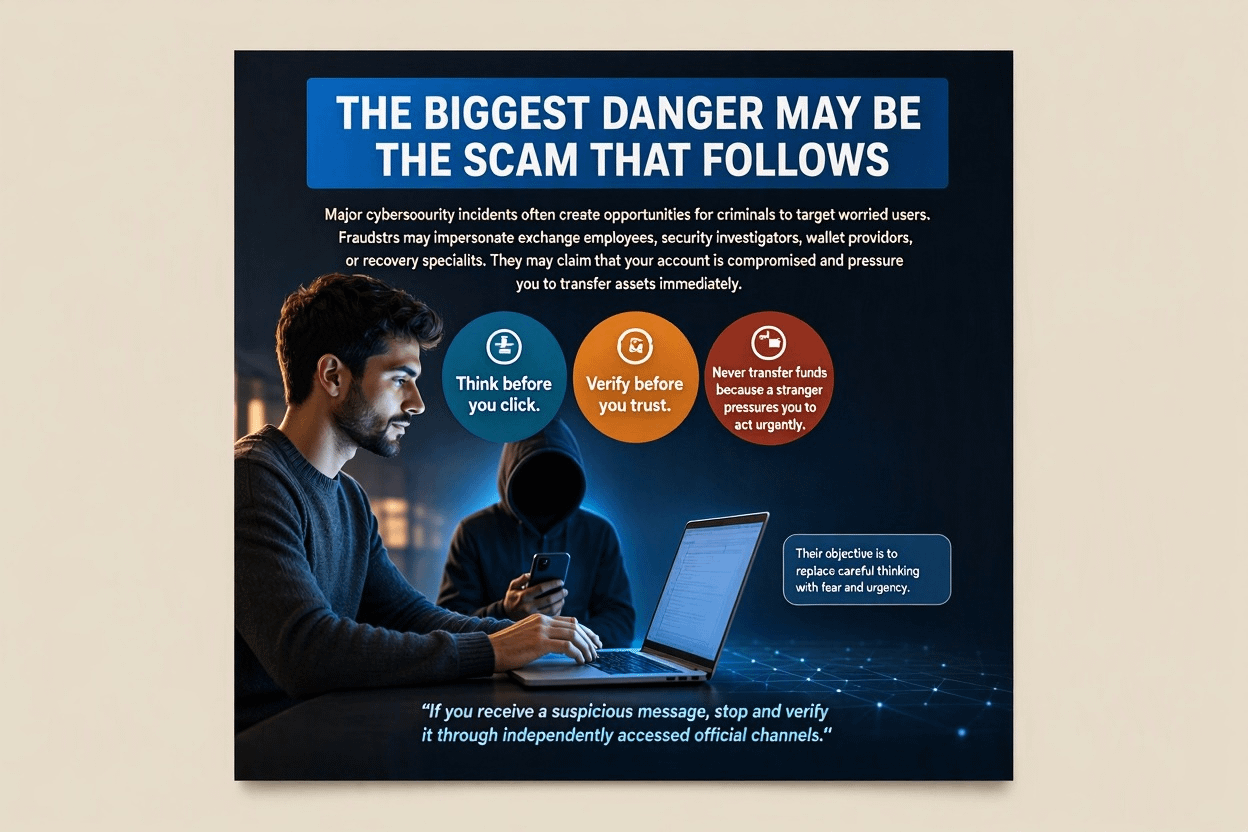
If you receive a suspicious message, stop and verify it through independently accessed official channels.
💰 4. UNDERSTAND EXCHANGE SECURITY AND YOUR ASSET RISKS
Cryptocurrency exchanges provide convenient trading, liquidity, and access to digital assets. However, using an exchange also means relying on its custody arrangements, operational controls, and security practices.
Users should understand three important distinctions:
Frozen assets: Funds restricted from moving do not necessarily mean those funds have been returned to their rightful owners.
Recovery and reimbursement: Investigating stolen assets, recovering funds, and reimbursing affected customers are different processes.
Proof of reserves: Reserve disclosures can provide useful information about certain assets held by an exchange, but they do not independently prove that every liability is covered or that every internal system is secure.
BINANCE reported commitment to cover losses should be followed through official updates and subsequent disclosures.
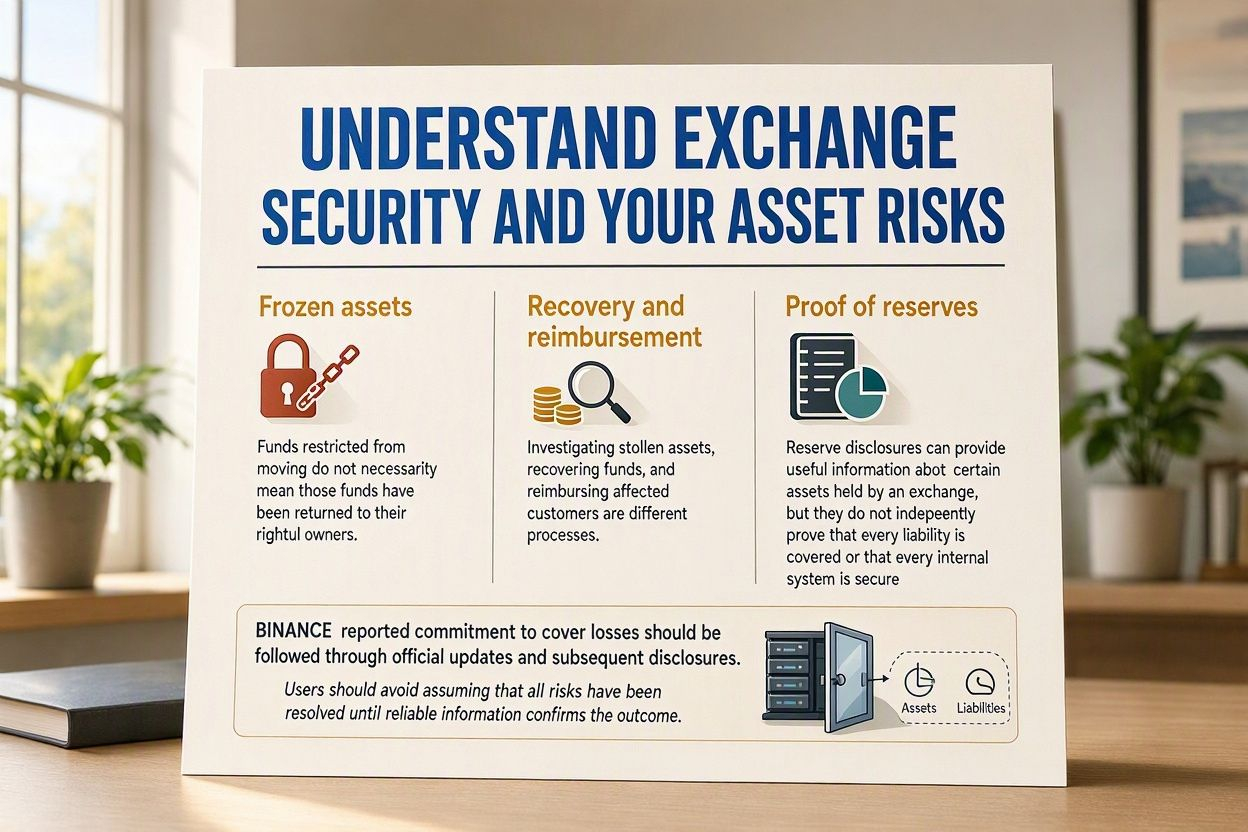
Users should avoid assuming that all risks have been resolved until reliable information confirms the outcome.
📊 5. WHAT COULD THIS MEAN FOR BTC, ETH, AND BNB?
A major exchange security incident can influence sentiment throughout the cryptocurrency market.
₿ Bitcoin (BTC): Reduced confidence may contribute to selling pressure, increased volatility, and leveraged liquidations. Broader market conditions and investor demand will also influence price movements.
◆ Ethereum (ETH): Ethereum may experience volatility as traders reassess risk and liquidity. The incident alone does not establish that Ethereum's underlying blockchain has been compromised.
🟡 BNB: Because of its close association with the Binance ecosystem, BNB may face increased scrutiny and changes in market sentiment as investors evaluate official disclosures and the progress of the investigation.

However, market reactions are not guaranteed, and short-term price movements should not be treated as proof of future outcomes.
Avoid panic selling, excessive leverage, and decisions based on unverified social media claims. Security awareness is important, but so is disciplined risk management.
🌍 6. WHY CYBERSECURITY MATTERS TO THE ENTIRE CRYPTO COMMUNITY
Cryptocurrency security is a shared responsibility.
Exchanges must maintain strong access controls, independent transaction approvals, continuous monitoring, effective incident response, and transparent communication.
Users must protect their credentials, secure their devices, verify communications, and understand the risks associated with digital asset custody.
Blockchain analytics firms, security researchers, exchanges, and law enforcement can also play important roles in investigating suspicious activity and tracing affected funds.
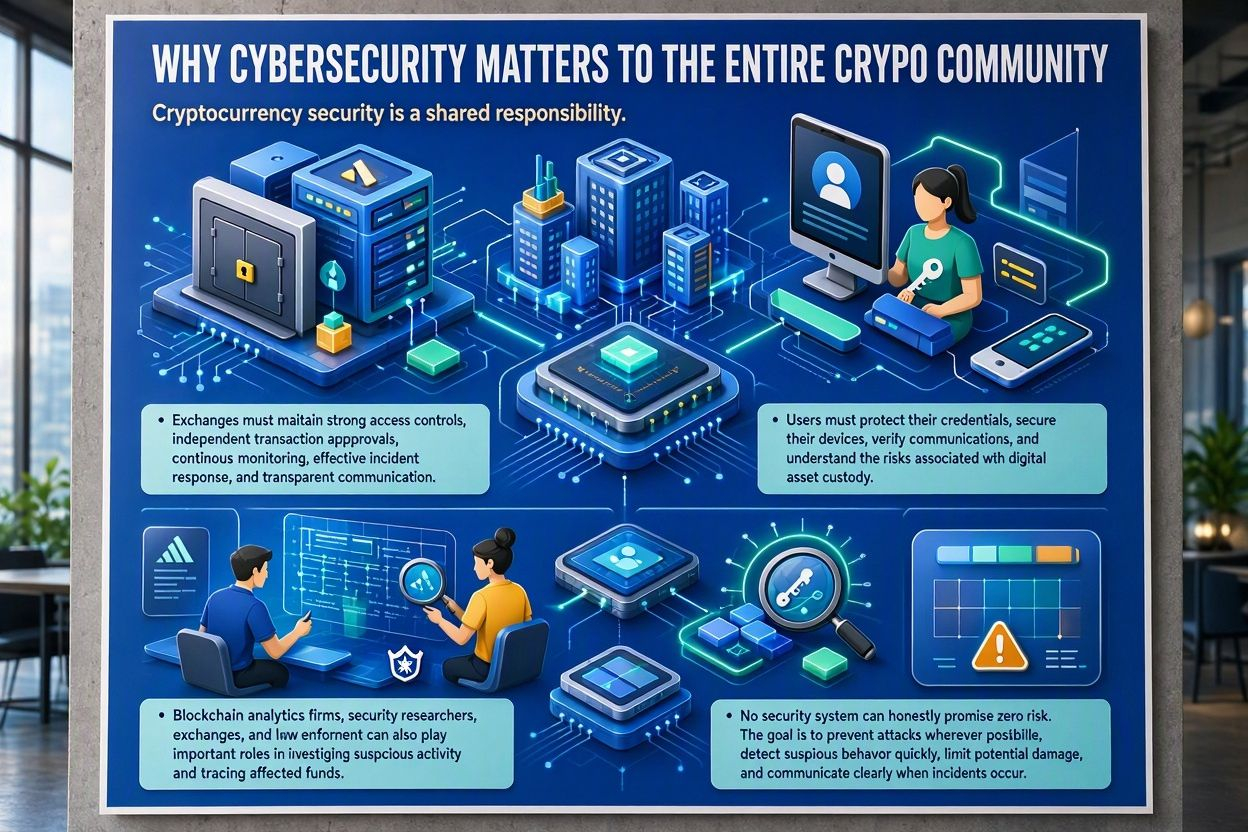
No security system can honestly promise zero risk. The goal is to prevent attacks wherever possible, detect suspicious behavior quickly, limit potential damage, and communicate clearly when incidents occur.
🎯 7. WHAT SHOULD BINANCE USERS DO TODAY?
✅ Read official Binance security announcements.
✅ Check deposit and withdrawal status before initiating transactions.
✅ Review your account security settings and recent activity.
✅ Secure your email account and enable strong authentication.
✅ Never share passwords, authentication codes, private keys, or recovery phrases.
✅ Ignore unsolicited messages promising guaranteed recovery of stolen funds.
✅ Keep records of relevant transactions and support communications securely.
✅ Verify important claims through reliable, independent sources.
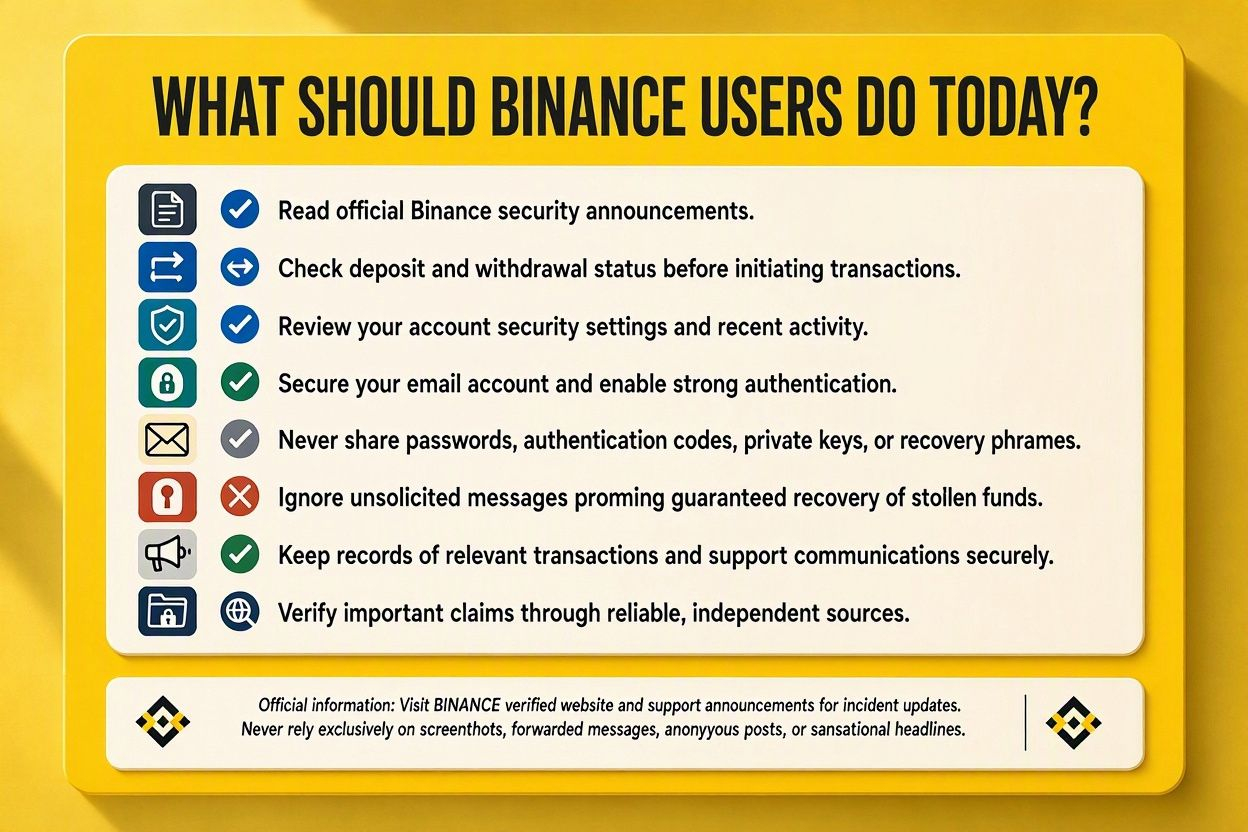
Official information: Visit BINANCE verified website and support announcements for incident updates. Never rely exclusively on screenshots, forwarded messages, anonymous posts, or sensational headlines.
💡 FINAL MESSAGE: KNOWLEDGE IS YOUR FIRST LINE OF DEFENSE
The reported Binance security incident is a reminder that trust in cryptocurrency must be supported by strong security, responsible operations, transparency, and informed users.
Protecting digital assets begins with small but important decisions: verifying a message, refusing a suspicious download, securing an account, and resisting pressure to act without checking the facts.
You do not need to be a cybersecurity expert to improve your protection. You need to stay informed, remain cautious, and develop safe digital habits.
⚖️ DISCLAIMER
This article is for educational and informational purposes only and does not constitute financial or investment advice. Reported incident figures, technical details, and attribution may change as investigations progress. Verify important information through official announcements and reliable independent reporting. Cryptocurrency investments involve substantial risks, including extreme volatility, cybersecurity incidents, and potential loss of capital. Always conduct your own research before making financial decisions.
#BinanceSecurity #BinanceAwareness #CryptoSecurity #CryptoAwareness #Cybersecurity #BlockchainSecurity #Bitcoin #Ethereum #BNB #SAFU #InvestorEducation #ProtectYourAssets #DYOR #PositiveMindsGlobalResults #BinanceSquare

🌍 PositiveMindsGlobalResults — Positivity Without Borders.
Let's build a stronger, safer, and more informed cryptocurrency community together.
Think Before You Click. Verify Before You Trust. Secure Before You Invest.