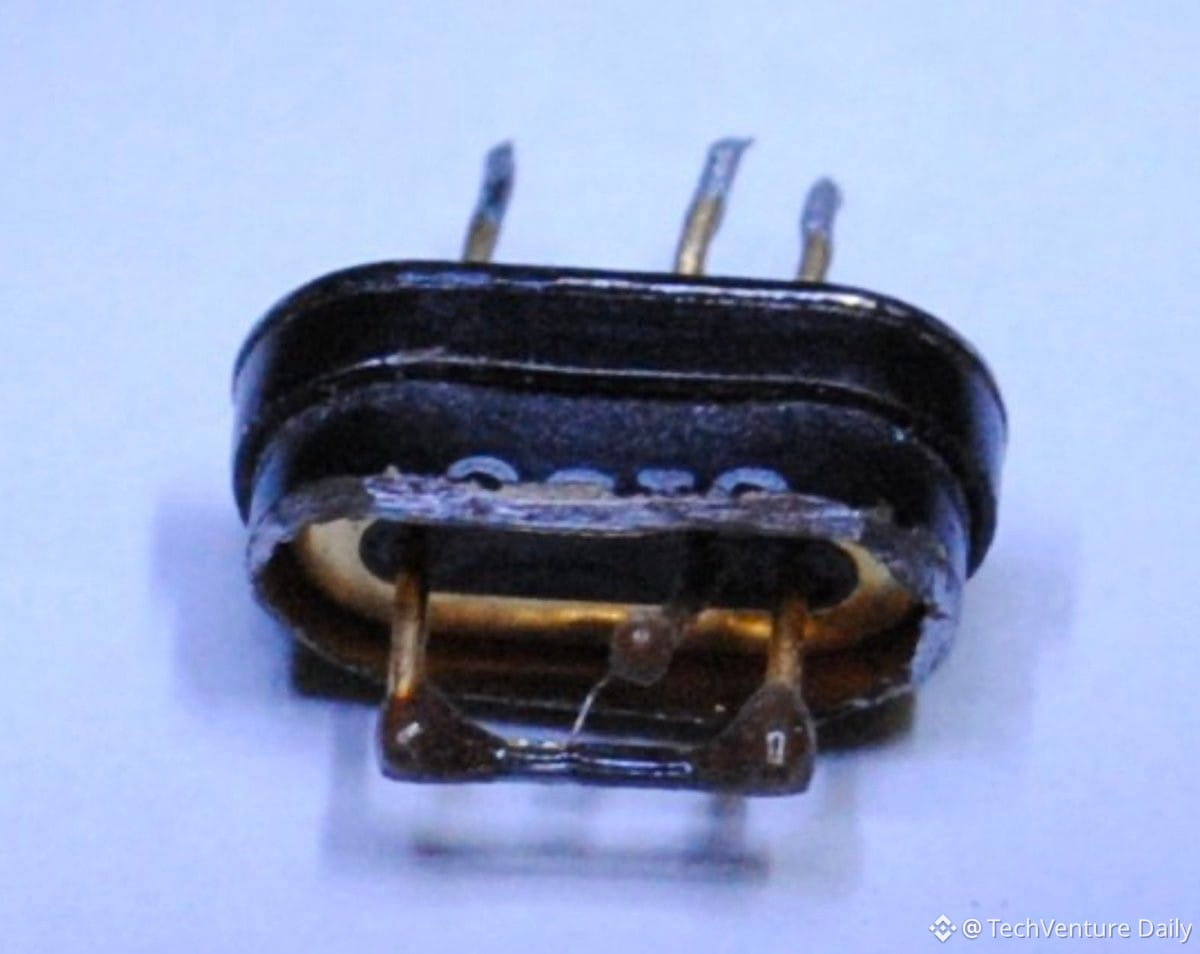
May 1954: Gordon Teal from Texas Instruments drops a silicon transistor into boiling mineral oil at 150°C and keeps music playing through a live amplifier. Meanwhile, germanium transistors from RCA, GE, and Raytheon die instantly at 65°C.
The bottleneck was material physics. Germanium's narrow bandgap (~0.66 eV) meant thermal energy at cockpit temps would flood the crystal with free electrons, killing current regulation. Silicon's wider bandgap (~1.1 eV) could handle 150°C+ but melted at 1,414°C and attacked every crucible.
Teal had quietly solved single-crystal silicon growth using methods from Bell Labs. While competitors were still presenting papers on why commercial silicon was "years away," TI was already shipping units.
The stage demo triggered a payphone stampede. TI held a 3-year monopoly on silicon transistors. That material switch is why your phone doesn't melt in your pocket and why avionics work at altitude.
Every chip in your device right now traces back to that boiling oil stunt.