

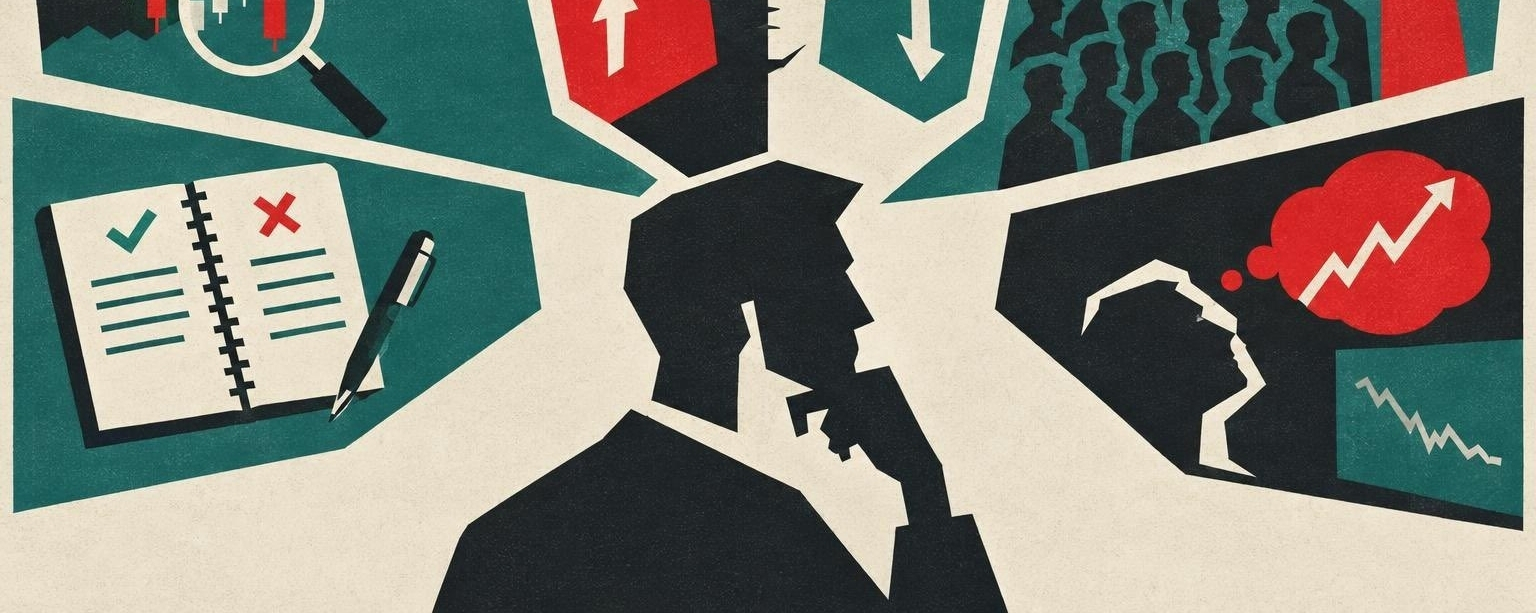


🧠 Five biases that can distort your next trade
A couple of losses can shake your confidence before you place the next trade. Biases can also distort how you read the market, so the first step is recognizing where your judgment is being pulled off course.
🟢 1. Recency bias
Recency bias means giving recent events too much weight. Beyond losing confidence after a few losses, you might focus on one economic release while overlooking the broader fundamentals, or study only the latest candles and lose sight of the longer-term trend.
Step back and assess the longer-term picture for the trade or your portfolio. Keep your latest success or failure from dictating how you execute the next trade.
🟢 2. Confirmation bias
You may give more weight to analysis that supports your view and dismiss opposing arguments because you want to be right. Once bullish commentary has convinced you to go long, bearish market signals become easier to ignore, making your decision more subjective.
Stay flexible and consult analysts with different views. Another person may notice something you missed, helping you consider both sides before committing.
🟢 3. Herding bias
Backing out of a trade simply because many other traders hold the opposite position is herding bias. Following the majority can feel more comfortable than standing apart from it.
A contrarian trade still needs proper fundamental and technical analysis and a clear plan. If you have enough reason to expect a turn, the crowd's commitment to the current trend need not override your analysis. Assessing market sentiment may help if you need further confirmation.
🟢 4. Attribution bias
Attribution bias appears when you credit your skill for winners but blame losses on outside factors, such as unpredictable markets or a slow internet connection. Trading psychologist Dr. Brett Steenbarger warns that this can distort decision-making: treating everything that goes wrong as beyond your control makes it harder to identify habits you need to correct.
Keep a detailed trade journal covering what you did right and wrong, what you expected, what surprised you and what you could have done better. Steenbarger says this helps you take ownership of your strengths and weaknesses, which may make you more mindful of your trading process.
🟢 5. Addiction bias
Your biggest winning trades can remain especially vivid. Those memories alone are insufficient grounds for another trade; the numbers also need to support the likelihood of the trade working out.
When you recognize one of these patterns, apply the relevant check: restore the longer-term context, consider opposing analysis, examine your reasons for following the crowd, review your journal or check whether the numbers support the setup. Recognizing a bias gives you a specific habit to work on