


Crypto scams don't always look suspicious. Some look like official websites, helpful support agents, or exciting opportunities.
But behind the different stories, scammers often use the same tricks. Here are five patterns you should recognize before they cost you your crypto.
Phishing Links
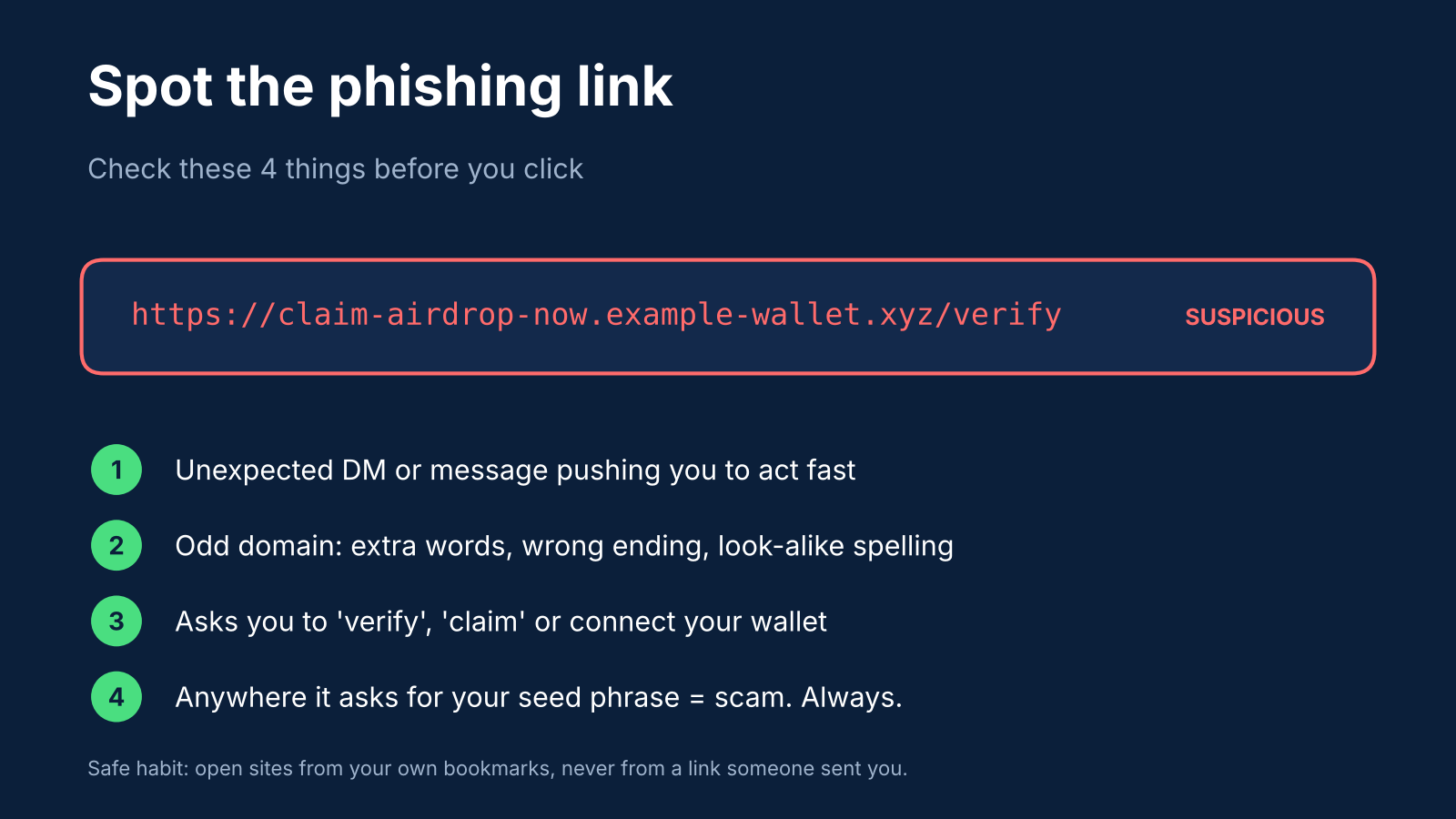
Scammers send messages asking you to verify your account, claim rewards, or fix an urgent issue. The link may lead to a fake page designed to steal your login details or trick you into approving a harmful transaction.
Stay safe: Never access your wallet or exchange through unsolicited links. Use your saved bookmarks or verified official channels.
Fake Websites
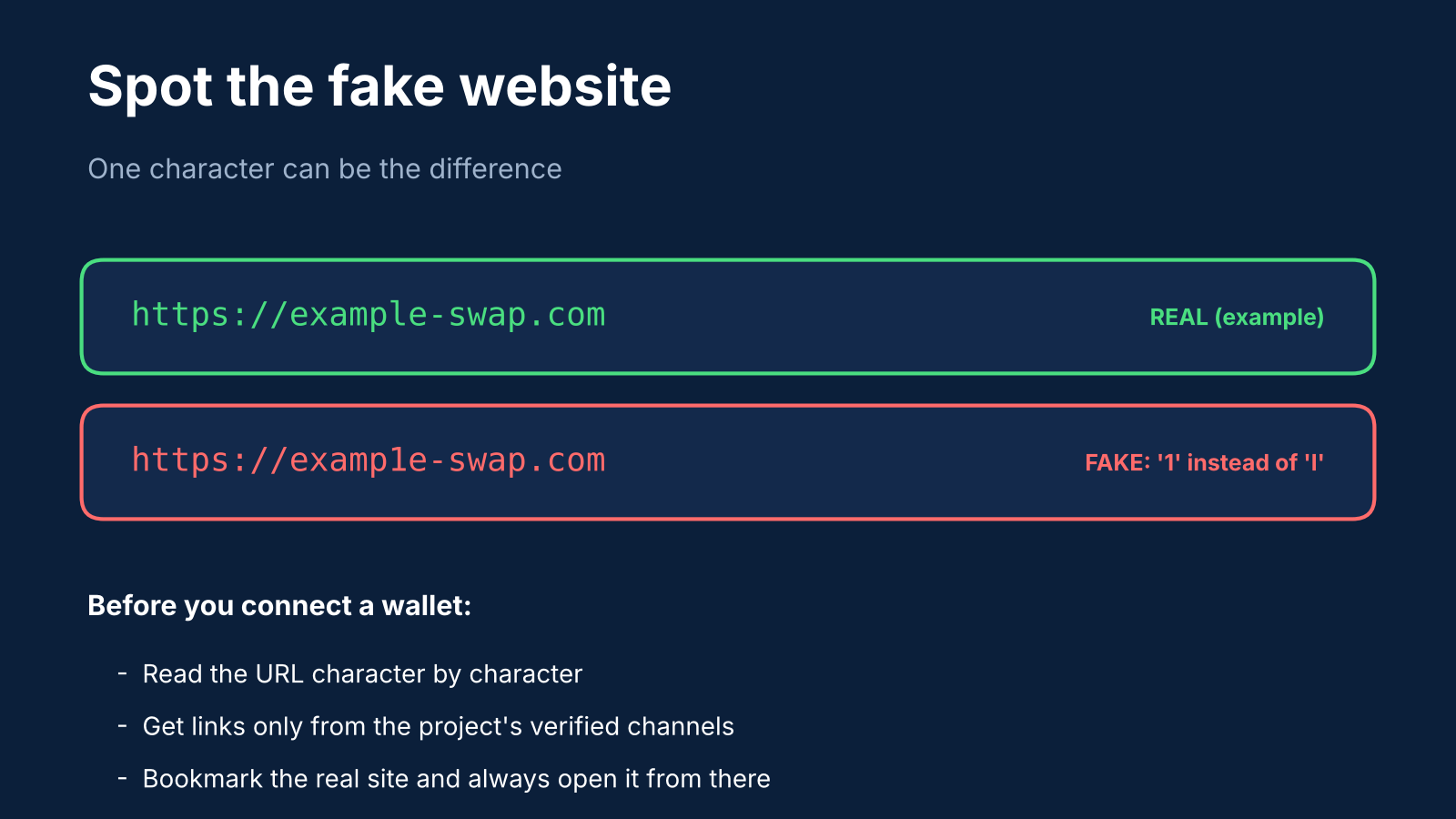
Some scammers create websites that look almost identical to legitimate crypto platforms. A tiny difference in the domain name can be enough to fool you.Stay safe: Check the URL carefully, character by character. Get official links from verified project channels.
Seed Phrase Theft
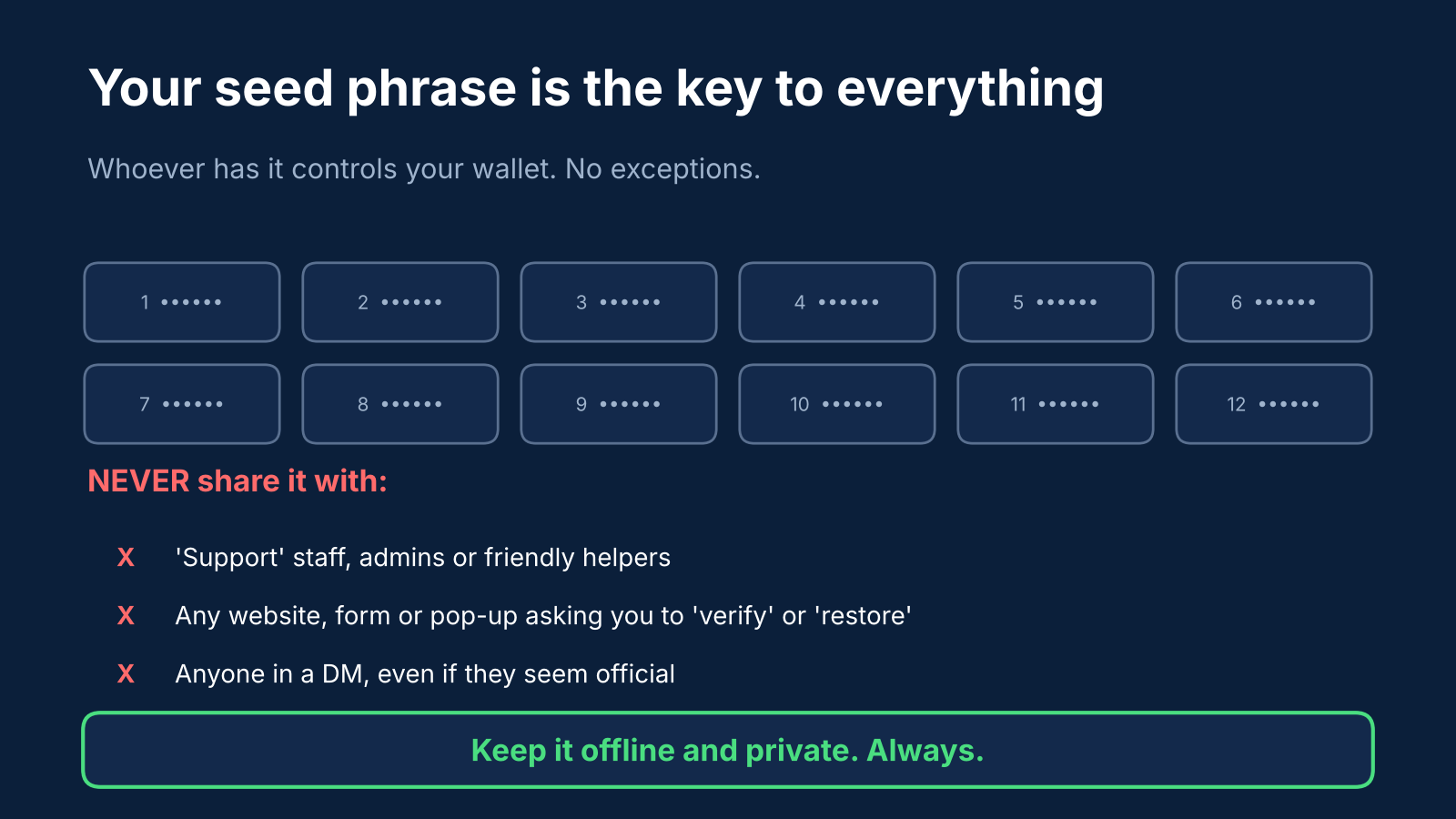
Your seed phrase gives access to your wallet. Anyone who obtains it may be able to take your funds.
Stay safe: Never share your seed phrase with anyone. Legitimate support teams will never need it.
Social Engineering
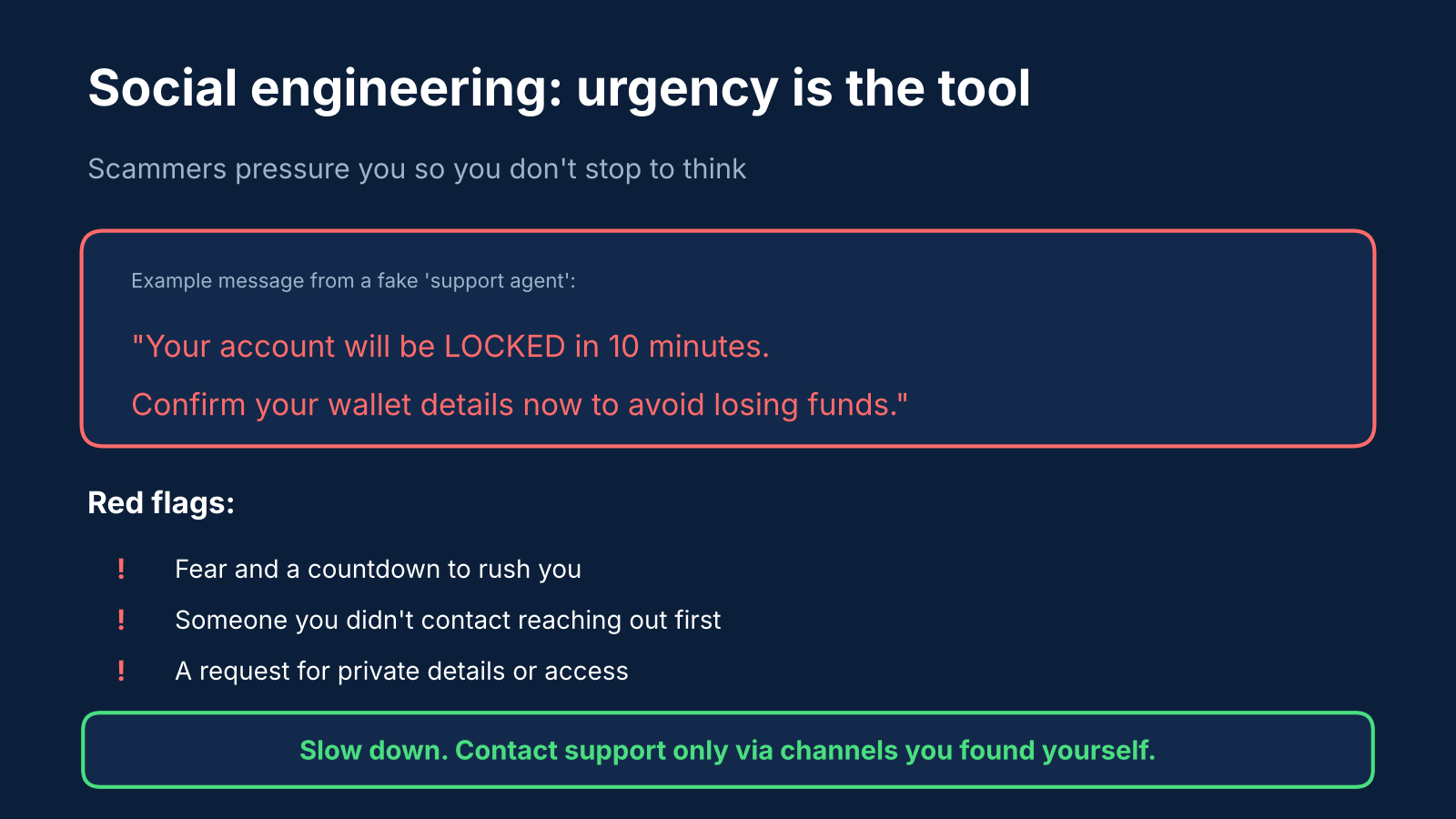
A scammer may pretend to be a support agent, project admin, or experienced crypto user offering help. They create panic by claiming your account is at risk or that you must act immediately.
Stay safe: Slow down and verify everything independently. Contact support only through official channels you find yourself.
Too-Good-to-Be-True Offers
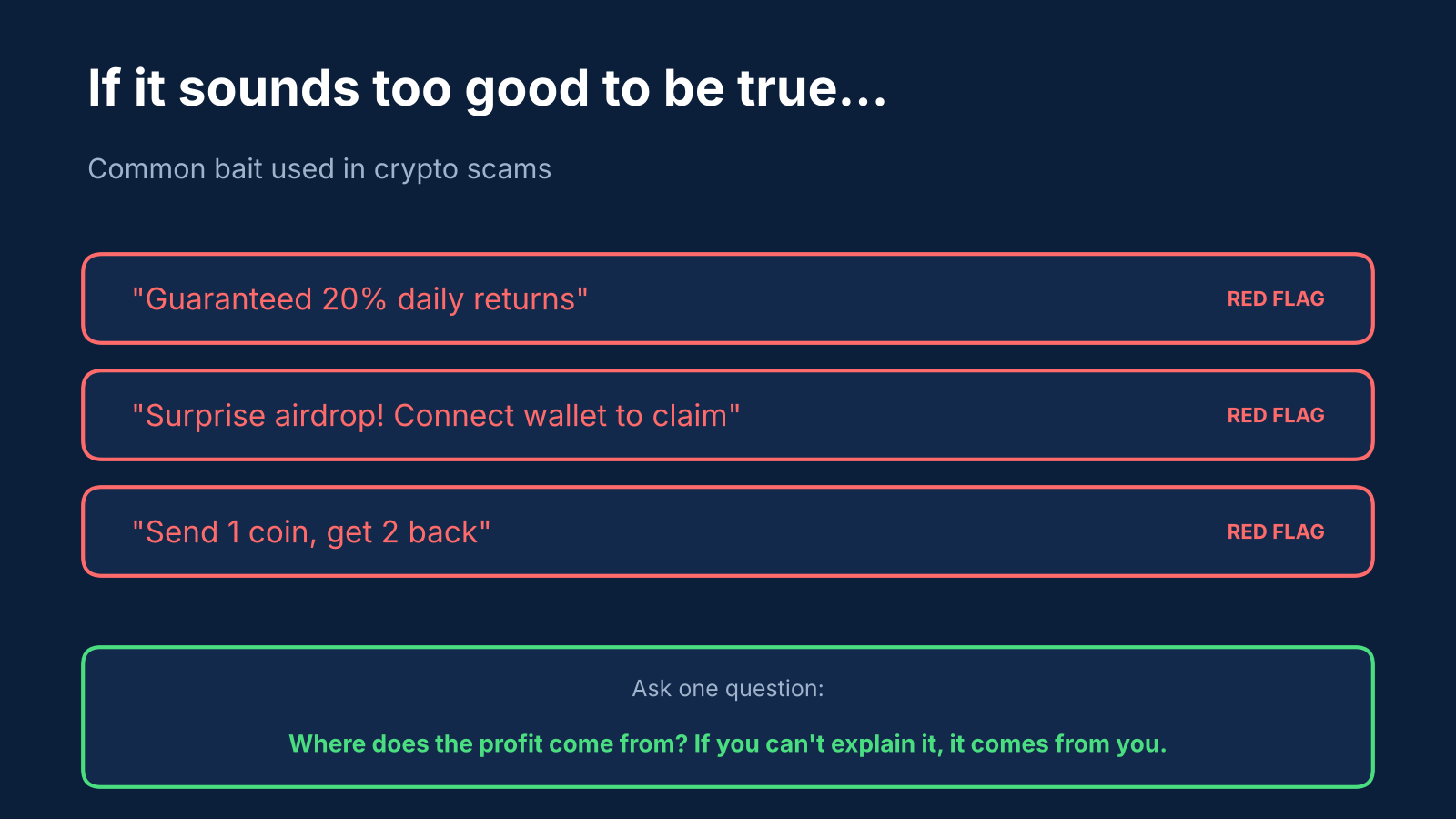 Guaranteed profits, unexpected airdrops, and promises to double your crypto are common warning signs.
Stay safe: Question unrealistic promises. If an offer requires you to send crypto first to unlock a reward, treat it as suspicious.
Simple Habits That Can Protect Your Crypto
• Bookmark legitimate websites.
• Double-check wallet addresses and. networks before transferring funds.
• Test unfamiliar transfers with a small. amount when appropriate.
• Never share your seed phrase.
• Never approve unfamiliar wallet. transactions or signature requests. without understanding them.
Knowledge is important, but knowing how to recognize a scam in practice is even better.
STON.fi has an educational cybersecurity game that lets you explore scam patterns through interactive quizzes, from basic to advanced.Try it here:
https://stonverse.com/cybersecgame/
Which of these scams have you encountered, or which do you think is easiest for beginners to fall for?
Share your experience in the comments. Your answer might help someone protect their funds.
Educational content only. Not financial advice.