

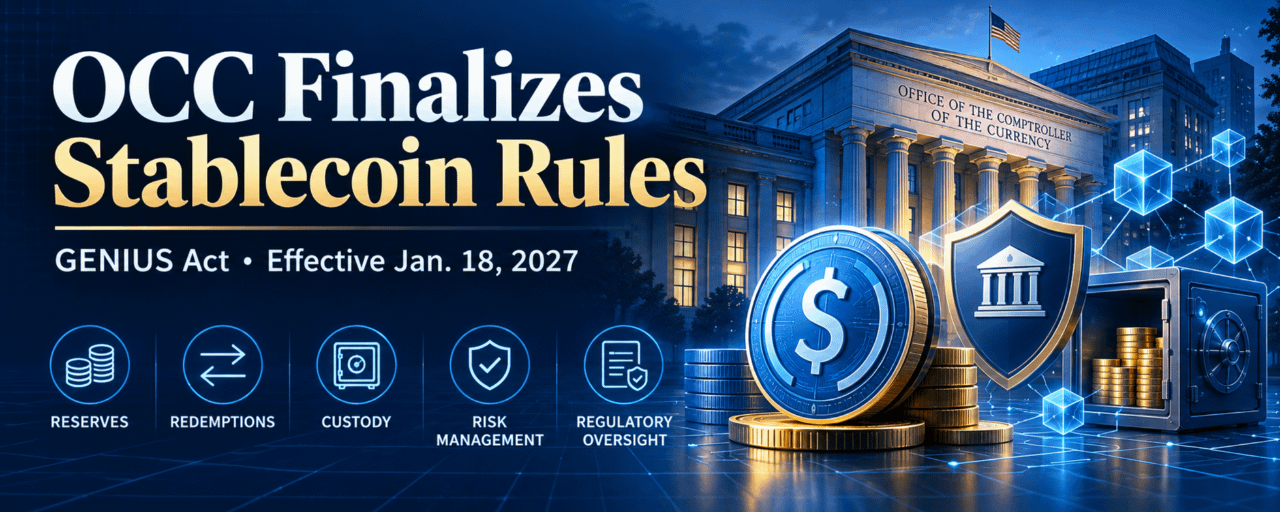


The U.S. Office of the Comptroller of the Currency (OCC) has released final regulations for the GENIUS Act that establishes federal rules for the issuers of stablecoins. The announcement covers the implementation of the regulations from January 18, 2027, for the reserves, redemptions, custody, and risk management.
The OCC has issued federal rules for the issuers of “stablecoins.”
The final rule also includes conditions for payment stablecoins offered by U.S. payment stablecoin issuers and for foreign payment stablecoin issuers that are subject to the OCC's supervision. It also sets standards for a few cryptocurrency custody services that are provided by federally regulated institutions.
The issuers have to comply with customer redemption, operational risk management and regulatory reporting obligations as well as reserve backing requirements. The OCC will oversee compliance with the new framework by qualifying companies and supervise their compliance.
The rules establish requirements on how the reserve is backed, how it is redeemed and its risk management, said Comptroller Jonathan Gould. The framework is one of the administration's initiatives to regulate digital asset services, he said.
The announcement was made following the Blockchain Association's recent recommendations in the GENIUS Act to give industry a clearer definition of digital asset service providers.
The association also called for safeguarding of the dapp infrastructure and clarity on the regulations on foreign stablecoin issuers.
Stablecoin Rewards is the subject of the final GENIUS Act Rule.The last GENIUS Act Rule tackles Stablecoin Rewards.
The OCC said that while it was satisfied with market participants achieving stablecoin supply and demand via indirect methods, such as paying interest or yield to depository institutions that hold the tokens, it was not comfortable with that process. The final version did however, eliminate the proposed automatic denial of certain third-party rewards arrangements.
Instead, regulators will look at case-by-case basis to determine if they violate the limitations on interest payments by issuers. However, it is not for all stablecoin rewards programs.
Stablecoins that offer incentives for the stablecoin holder, like regulated exchanges, will see this difference make a difference. Such arrangements shall not be exempt from the requirements or supervision of the federal requirements.
The decision comes on the heels of a search for clarity in financial institutions' cryptocurrency banking business. Prior to this, community banking institutions have opposed the issuance of crypto charters by the OCC, prompting the question of whether the regulator will be able to regulate them.
Within the comment period for the rulemaking, the OCC received hundreds of comments, including some from banking associations and cryptocurrency organizations and from academics.
The regulations for Stablecoins come into effect on January 18, 2027.
The GENIUS Act and implementing regulations by the OCC will take effect on January 18, 2027. But some compliance obligations are yet to be addressed through separate rulemaking.
The OCC reiterated that the AML, BSA and sanctions-related requirements will be subject to separate regulations, which will be coordinated with Treasury Department regulations.
The regulator will also work closely with other federal agencies that need to implement the law. Prospective issuers of stablecoins will get further announcements about the applications and waiver request.
In the meantime, the OCC has provided guidance on applications and registration requirements and supervisory considerations for eligible companies. The agency will keep track of the stablecoin sector and could modify its supervisory structure if the market evolves.
#EarningsSeason
#ZcashDevelopersConfirmNovemberDateForNU7Upgrade