


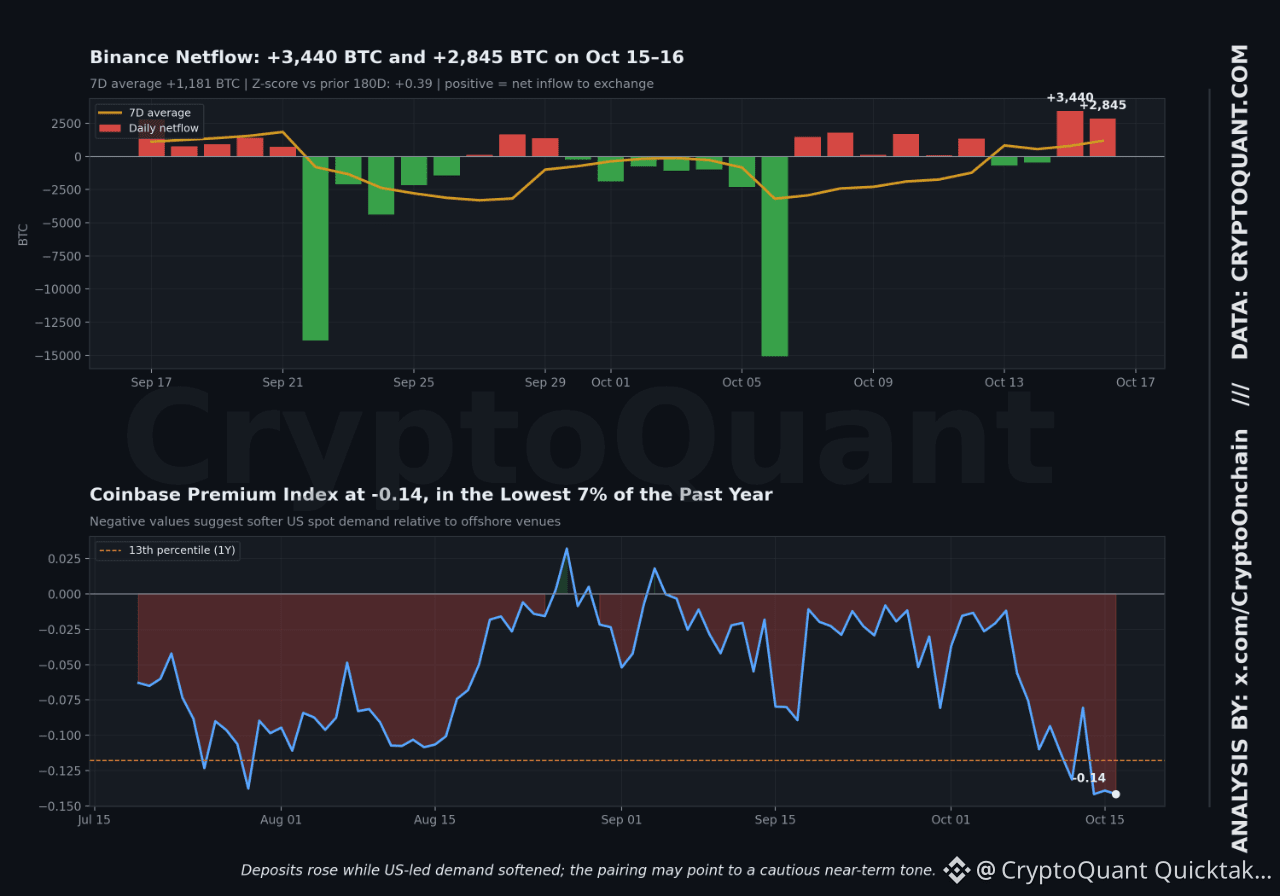
On Oct 15, Binance saw a net inflow of 3,440 BTC, followed by another 2,845 BTC on Oct 16.
On Oct 14, US headline CPI came in at 3.74% YoY, up from 3.40%, and PPI jumped to 6.34% the next day.
By Oct 16, the Coinbase Premium Index had slipped to -0.14, in the lowest 13% of its readings over the past year.
Context: the inflows came right after CPI, PPI and Retail Sales (Oct 14–15). The 10Y yield is at 5.10% and the 2Y rose 2bp on the week, which points to fading hopes for near-term rate cuts.
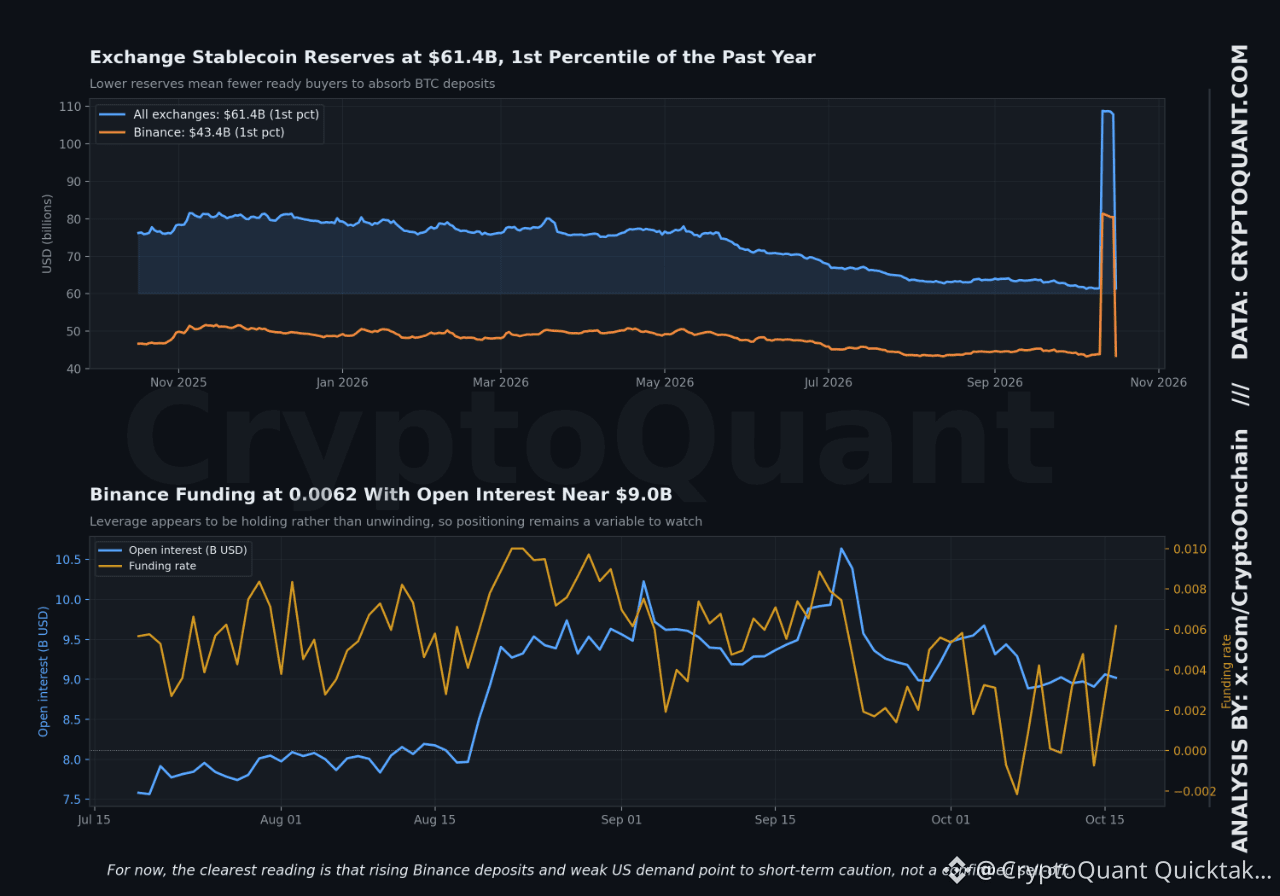
Baseline: Binance's 7-day average netflow is +1,181 BTC, a Z-score of only +0.39 against the prior 180 days. That's notable but not extreme. Over the week, Binance inflows rose 14.8% while outflows fell 40.2%. So the shift comes more from fewer withdrawals than from a flood of deposits. Binance funding rose to 0.0062 and open interest held near $9.0B, so leverage has not unwound.
Liquidity is thin. Stablecoin reserves across all exchanges stand at $61.4B, the 1st percentile of the past year. Binance's own stablecoin reserve, at $43.4B, sits in the 4th percentile. Less stablecoin cash on exchanges means fewer ready buyers to absorb BTC deposits.
One candidate explanation, unverified: the hotter inflation data led some holders to move BTC to Binance to hedge or cut exposure, while US demand stayed weak, as the negative Coinbase premium shows.
Price is holding for now. BTC is at $81.5K, down 1.3% on the week. MVRV is 1.51 and SOPR is 1.00, so the average coin is still in profit and recent sellers are roughly breaking even.
"For now, the clearest reading is that rising Binance deposits and weak US demand point to short-term caution, not a confirmed sell-off."
Written by CryptoOnchain