
That free Wi-Fi could be the weakest link in your security. ⚠️
You connect to a network, open your apps, check your accounts, and go about your day. Everything seems normal.
But what if the network isn’t what you think it is?
Public Wi-Fi can expose you to security risks that aren’t always obvious. Here’s what you need to know before connecting. 🧵👇
🔸 1. Fake Wi-Fi Networks
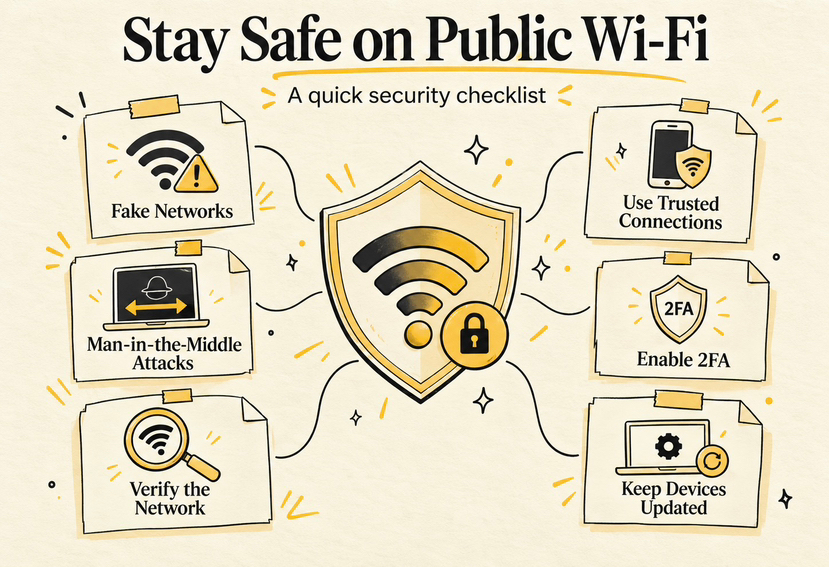
Attackers can create fake hotspots with names similar to legitimate networks in cafés, hotels, and airports. Connecting to the wrong one could expose you to unnecessary risks.
🔸 2. Man-in-the-Middle Attacks
In this type of attack, someone intercepts communication between two parties. Depending on the circumstances, sensitive information could be exposed or your traffic could be manipulated.
🔸 3. Your Crypto Account Deserves Extra Care 🔐
If you’re accessing your crypto accounts on the go, don’t let convenience override security. A compromised network or a fraudulent website could put your information at risk.
🛡️ So, how can you protect yourself?
✅ Verify the network name with the venue before connecting.
✅ Prefer mobile data or a trusted network when accessing sensitive accounts.
✅ Enable Two-Factor Authentication (2FA) to add another layer of account protection.
✅ Keep your device and apps updated.
✅ Never share your passwords or verification codes, and never approve login requests you didn’t initiate.
✅ Pay attention to browser security warnings, and always verify website addresses before entering your credentials.
Remember: HTTPS is important, but it doesn’t guarantee that a website is legitimate or that every connection is safe.
🔎 Want to understand the risks better?
Read the guide from Binance Academy:
https://academy.binance.com/en/articles/why-public-wifi-is-insecure
💬 One question: Do you check a Wi-Fi network before connecting, or do you usually choose the first one that says “Free Wi-Fi”?
Sometimes, the smallest security habits make the biggest difference.