
#security
security
1.8M Aufrufe
4,422 Kommentare
Hot
Zuletzt

Artikel
Übersetzung ansehen
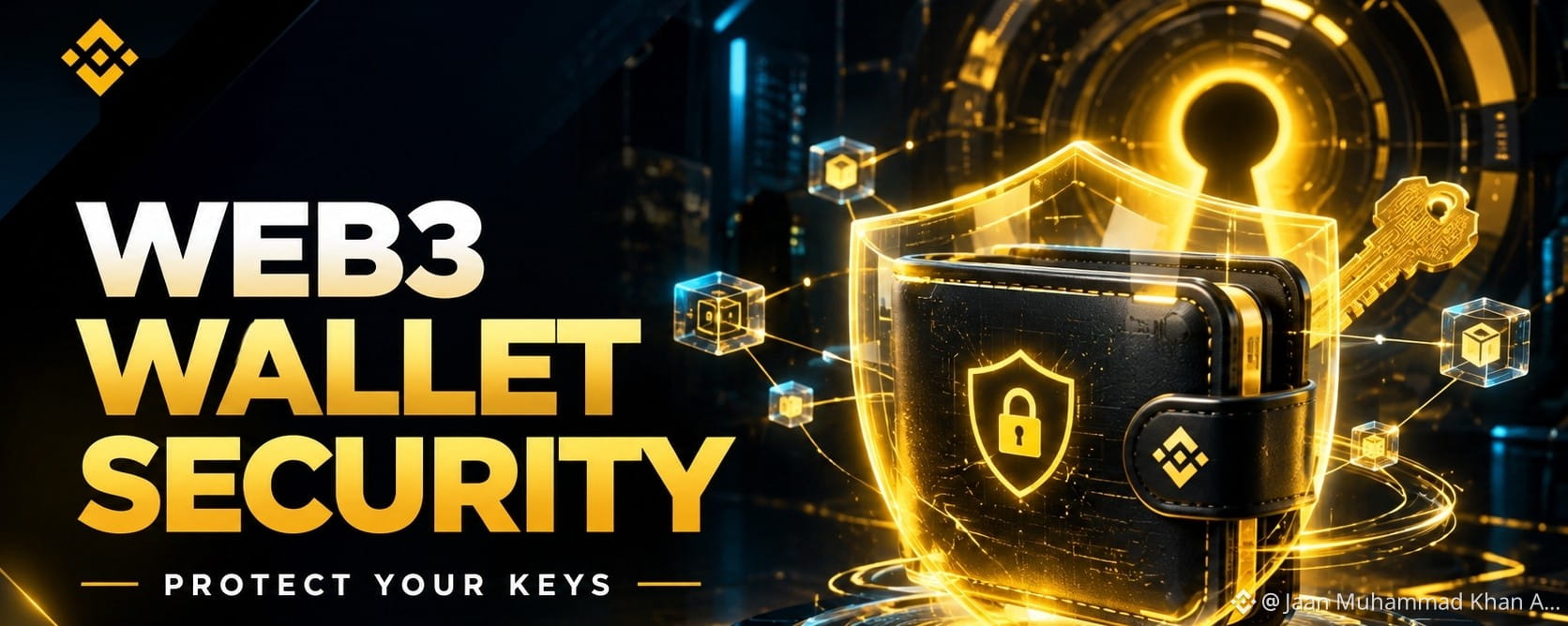
🌐WEB3 WALLET SECURITY🔐 Web3 Wallet Security: Your Wallet Is More Than Just a Password
Web3 has changed how people interact with digital assets.
Instead of relying entirely on traditional financial institutions, users can interact directly with blockchain networks through wallets.
A wallet can provide access to assets, decentralized applications, NFTs, DeFi protocols, and smart contracts.
But there is one important reality:
Your wallet is only as secure as the way you use and protect it.
A blockchain network may be highly secure, but that does not automatically make every wallet interaction safe.
🔑 What Makes Wallet Security Different?
Traditional accounts often rely on:
Usernames
Passwords
Email recovery
Customer support
Account resets
Centralized authentication
Web3 wallets can work differently.
A wallet may rely on a private key or seed phrase that gives control over assets.
If that secret is compromised, attackers may not need to “hack the blockchain.”
They may simply use the credentials you accidentally exposed.
This creates a major security principle:
Protect the keys, protect the assets.
⚠️ Common Web3 Wallet Threats
1️⃣ Phishing
Attackers can create fake websites that look almost identical to legitimate platforms.
A user may connect their wallet and unknowingly authorize a malicious transaction.
2️⃣ Malicious Smart Contracts
Not every contract interaction is safe.
A user may approve a transaction without fully understanding what permissions are being granted.
3️⃣ Seed Phrase Theft
Your seed phrase should be treated like the master key to your wallet.
Never enter it into:
Random websites
Unverified applications
Forms
Messages
“Support” pages
Unknown browser extensions
4️⃣ Fake Airdrops
Free tokens sound attractive.
Attackers know this.
Fake airdrop campaigns can be designed to convince users to connect their wallets or sign malicious transactions.
5️⃣ Compromised Devices
Even if the blockchain is secure, a compromised computer or smartphone can become the weak point.
🛡️ How Can Users Improve Wallet Security?
Think about wallet security as multiple layers.
Layer 1 — Device Security
Keep your operating system, browser and security software updated.
Layer 2 — Wallet Security
Use strong protection and carefully secure recovery information.
Layer 3 — Transaction Verification
Never blindly approve transactions.
Understand what you're signing.
Layer 4 — Application Verification
Check the website and contract you're interacting with.
Layer 5 — Asset Segmentation
For serious users, separating funds across wallets can reduce the impact of a single compromise.
🧠 The Bigger Lesson
Blockchain technology can provide strong cryptographic security.
But users still operate the interface.
That means the security chain can look like:
User → Device → Wallet → Application → Smart Contract → Blockchain
If one layer becomes compromised, the overall experience can become dangerous.
So remember:
Blockchain Security ≠ Wallet Security
Security requires protecting the entire interaction.
🚀 Final Thought
Web3 gives users more control.
But greater control also means greater responsibility.
The future of Web3 security isn't only about building stronger blockchains.
It's also about building better security practices around the people, wallets, applications and infrastructure interacting with them.
Secure the keys.
Verify the transaction.
Understand what you're signing.
That's where responsible Web3 security begins.#security
🌐WEB3 WALLET SECURITY
🔐 Web3 Wallet Security: Your Wallet Is More Than Just a Password
Web3 has changed how people interact with digital assets.
Instead of relying entirely on traditional financial institutions, users can interact directly with blockchain networks through wallets.
A wallet can provide access to assets, decentralized applications, NFTs, DeFi protocols, and smart contracts.
But there is one important reality:
Your wallet is only as secure as the way you use and protect it.
A blockchain network may be highly secure, but that does not automatically make every wallet interaction safe.
🔑 What Makes Wallet Security Different?
Traditional accounts often rely on:
Usernames
Passwords
Email recovery
Customer support
Account resets
Centralized authentication
Web3 wallets can work differently.
A wallet may rely on a private key or seed phrase that gives control over assets.
If that secret is compromised, attackers may not need to “hack the blockchain.”
They may simply use the credentials you accidentally exposed.
This creates a major security principle:
Protect the keys, protect the assets.
⚠️ Common Web3 Wallet Threats
1️⃣ Phishing
Attackers can create fake websites that look almost identical to legitimate platforms.
A user may connect their wallet and unknowingly authorize a malicious transaction.
2️⃣ Malicious Smart Contracts
Not every contract interaction is safe.
A user may approve a transaction without fully understanding what permissions are being granted.
3️⃣ Seed Phrase Theft
Your seed phrase should be treated like the master key to your wallet.
Never enter it into:
Random websites
Unverified applications
Forms
Messages
“Support” pages
Unknown browser extensions
4️⃣ Fake Airdrops
Free tokens sound attractive.
Attackers know this.
Fake airdrop campaigns can be designed to convince users to connect their wallets or sign malicious transactions.
5️⃣ Compromised Devices
Even if the blockchain is secure, a compromised computer or smartphone can become the weak point.
🛡️ How Can Users Improve Wallet Security?
Think about wallet security as multiple layers.
Layer 1 — Device Security
Keep your operating system, browser and security software updated.
Layer 2 — Wallet Security
Use strong protection and carefully secure recovery information.
Layer 3 — Transaction Verification
Never blindly approve transactions.
Understand what you're signing.
Layer 4 — Application Verification
Check the website and contract you're interacting with.
Layer 5 — Asset Segmentation
For serious users, separating funds across wallets can reduce the impact of a single compromise.
🧠 The Bigger Lesson
Blockchain technology can provide strong cryptographic security.
But users still operate the interface.
That means the security chain can look like:
User → Device → Wallet → Application → Smart Contract → Blockchain
If one layer becomes compromised, the overall experience can become dangerous.
So remember:
Blockchain Security ≠ Wallet Security
Security requires protecting the entire interaction.
🚀 Final Thought
Web3 gives users more control.
But greater control also means greater responsibility.
The future of Web3 security isn't only about building stronger blockchains.
It's also about building better security practices around the people, wallets, applications and infrastructure interacting with them.
Secure the keys.
Verify the transaction.
Understand what you're signing.
That's where responsible Web3 security begins.#security
Web3 has changed how people interact with digital assets.
Instead of relying entirely on traditional financial institutions, users can interact directly with blockchain networks through wallets.
A wallet can provide access to assets, decentralized applications, NFTs, DeFi protocols, and smart contracts.
But there is one important reality:
Your wallet is only as secure as the way you use and protect it.
A blockchain network may be highly secure, but that does not automatically make every wallet interaction safe.
🔑 What Makes Wallet Security Different?
Traditional accounts often rely on:
Usernames
Passwords
Email recovery
Customer support
Account resets
Centralized authentication
Web3 wallets can work differently.
A wallet may rely on a private key or seed phrase that gives control over assets.
If that secret is compromised, attackers may not need to “hack the blockchain.”
They may simply use the credentials you accidentally exposed.
This creates a major security principle:
Protect the keys, protect the assets.
⚠️ Common Web3 Wallet Threats
1️⃣ Phishing
Attackers can create fake websites that look almost identical to legitimate platforms.
A user may connect their wallet and unknowingly authorize a malicious transaction.
2️⃣ Malicious Smart Contracts
Not every contract interaction is safe.
A user may approve a transaction without fully understanding what permissions are being granted.
3️⃣ Seed Phrase Theft
Your seed phrase should be treated like the master key to your wallet.
Never enter it into:
Random websites
Unverified applications
Forms
Messages
“Support” pages
Unknown browser extensions
4️⃣ Fake Airdrops
Free tokens sound attractive.
Attackers know this.
Fake airdrop campaigns can be designed to convince users to connect their wallets or sign malicious transactions.
5️⃣ Compromised Devices
Even if the blockchain is secure, a compromised computer or smartphone can become the weak point.
🛡️ How Can Users Improve Wallet Security?
Think about wallet security as multiple layers.
Layer 1 — Device Security
Keep your operating system, browser and security software updated.
Layer 2 — Wallet Security
Use strong protection and carefully secure recovery information.
Layer 3 — Transaction Verification
Never blindly approve transactions.
Understand what you're signing.
Layer 4 — Application Verification
Check the website and contract you're interacting with.
Layer 5 — Asset Segmentation
For serious users, separating funds across wallets can reduce the impact of a single compromise.
🧠 The Bigger Lesson
Blockchain technology can provide strong cryptographic security.
But users still operate the interface.
That means the security chain can look like:
User → Device → Wallet → Application → Smart Contract → Blockchain
If one layer becomes compromised, the overall experience can become dangerous.
So remember:
Blockchain Security ≠ Wallet Security
Security requires protecting the entire interaction.
🚀 Final Thought
Web3 gives users more control.
But greater control also means greater responsibility.
The future of Web3 security isn't only about building stronger blockchains.
It's also about building better security practices around the people, wallets, applications and infrastructure interacting with them.
Secure the keys.
Verify the transaction.
Understand what you're signing.
That's where responsible Web3 security begins.#security
158
·
--
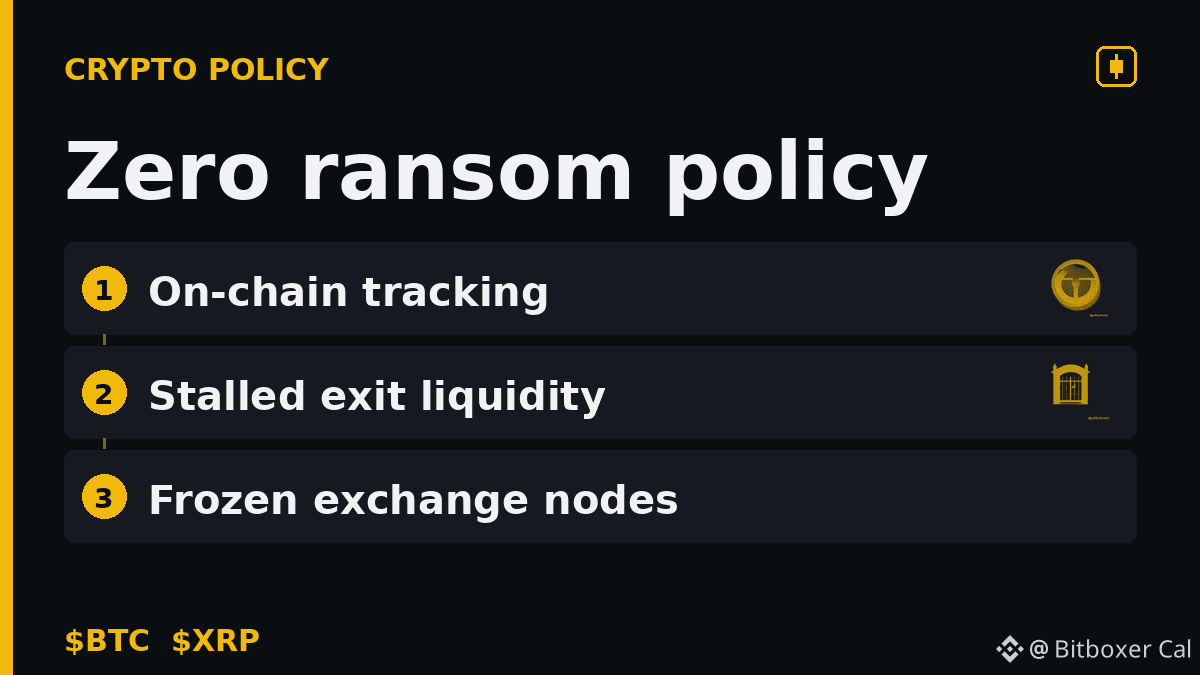
Null-Toleranz-Policies machen $BTC zu einer radioaktiven Falle für Hacker.
On-Chain-Forensik macht kontaminierte Coins inzwischen unmöglich, um sie aus dem System offenzufahren. Wenn Protokolle sich weigern zu verhandeln, verschwindet die Exit-Liquidität eines Angreifers. Beobachten Sie, wie Börsen $XRP oder überbrückte Assets einfrieren, um Hacker in eine dauerhafte digitale Beweiskette einzuschließen. Verändert sich dadurch effektiv die Profitabilität von Krypto-Hacks?
$BTC #crypto #blockchain #security
Null-Toleranz-Policies machen $BTC zu einer radioaktiven Falle für Hacker.
On-Chain-Forensik macht kontaminierte Coins inzwischen unmöglich, um sie aus dem System offenzufahren. Wenn Protokolle sich weigern zu verhandeln, verschwindet die Exit-Liquidität eines Angreifers. Beobachten Sie, wie Börsen $XRP oder überbrückte Assets einfrieren, um Hacker in eine dauerhafte digitale Beweiskette einzuschließen. Verändert sich dadurch effektiv die Profitabilität von Krypto-Hacks?
$BTC #crypto #blockchain #security
On-Chain-Forensik macht kontaminierte Coins inzwischen unmöglich, um sie aus dem System offenzufahren. Wenn Protokolle sich weigern zu verhandeln, verschwindet die Exit-Liquidität eines Angreifers. Beobachten Sie, wie Börsen $XRP oder überbrückte Assets einfrieren, um Hacker in eine dauerhafte digitale Beweiskette einzuschließen. Verändert sich dadurch effektiv die Profitabilität von Krypto-Hacks?
$BTC #crypto #blockchain #security
82

Übersetzung ansehen
🚨 REVOLUT误泄富客护照及比特币记录 🧠
📊 | $BTC | $ETH | $BNB |
- 请关注、点赞并留言,共同探讨最新加密动态 📈
- Revolut因误认欺诈性政府请求,向黑客披露用户护照、自拍及比特币交易记录。
- 受影响用户包括持有大量资产的富客,信息涉及护照/驾照、姓名、出生日期、住址、电话、IBAN及账户对账单。
- 公开的交易数据涵盖提现记录及完整的比特币转账历史,可能被用于洗钱或进一步攻击。
- 公司已声明将配合调查并加强身份验证流程。 🔥
- 该泄露事件可能导致市场对中心化金融平台信任度下降,短期内比特币价格预计承压。
- 投资者情绪转为看空,或将触发抛售潮,引发波动加剧。
- 巨鲸可能利用下跌进行分配或低位吸纳,观察链上大额转移动向。
- 短期内市场预计保持下行压力,波动性上升,需关注监管回应。
- 你认为此类数据泄露会否加速用户转向去中心化交易所?
- 欢迎继续关注我们的深度分析,留言分享你的看法。
- #Bitcoin #Crypto #Whales #Security #Revolut
🚨 REVOLUT误泄富客护照及比特币记录 🧠
📊 | $BTC | $ETH | $BNB |
- 请关注、点赞并留言,共同探讨最新加密动态 📈
- Revolut因误认欺诈性政府请求,向黑客披露用户护照、自拍及比特币交易记录。
- 受影响用户包括持有大量资产的富客,信息涉及护照/驾照、姓名、出生日期、住址、电话、IBAN及账户对账单。
- 公开的交易数据涵盖提现记录及完整的比特币转账历史,可能被用于洗钱或进一步攻击。
- 公司已声明将配合调查并加强身份验证流程。 🔥
- 该泄露事件可能导致市场对中心化金融平台信任度下降,短期内比特币价格预计承压。
- 投资者情绪转为看空,或将触发抛售潮,引发波动加剧。
- 巨鲸可能利用下跌进行分配或低位吸纳,观察链上大额转移动向。
- 短期内市场预计保持下行压力,波动性上升,需关注监管回应。
- 你认为此类数据泄露会否加速用户转向去中心化交易所?
- 欢迎继续关注我们的深度分析,留言分享你的看法。
- #Bitcoin #Crypto #Whales #Security #Revolut
📊 | $BTC | $ETH | $BNB |
- 请关注、点赞并留言,共同探讨最新加密动态 📈
- Revolut因误认欺诈性政府请求,向黑客披露用户护照、自拍及比特币交易记录。
- 受影响用户包括持有大量资产的富客,信息涉及护照/驾照、姓名、出生日期、住址、电话、IBAN及账户对账单。
- 公开的交易数据涵盖提现记录及完整的比特币转账历史,可能被用于洗钱或进一步攻击。
- 公司已声明将配合调查并加强身份验证流程。 🔥
- 该泄露事件可能导致市场对中心化金融平台信任度下降,短期内比特币价格预计承压。
- 投资者情绪转为看空,或将触发抛售潮,引发波动加剧。
- 巨鲸可能利用下跌进行分配或低位吸纳,观察链上大额转移动向。
- 短期内市场预计保持下行压力,波动性上升,需关注监管回应。
- 你认为此类数据泄露会否加速用户转向去中心化交易所?
- 欢迎继续关注我们的深度分析,留言分享你的看法。
- #Bitcoin #Crypto #Whales #Security #Revolut
44
Übersetzung ansehen
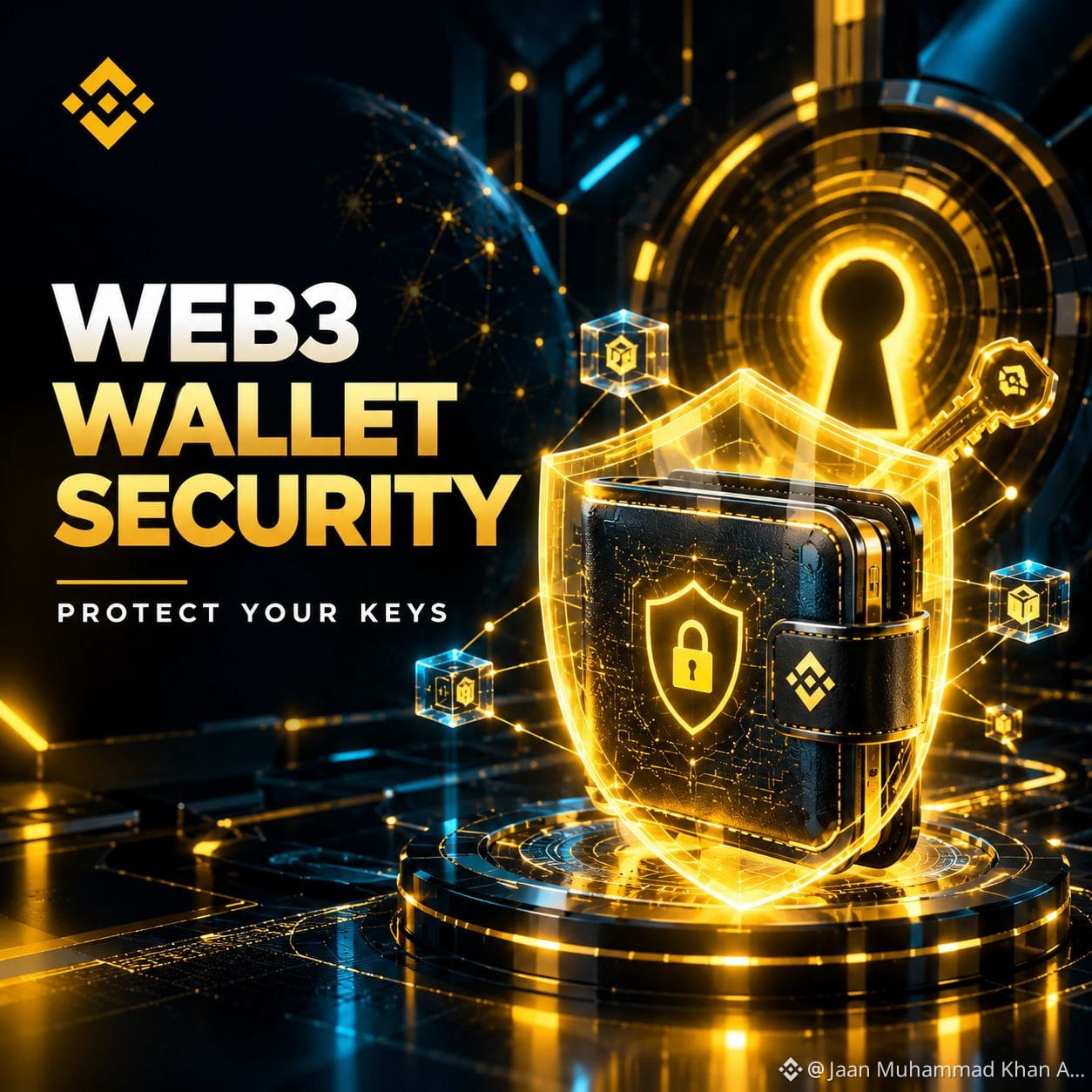
🌐 WEB3 WALLET SECURITY 🔐
Your Wallet Is More Than Just a Password
Web3 gives users direct control over digital assets, DeFi, NFTs, dApps, and blockchain transactions.
But remember:
Blockchain security ≠ Wallet security.
Your wallet is only as secure as the way you use and protect it.
🔑 WHY WALLET SECURITY IS DIFFERENT
Web3 wallets can rely on private keys or seed phrases.
If those secrets are compromised, an attacker may not need to “hack the blockchain.”
They may simply use the credentials you exposed.
Protect the keys → Protect the assets.
⚠️ COMMON WALLET THREATS
1️⃣ Phishing — Fake websites can trick users into connecting wallets or approving malicious transactions.
2️⃣ Malicious Contracts — Blindly signing transactions or approvals can give attackers dangerous permissions.
3️⃣ Seed Phrase Theft — Never enter your recovery phrase into websites, forms, messages, or unverified “support” pages.
4️⃣ Fake Airdrops — Free tokens can be used as bait for malicious wallet interactions.
5️⃣ Compromised Devices — Your phone or computer can become the weakest link.
🛡️ 5 SECURITY LAYERS
💻 Device — Keep your OS and browser updated.
🔐 Wallet — Protect your recovery information.
✍️ Transactions — Understand what you're signing.
🌐 Applications — Verify websites and contracts.
💰 Assets — Consider separating funds across wallets.
🧠 THE BIGGER LESSON
Your security chain can look like:
User → Device → Wallet → App → Smart Contract → Blockchain
If one layer is compromised, the entire interaction can become risky.
🚀 My takeaway:
Web3 gives you more control—but also more responsibility.
Secure the keys.
Verify the transaction.
Understand what you're signing.
That's where responsible Web3 security begins. 🔐
What do you think is the biggest Web3 wallet security risk?
🎣 Phishing
🔑 Seed phrase theft
📝 Malicious transactions
💻 Compromised devices
#security
🌐 WEB3 WALLET SECURITY 🔐
Your Wallet Is More Than Just a Password
Web3 gives users direct control over digital assets, DeFi, NFTs, dApps, and blockchain transactions.
But remember:
Blockchain security ≠ Wallet security.
Your wallet is only as secure as the way you use and protect it.
🔑 WHY WALLET SECURITY IS DIFFERENT
Web3 wallets can rely on private keys or seed phrases.
If those secrets are compromised, an attacker may not need to “hack the blockchain.”
They may simply use the credentials you exposed.
Protect the keys → Protect the assets.
⚠️ COMMON WALLET THREATS
1️⃣ Phishing — Fake websites can trick users into connecting wallets or approving malicious transactions.
2️⃣ Malicious Contracts — Blindly signing transactions or approvals can give attackers dangerous permissions.
3️⃣ Seed Phrase Theft — Never enter your recovery phrase into websites, forms, messages, or unverified “support” pages.
4️⃣ Fake Airdrops — Free tokens can be used as bait for malicious wallet interactions.
5️⃣ Compromised Devices — Your phone or computer can become the weakest link.
🛡️ 5 SECURITY LAYERS
💻 Device — Keep your OS and browser updated.
🔐 Wallet — Protect your recovery information.
✍️ Transactions — Understand what you're signing.
🌐 Applications — Verify websites and contracts.
💰 Assets — Consider separating funds across wallets.
🧠 THE BIGGER LESSON
Your security chain can look like:
User → Device → Wallet → App → Smart Contract → Blockchain
If one layer is compromised, the entire interaction can become risky.
🚀 My takeaway:
Web3 gives you more control—but also more responsibility.
Secure the keys.
Verify the transaction.
Understand what you're signing.
That's where responsible Web3 security begins. 🔐
What do you think is the biggest Web3 wallet security risk?
🎣 Phishing
🔑 Seed phrase theft
📝 Malicious transactions
💻 Compromised devices
#security
Your Wallet Is More Than Just a Password
Web3 gives users direct control over digital assets, DeFi, NFTs, dApps, and blockchain transactions.
But remember:
Blockchain security ≠ Wallet security.
Your wallet is only as secure as the way you use and protect it.
🔑 WHY WALLET SECURITY IS DIFFERENT
Web3 wallets can rely on private keys or seed phrases.
If those secrets are compromised, an attacker may not need to “hack the blockchain.”
They may simply use the credentials you exposed.
Protect the keys → Protect the assets.
⚠️ COMMON WALLET THREATS
1️⃣ Phishing — Fake websites can trick users into connecting wallets or approving malicious transactions.
2️⃣ Malicious Contracts — Blindly signing transactions or approvals can give attackers dangerous permissions.
3️⃣ Seed Phrase Theft — Never enter your recovery phrase into websites, forms, messages, or unverified “support” pages.
4️⃣ Fake Airdrops — Free tokens can be used as bait for malicious wallet interactions.
5️⃣ Compromised Devices — Your phone or computer can become the weakest link.
🛡️ 5 SECURITY LAYERS
💻 Device — Keep your OS and browser updated.
🔐 Wallet — Protect your recovery information.
✍️ Transactions — Understand what you're signing.
🌐 Applications — Verify websites and contracts.
💰 Assets — Consider separating funds across wallets.
🧠 THE BIGGER LESSON
Your security chain can look like:
User → Device → Wallet → App → Smart Contract → Blockchain
If one layer is compromised, the entire interaction can become risky.
🚀 My takeaway:
Web3 gives you more control—but also more responsibility.
Secure the keys.
Verify the transaction.
Understand what you're signing.
That's where responsible Web3 security begins. 🔐
What do you think is the biggest Web3 wallet security risk?
🎣 Phishing
🔑 Seed phrase theft
📝 Malicious transactions
💻 Compromised devices
#security
44

·
--
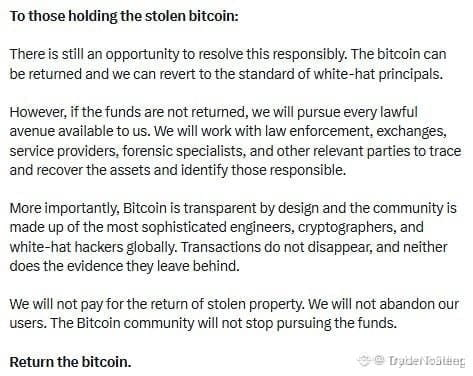
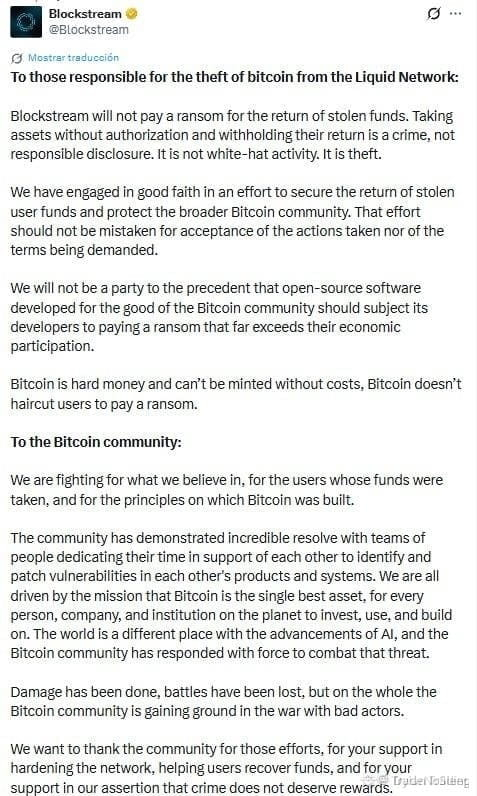
🚨 BLOCKSTREAM PROBLEME: HACKER-ULTIMATUM ALS LIQUID-SIDCHAIN-BREACH-DROHUNG GEFÄHRDET DIE $BTC -INFRASTRUKTUR ⚠️
Blockstream hat eine offizielle rechtliche Anweisung an Akteure herausgegeben, die das Liquid-Netzwerk kompromittieren, nachdem ein laufender Verstoß im gesamten Ökosystem entdeckt wurde. 🔍 Sicherheitsanalysten deuten darauf hin, dass diese Schwachstelle in der Bitcoin-föderierten Sidechain-Infrastruktur eine kurzfristige Liquiditätsverknappung sowie einen kurzen Verkaufsdruck in Tokens des Derivate-Ökosystems wie $TFUEL auslöst.
Aus Sicht der Marktstruktur beobachtet institutionelles Kapital genau, ob diese operative Reibung zu einer stärkeren Entsicherung durch „Smart Money“ führt oder ob sich der Order-Flow um wichtige Support-Pools stabilisiert. 📌 🌊
💬 Wie wird dieses Sicherheitsevent deine Einschätzung zu Sidechain-Scaling-Lösungen in den kommenden Sitzungen beeinflussen? 👇
⚠️ Keine Finanzberatung. Behandle stets dein Risiko. 🛡️
🏷️ #BTC #TFUEL #MarketStructure #CryptoNews #Security
🎯 🦈
🚨 BLOCKSTREAM PROBLEME: HACKER-ULTIMATUM ALS LIQUID-SIDCHAIN-BREACH-DROHUNG GEFÄHRDET DIE $BTC -INFRASTRUKTUR ⚠️
Blockstream hat eine offizielle rechtliche Anweisung an Akteure herausgegeben, die das Liquid-Netzwerk kompromittieren, nachdem ein laufender Verstoß im gesamten Ökosystem entdeckt wurde. 🔍 Sicherheitsanalysten deuten darauf hin, dass diese Schwachstelle in der Bitcoin-föderierten Sidechain-Infrastruktur eine kurzfristige Liquiditätsverknappung sowie einen kurzen Verkaufsdruck in Tokens des Derivate-Ökosystems wie $TFUEL auslöst.
Aus Sicht der Marktstruktur beobachtet institutionelles Kapital genau, ob diese operative Reibung zu einer stärkeren Entsicherung durch „Smart Money“ führt oder ob sich der Order-Flow um wichtige Support-Pools stabilisiert. 📌 🌊
💬 Wie wird dieses Sicherheitsevent deine Einschätzung zu Sidechain-Scaling-Lösungen in den kommenden Sitzungen beeinflussen? 👇
⚠️ Keine Finanzberatung. Behandle stets dein Risiko. 🛡️
🏷️ #BTC #TFUEL #MarketStructure #CryptoNews #Security
🎯 🦈
Blockstream hat eine offizielle rechtliche Anweisung an Akteure herausgegeben, die das Liquid-Netzwerk kompromittieren, nachdem ein laufender Verstoß im gesamten Ökosystem entdeckt wurde. 🔍 Sicherheitsanalysten deuten darauf hin, dass diese Schwachstelle in der Bitcoin-föderierten Sidechain-Infrastruktur eine kurzfristige Liquiditätsverknappung sowie einen kurzen Verkaufsdruck in Tokens des Derivate-Ökosystems wie $TFUEL auslöst.
Aus Sicht der Marktstruktur beobachtet institutionelles Kapital genau, ob diese operative Reibung zu einer stärkeren Entsicherung durch „Smart Money“ führt oder ob sich der Order-Flow um wichtige Support-Pools stabilisiert. 📌 🌊
💬 Wie wird dieses Sicherheitsevent deine Einschätzung zu Sidechain-Scaling-Lösungen in den kommenden Sitzungen beeinflussen? 👇
⚠️ Keine Finanzberatung. Behandle stets dein Risiko. 🛡️
🏷️ #BTC #TFUEL #MarketStructure #CryptoNews #Security
🎯 🦈
22

Übersetzung ansehen
🚨 $BTC ALERT: PHISHING SCAM HIDING BEHIND Trezor’S OFFICIAL DOMAIN! 🦈
The latest breach exploited a compromised third‑party email service, letting attackers fire “Critical Security Alert” mails that look straight from Trezor’s domain. 📧 With 87k+ users already exposed from a prior shipment‑partner hack, the phishing payload now masquerades as an urgent firmware update, making visual verification nearly impossible. 📊
Smart money knows the moment a legit‑looking email lands, it’s a liquidity sweep for credentials—not a market move. Keep your inbox razor‑sharp and verify every link on the official site, not the email. 💡💬 Are you double‑checking Trezor alerts before you click? 👇
⚠️ Not financial advice. Always manage your risk. 🛡️
🏷️ #BTC #PhishingAlert #Security #Crypto
🔥 💎
🚨 $BTC ALERT: PHISHING SCAM HIDING BEHIND Trezor’S OFFICIAL DOMAIN! 🦈
The latest breach exploited a compromised third‑party email service, letting attackers fire “Critical Security Alert” mails that look straight from Trezor’s domain. 📧 With 87k+ users already exposed from a prior shipment‑partner hack, the phishing payload now masquerades as an urgent firmware update, making visual verification nearly impossible. 📊
Smart money knows the moment a legit‑looking email lands, it’s a liquidity sweep for credentials—not a market move. Keep your inbox razor‑sharp and verify every link on the official site, not the email. 💡💬 Are you double‑checking Trezor alerts before you click? 👇
⚠️ Not financial advice. Always manage your risk. 🛡️
🏷️ #BTC #PhishingAlert #Security #Crypto
🔥 💎
The latest breach exploited a compromised third‑party email service, letting attackers fire “Critical Security Alert” mails that look straight from Trezor’s domain. 📧 With 87k+ users already exposed from a prior shipment‑partner hack, the phishing payload now masquerades as an urgent firmware update, making visual verification nearly impossible. 📊
Smart money knows the moment a legit‑looking email lands, it’s a liquidity sweep for credentials—not a market move. Keep your inbox razor‑sharp and verify every link on the official site, not the email. 💡💬 Are you double‑checking Trezor alerts before you click? 👇
⚠️ Not financial advice. Always manage your risk. 🛡️
🏷️ #BTC #PhishingAlert #Security #Crypto
🔥 💎
12

·
--
Übersetzung ansehen
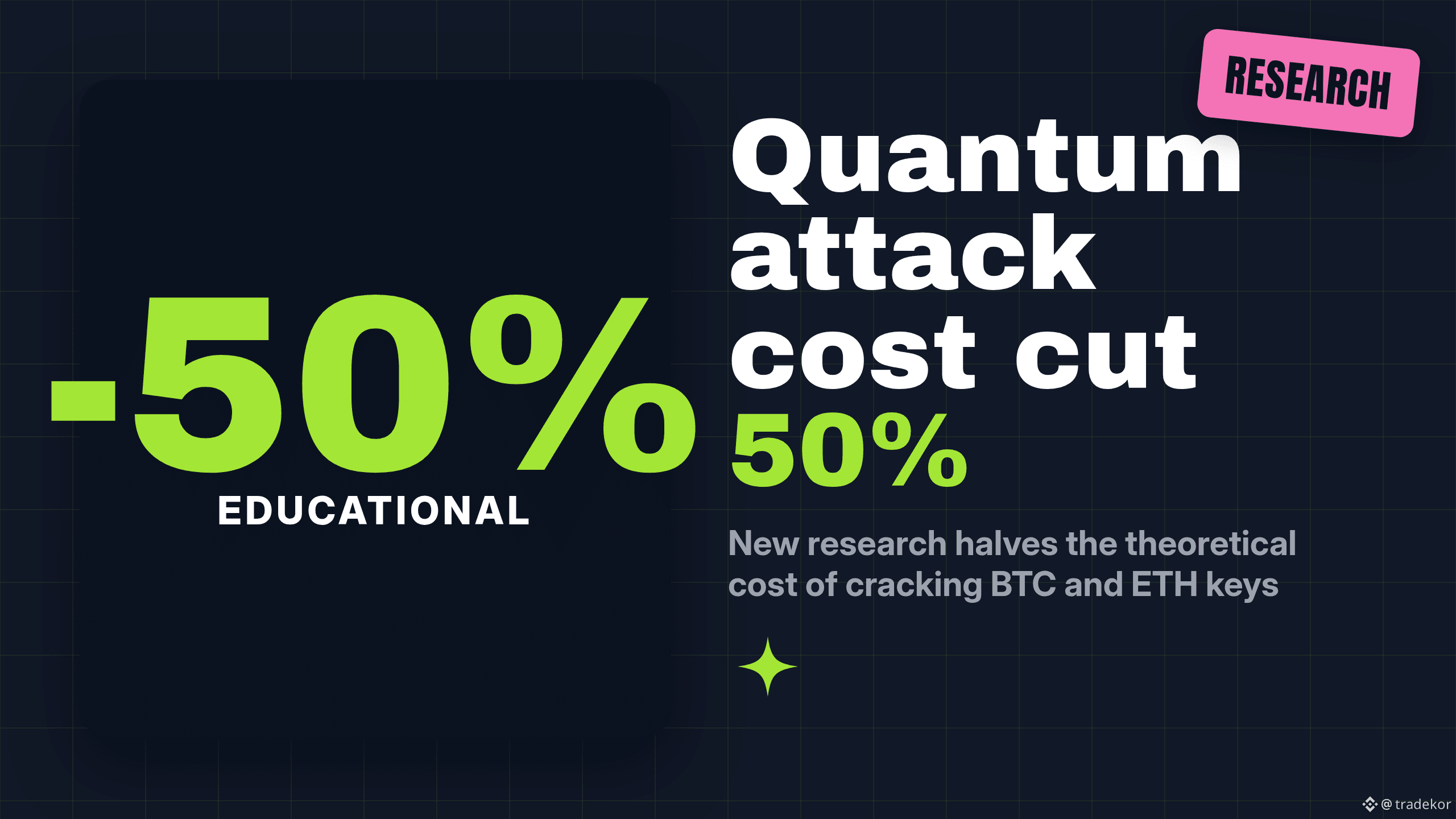
Researchers just cut the estimated quantum-computing cost to attack Bitcoin and Ethereum's encryption by more than 50% -- and no machine on Earth can actually do it yet.
The news: a collaborative effort (100+ contributors, including teams from the Ethereum Foundation, Theta Labs, and StarkWare) designed a new quantum circuit needing 1,151 logical qubits and about 1.3 million Toffoli gates to perform the core arithmetic step in breaking the elliptic-curve cryptography (secp256k1) that secures both Bitcoin and Ethereum private keys. The combined resource score came to roughly 1.5 billion -- more than 50% below the ~3 billion benchmark Google Quantum AI published in March, and an 86% drop from where an open research challenge started just two months ago.
The catch: today's quantum hardware has only ~1,000-1,200 physical qubits and logical-qubit counts in the tens or low hundreds -- nowhere close to running this. This is a benchmark for a theoretical future attack, not a live threat, and remediation (protocol upgrades, wallet migrations to quantum-resistant signatures) has years of runway to happen before hardware could plausibly catch up. Progress like this tends to come in irregular jumps, not a steady countdown clock.
Why it still matters: roughly 7 million BTC sit in addresses where the public key is already exposed on-chain -- those are the coins most at risk whenever "Q-Day" eventually arrives, and industry-wide migration to quantum-resistant wallets takes years to roll out even once the tech exists. Research like this is exactly what should be driving that migration timeline, not a sudden hardware breakthrough nobody saw coming.
Does a 50%+ cut in the theoretical attack cost change your view on how urgent quantum-resistant wallet migration actually is?
Not financial advice. DYOR.
$BTC $ETH #CryptoNews #Quantum #Security
Researchers just cut the estimated quantum-computing cost to attack Bitcoin and Ethereum's encryption by more than 50% -- and no machine on Earth can actually do it yet.
The news: a collaborative effort (100+ contributors, including teams from the Ethereum Foundation, Theta Labs, and StarkWare) designed a new quantum circuit needing 1,151 logical qubits and about 1.3 million Toffoli gates to perform the core arithmetic step in breaking the elliptic-curve cryptography (secp256k1) that secures both Bitcoin and Ethereum private keys. The combined resource score came to roughly 1.5 billion -- more than 50% below the ~3 billion benchmark Google Quantum AI published in March, and an 86% drop from where an open research challenge started just two months ago.
The catch: today's quantum hardware has only ~1,000-1,200 physical qubits and logical-qubit counts in the tens or low hundreds -- nowhere close to running this. This is a benchmark for a theoretical future attack, not a live threat, and remediation (protocol upgrades, wallet migrations to quantum-resistant signatures) has years of runway to happen before hardware could plausibly catch up. Progress like this tends to come in irregular jumps, not a steady countdown clock.
Why it still matters: roughly 7 million BTC sit in addresses where the public key is already exposed on-chain -- those are the coins most at risk whenever "Q-Day" eventually arrives, and industry-wide migration to quantum-resistant wallets takes years to roll out even once the tech exists. Research like this is exactly what should be driving that migration timeline, not a sudden hardware breakthrough nobody saw coming.
Does a 50%+ cut in the theoretical attack cost change your view on how urgent quantum-resistant wallet migration actually is?
Not financial advice. DYOR.
$BTC $ETH #CryptoNews #Quantum #Security
The news: a collaborative effort (100+ contributors, including teams from the Ethereum Foundation, Theta Labs, and StarkWare) designed a new quantum circuit needing 1,151 logical qubits and about 1.3 million Toffoli gates to perform the core arithmetic step in breaking the elliptic-curve cryptography (secp256k1) that secures both Bitcoin and Ethereum private keys. The combined resource score came to roughly 1.5 billion -- more than 50% below the ~3 billion benchmark Google Quantum AI published in March, and an 86% drop from where an open research challenge started just two months ago.
The catch: today's quantum hardware has only ~1,000-1,200 physical qubits and logical-qubit counts in the tens or low hundreds -- nowhere close to running this. This is a benchmark for a theoretical future attack, not a live threat, and remediation (protocol upgrades, wallet migrations to quantum-resistant signatures) has years of runway to happen before hardware could plausibly catch up. Progress like this tends to come in irregular jumps, not a steady countdown clock.
Why it still matters: roughly 7 million BTC sit in addresses where the public key is already exposed on-chain -- those are the coins most at risk whenever "Q-Day" eventually arrives, and industry-wide migration to quantum-resistant wallets takes years to roll out even once the tech exists. Research like this is exactly what should be driving that migration timeline, not a sudden hardware breakthrough nobody saw coming.
Does a 50%+ cut in the theoretical attack cost change your view on how urgent quantum-resistant wallet migration actually is?
Not financial advice. DYOR.
$BTC $ETH #CryptoNews #Quantum #Security
64

·
--
Übersetzung ansehen
🚨 REVOLUT DATA BREACH EXPOSES BITCOIN HISTORIES DRIVING SHORT TERM PRIVACY CONCERNS 📉
The recent security breach at Revolut highlights how centralized off-ramps remain vulnerable to social engineering rather than core infrastructure exploits. While user balances remain fully secure, the exposure of personal identification alongside on-chain footprint data introduces clear structural privacy friction. 📊
From an order flow perspective, administrative leaks typically trigger transient sentiment pullbacks rather than systemic repositioning. Institutional capital generally separates operational social engineering from platform liquidity, using knee-jerk retail reactions to gauge market absorbency. 🔍
🤔 Will this privacy lapse trigger a temporary market dip, or will smart money quickly absorb the noise? 👇
⚠️ Not financial advice. Always manage your risk. 🛡️
🏷️ #BTC #MarketUpdate #Crypto #Security
🎯 🦈
🚨 REVOLUT DATA BREACH EXPOSES BITCOIN HISTORIES DRIVING SHORT TERM PRIVACY CONCERNS 📉
The recent security breach at Revolut highlights how centralized off-ramps remain vulnerable to social engineering rather than core infrastructure exploits. While user balances remain fully secure, the exposure of personal identification alongside on-chain footprint data introduces clear structural privacy friction. 📊
From an order flow perspective, administrative leaks typically trigger transient sentiment pullbacks rather than systemic repositioning. Institutional capital generally separates operational social engineering from platform liquidity, using knee-jerk retail reactions to gauge market absorbency. 🔍
🤔 Will this privacy lapse trigger a temporary market dip, or will smart money quickly absorb the noise? 👇
⚠️ Not financial advice. Always manage your risk. 🛡️
🏷️ #BTC #MarketUpdate #Crypto #Security
🎯 🦈
The recent security breach at Revolut highlights how centralized off-ramps remain vulnerable to social engineering rather than core infrastructure exploits. While user balances remain fully secure, the exposure of personal identification alongside on-chain footprint data introduces clear structural privacy friction. 📊
From an order flow perspective, administrative leaks typically trigger transient sentiment pullbacks rather than systemic repositioning. Institutional capital generally separates operational social engineering from platform liquidity, using knee-jerk retail reactions to gauge market absorbency. 🔍
🤔 Will this privacy lapse trigger a temporary market dip, or will smart money quickly absorb the noise? 👇
⚠️ Not financial advice. Always manage your risk. 🛡️
🏷️ #BTC #MarketUpdate #Crypto #Security
🎯 🦈

1

·
--
Chinesisch:
Blockstream zeigt Haltung! Weigert sich, der Forderung nach einem 50-Millionen-Dollar-Bounty des Hackers nachzukommen, und setzt stattdessen darauf, diese 600 BTC zu behalten. Nach dem Liquid-Hack im September, bei dem etwa 4.000 L-BTC erstellt und etwa 3.996 echte BTC abgezogen wurden, zieht Blockstream eine klare Linie. Das ist gut für das Bitcoin-Ökosystem: Es zeigt den technischen Akteuren, dass sie an ihrer Sicherheitsgrenze festhalten. Kurzfristig könnte der Markt bei Layer-2-Lösungen vorsichtiger werden, aber langfristig stärkt es die Position von Bitcoin als der sichersten Kryptowährung.$BTC #Layer2 #Security
Englische Version:
Blockstream nimmt es mit der Sicherheit ernst! Sie weigern sich, die Forderung des Hackers nach einer 50-Millionen-Dollar-Bounty zu bezahlen, und setzen darauf, diese 600 BTC zu behalten. Nach dem Liquid-Hack im September, bei dem ~4.000 L-BTC erzeugt und ~3.996 echte BTC abgezogen wurden, zieht Blockstream eine Grenze. Das sendet eine starke Botschaft zur Sicherheit im Bitcoin-Ökosystem – kurzfristig könnten die Märkte bei Layer-2-Lösungen vorsichtiger werden, aber langfristig stärkt es Bitcoins Position als die sicherste Krypto. $BTC #Layer2 #Security
Chinesisch:
Blockstream zeigt Haltung! Weigert sich, der Forderung nach einem 50-Millionen-Dollar-Bounty des Hackers nachzukommen, und setzt stattdessen darauf, diese 600 BTC zu behalten. Nach dem Liquid-Hack im September, bei dem etwa 4.000 L-BTC erstellt und etwa 3.996 echte BTC abgezogen wurden, zieht Blockstream eine klare Linie. Das ist gut für das Bitcoin-Ökosystem: Es zeigt den technischen Akteuren, dass sie an ihrer Sicherheitsgrenze festhalten. Kurzfristig könnte der Markt bei Layer-2-Lösungen vorsichtiger werden, aber langfristig stärkt es die Position von Bitcoin als der sichersten Kryptowährung.$BTC #Layer2 #Security
Englische Version:
Blockstream nimmt es mit der Sicherheit ernst! Sie weigern sich, die Forderung des Hackers nach einer 50-Millionen-Dollar-Bounty zu bezahlen, und setzen darauf, diese 600 BTC zu behalten. Nach dem Liquid-Hack im September, bei dem ~4.000 L-BTC erzeugt und ~3.996 echte BTC abgezogen wurden, zieht Blockstream eine Grenze. Das sendet eine starke Botschaft zur Sicherheit im Bitcoin-Ökosystem – kurzfristig könnten die Märkte bei Layer-2-Lösungen vorsichtiger werden, aber langfristig stärkt es Bitcoins Position als die sicherste Krypto. $BTC #Layer2 #Security
Blockstream zeigt Haltung! Weigert sich, der Forderung nach einem 50-Millionen-Dollar-Bounty des Hackers nachzukommen, und setzt stattdessen darauf, diese 600 BTC zu behalten. Nach dem Liquid-Hack im September, bei dem etwa 4.000 L-BTC erstellt und etwa 3.996 echte BTC abgezogen wurden, zieht Blockstream eine klare Linie. Das ist gut für das Bitcoin-Ökosystem: Es zeigt den technischen Akteuren, dass sie an ihrer Sicherheitsgrenze festhalten. Kurzfristig könnte der Markt bei Layer-2-Lösungen vorsichtiger werden, aber langfristig stärkt es die Position von Bitcoin als der sichersten Kryptowährung.$BTC #Layer2 #Security
Englische Version:
Blockstream nimmt es mit der Sicherheit ernst! Sie weigern sich, die Forderung des Hackers nach einer 50-Millionen-Dollar-Bounty zu bezahlen, und setzen darauf, diese 600 BTC zu behalten. Nach dem Liquid-Hack im September, bei dem ~4.000 L-BTC erzeugt und ~3.996 echte BTC abgezogen wurden, zieht Blockstream eine Grenze. Das sendet eine starke Botschaft zur Sicherheit im Bitcoin-Ökosystem – kurzfristig könnten die Märkte bei Layer-2-Lösungen vorsichtiger werden, aber langfristig stärkt es Bitcoins Position als die sicherste Krypto. $BTC #Layer2 #Security
45
Übersetzung ansehen
🚨 BLOCKSTREAM拒绝赎金称4700万美元比特币被盗 🧠
📊 | $BTC | $ETH | $BNB |
- 请关注、点赞并留言分享您的看法 📈
- Blockstream确认其Liquid网络被黑,损失约4700万美元(约598.5 BTC)。
- 公司声明不接受任何形式的赎金,称此行为为盗窃。
- Blockstream已向执法机构报告,并要求归还全部比特币。
- 如资金未归还,公司将配合进一步法律行动。 🔥
- 该事件可能引发市场对Liquid平台安全性的担忧,导致比特币短线跌破关键支撑位。
- 短期内恐慌性抛售或将加剧波动,预计BTC价格将承压至$24,000以下。
- 大额鲸鱼持仓出现分散或低位买入迹象,可能在回调中进行抄底布局。
- 若执法进展顺利并追回部分资产,市场情绪或将出现快速反弹。
- 您认为此次黑客事件会对比特币长期走势产生何种影响?
- 欢迎继续关注,我们将第一时间更新最新进展。
#Bitcoin #Crypto #Whales #Blockchain #Security
🚨 BLOCKSTREAM拒绝赎金称4700万美元比特币被盗 🧠
📊 | $BTC | $ETH | $BNB |
- 请关注、点赞并留言分享您的看法 📈
- Blockstream确认其Liquid网络被黑,损失约4700万美元(约598.5 BTC)。
- 公司声明不接受任何形式的赎金,称此行为为盗窃。
- Blockstream已向执法机构报告,并要求归还全部比特币。
- 如资金未归还,公司将配合进一步法律行动。 🔥
- 该事件可能引发市场对Liquid平台安全性的担忧,导致比特币短线跌破关键支撑位。
- 短期内恐慌性抛售或将加剧波动,预计BTC价格将承压至$24,000以下。
- 大额鲸鱼持仓出现分散或低位买入迹象,可能在回调中进行抄底布局。
- 若执法进展顺利并追回部分资产,市场情绪或将出现快速反弹。
- 您认为此次黑客事件会对比特币长期走势产生何种影响?
- 欢迎继续关注,我们将第一时间更新最新进展。
#Bitcoin #Crypto #Whales #Blockchain #Security
📊 | $BTC | $ETH | $BNB |
- 请关注、点赞并留言分享您的看法 📈
- Blockstream确认其Liquid网络被黑,损失约4700万美元(约598.5 BTC)。
- 公司声明不接受任何形式的赎金,称此行为为盗窃。
- Blockstream已向执法机构报告,并要求归还全部比特币。
- 如资金未归还,公司将配合进一步法律行动。 🔥
- 该事件可能引发市场对Liquid平台安全性的担忧,导致比特币短线跌破关键支撑位。
- 短期内恐慌性抛售或将加剧波动,预计BTC价格将承压至$24,000以下。
- 大额鲸鱼持仓出现分散或低位买入迹象,可能在回调中进行抄底布局。
- 若执法进展顺利并追回部分资产,市场情绪或将出现快速反弹。
- 您认为此次黑客事件会对比特币长期走势产生何种影响?
- 欢迎继续关注,我们将第一时间更新最新进展。
#Bitcoin #Crypto #Whales #Blockchain #Security
31

·
--
Übersetzung ansehen
🚨 BLOCKSTREAM REFUSES RANSOM AFTER $BTC EXPLOIT AS ON-CHAIN FORENSICS TIGHTEN! 🛡️
Blockstream has taken a hard institutional stance following the recent Liquid Network breach, refusing to pay ransom demands. Instead of settling with unauthorized exploiters, the infrastructure team is leveraging on-chain forensics and top-tier exchange tracking to isolate the stolen $BTC ledger movements. 📊
Public ledgers leave permanent footprints, making high-volume illicit transfers notoriously difficult to liquidate without triggering automated compliance traps. 🔍 Meanwhile, beware of secondary phishing scams attempting to exploit user panic under the guise of asset recovery. ⚠️
💬 Do you believe institutional non-negotiation policies will ultimately deter future protocol exploits? 👇
⚠️ Not financial advice. Always manage your risk. 🛡️
🏷️ #BTC #Blockstream #OnChain #Security
🛡️ 🔍
🚨 BLOCKSTREAM REFUSES RANSOM AFTER $BTC EXPLOIT AS ON-CHAIN FORENSICS TIGHTEN! 🛡️
Blockstream has taken a hard institutional stance following the recent Liquid Network breach, refusing to pay ransom demands. Instead of settling with unauthorized exploiters, the infrastructure team is leveraging on-chain forensics and top-tier exchange tracking to isolate the stolen $BTC ledger movements. 📊
Public ledgers leave permanent footprints, making high-volume illicit transfers notoriously difficult to liquidate without triggering automated compliance traps. 🔍 Meanwhile, beware of secondary phishing scams attempting to exploit user panic under the guise of asset recovery. ⚠️
💬 Do you believe institutional non-negotiation policies will ultimately deter future protocol exploits? 👇
⚠️ Not financial advice. Always manage your risk. 🛡️
🏷️ #BTC #Blockstream #OnChain #Security
🛡️ 🔍
Blockstream has taken a hard institutional stance following the recent Liquid Network breach, refusing to pay ransom demands. Instead of settling with unauthorized exploiters, the infrastructure team is leveraging on-chain forensics and top-tier exchange tracking to isolate the stolen $BTC ledger movements. 📊
Public ledgers leave permanent footprints, making high-volume illicit transfers notoriously difficult to liquidate without triggering automated compliance traps. 🔍 Meanwhile, beware of secondary phishing scams attempting to exploit user panic under the guise of asset recovery. ⚠️
💬 Do you believe institutional non-negotiation policies will ultimately deter future protocol exploits? 👇
⚠️ Not financial advice. Always manage your risk. 🛡️
🏷️ #BTC #Blockstream #OnChain #Security
🛡️ 🔍
13
·
--
Übersetzung ansehen
中文版:
Blockstream被黑了!4700万美元的BTC被盗,但他们拒绝支付赎金,598.5个BTC还没找回。公司说这是赤裸裸的盗窃,要报警处理。老炮儿就是硬气!这种安全事件短期可能让大饼有点压力,但长期看,Blockstream这态度反而证明加密圈对"拿走别人的东西就是不行"的底线。希望执法机构能找回这些钱,给黑客点颜色看看!
英文版:
Blockstream got hacked with $47M in BTC stolen, but they're not paying the ransom! 598.5 BTC still missing, and the company is calling it straight-up theft and going to the cops. That's the right attitude! This security incident might cause some short-term pressure on Bitcoin, but long-term, this stance actually reinforces that crypto space won't tolerate theft. Let's see if law enforcement can recover those funds and teach those hackers a lesson!
#Security #Blockchain
$BTC $LQD
中文版:
Blockstream被黑了!4700万美元的BTC被盗,但他们拒绝支付赎金,598.5个BTC还没找回。公司说这是赤裸裸的盗窃,要报警处理。老炮儿就是硬气!这种安全事件短期可能让大饼有点压力,但长期看,Blockstream这态度反而证明加密圈对"拿走别人的东西就是不行"的底线。希望执法机构能找回这些钱,给黑客点颜色看看!
英文版:
Blockstream got hacked with $47M in BTC stolen, but they're not paying the ransom! 598.5 BTC still missing, and the company is calling it straight-up theft and going to the cops. That's the right attitude! This security incident might cause some short-term pressure on Bitcoin, but long-term, this stance actually reinforces that crypto space won't tolerate theft. Let's see if law enforcement can recover those funds and teach those hackers a lesson!
#Security #Blockchain
$BTC $LQD
Blockstream被黑了!4700万美元的BTC被盗,但他们拒绝支付赎金,598.5个BTC还没找回。公司说这是赤裸裸的盗窃,要报警处理。老炮儿就是硬气!这种安全事件短期可能让大饼有点压力,但长期看,Blockstream这态度反而证明加密圈对"拿走别人的东西就是不行"的底线。希望执法机构能找回这些钱,给黑客点颜色看看!
英文版:
Blockstream got hacked with $47M in BTC stolen, but they're not paying the ransom! 598.5 BTC still missing, and the company is calling it straight-up theft and going to the cops. That's the right attitude! This security incident might cause some short-term pressure on Bitcoin, but long-term, this stance actually reinforces that crypto space won't tolerate theft. Let's see if law enforcement can recover those funds and teach those hackers a lesson!
#Security #Blockchain
$BTC $LQD
56

🚨 BLOCKSTREAM WEIGERT SICH, RANSOM NACH GROßEM EINBRUCH ZU ZAHLEN, UND LÖST $BTC NETZWERK-TURMOIL AUS! 📉
Blockstream zieht eine klare Grenze und lehnt es offiziell ab, das Lösegeld zu zahlen, nachdem es einen mehrmillionenschweren Exploit im Liquid-Netzwerk gegeben hat. 🔒 Während der Verlust von Kapital die Stimmung im Netzwerk kurzfristig hart trifft, setzt das Kapitulieren vor Erpressung ein gefährliches Präzedenzsignal für die institutionelle Infrastruktur.
Erwarte sofortige Volatilität rund um mit Liquid verknüpfte Assets wie $TFUEL , da erstklassige Börsen die Auszahlungsgrenzen weiter verschärfen und Notfall-Sicherheitsaudits einleiten. ⚠️ „Smart Money“ sichert bereits Risiken ab, aber die langfristige strukturelle Integrität erfordert keinerlei Kompromisse mit den Ausnutzern. 📉
💬 Kann diese kompromisslose Haltung das institutionelle Vertrauen in die Sicherheit wiederherstellen, oder übernimmt der kurzfristige Verkaufsdruck? 👇
⚠️ Keine Finanzberatung. Manage immer dein Risiko. 🛡️
🏷️ #BTC #TFUEL #CryptoNews #MarketAlert #Security
🛡️ 👁️
🚨 BLOCKSTREAM WEIGERT SICH, RANSOM NACH GROßEM EINBRUCH ZU ZAHLEN, UND LÖST $BTC NETZWERK-TURMOIL AUS! 📉
Blockstream zieht eine klare Grenze und lehnt es offiziell ab, das Lösegeld zu zahlen, nachdem es einen mehrmillionenschweren Exploit im Liquid-Netzwerk gegeben hat. 🔒 Während der Verlust von Kapital die Stimmung im Netzwerk kurzfristig hart trifft, setzt das Kapitulieren vor Erpressung ein gefährliches Präzedenzsignal für die institutionelle Infrastruktur.
Erwarte sofortige Volatilität rund um mit Liquid verknüpfte Assets wie $TFUEL , da erstklassige Börsen die Auszahlungsgrenzen weiter verschärfen und Notfall-Sicherheitsaudits einleiten. ⚠️ „Smart Money“ sichert bereits Risiken ab, aber die langfristige strukturelle Integrität erfordert keinerlei Kompromisse mit den Ausnutzern. 📉
💬 Kann diese kompromisslose Haltung das institutionelle Vertrauen in die Sicherheit wiederherstellen, oder übernimmt der kurzfristige Verkaufsdruck? 👇
⚠️ Keine Finanzberatung. Manage immer dein Risiko. 🛡️
🏷️ #BTC #TFUEL #CryptoNews #MarketAlert #Security
🛡️ 👁️
Blockstream zieht eine klare Grenze und lehnt es offiziell ab, das Lösegeld zu zahlen, nachdem es einen mehrmillionenschweren Exploit im Liquid-Netzwerk gegeben hat. 🔒 Während der Verlust von Kapital die Stimmung im Netzwerk kurzfristig hart trifft, setzt das Kapitulieren vor Erpressung ein gefährliches Präzedenzsignal für die institutionelle Infrastruktur.
Erwarte sofortige Volatilität rund um mit Liquid verknüpfte Assets wie $TFUEL , da erstklassige Börsen die Auszahlungsgrenzen weiter verschärfen und Notfall-Sicherheitsaudits einleiten. ⚠️ „Smart Money“ sichert bereits Risiken ab, aber die langfristige strukturelle Integrität erfordert keinerlei Kompromisse mit den Ausnutzern. 📉
💬 Kann diese kompromisslose Haltung das institutionelle Vertrauen in die Sicherheit wiederherstellen, oder übernimmt der kurzfristige Verkaufsdruck? 👇
⚠️ Keine Finanzberatung. Manage immer dein Risiko. 🛡️
🏷️ #BTC #TFUEL #CryptoNews #MarketAlert #Security
🛡️ 👁️


32
·
--
Blockstream wurde gehackt – Hacker kontrollierten fast 600 BTC! Dieser Bitcoin-Gigant weigert sich direkt, ein Lösegeld zu zahlen, und will stattdessen mit Strafverfolgungsbehörden und Börsen zusammenarbeiten, um die gestohlenen Gelder zurückzuholen.
Kurzfristig könnten solche Hackerangriffe das Marktgeschehen beunruhigen, vor allem im Hinblick auf Sicherheitsbedenken bezüglich des Liquid-Netzwerks. Allerdings könnte die harte Haltung von Blockstream und die Entschlossenheit, die Gelder zurückzuerlangen, – falls es tatsächlich gelingt – den Markt sogar stärken und das Vertrauen in das Bitcoin-Ökosystem erhöhen.
$BTC #Blockchain #Security
Blockstream wurde gehackt – Hacker kontrollierten fast 600 BTC! Dieser Bitcoin-Gigant weigert sich direkt, ein Lösegeld zu zahlen, und will stattdessen mit Strafverfolgungsbehörden und Börsen zusammenarbeiten, um die gestohlenen Gelder zurückzuholen.
Kurzfristig könnten solche Hackerangriffe das Marktgeschehen beunruhigen, vor allem im Hinblick auf Sicherheitsbedenken bezüglich des Liquid-Netzwerks. Allerdings könnte die harte Haltung von Blockstream und die Entschlossenheit, die Gelder zurückzuerlangen, – falls es tatsächlich gelingt – den Markt sogar stärken und das Vertrauen in das Bitcoin-Ökosystem erhöhen.
$BTC #Blockchain #Security
Kurzfristig könnten solche Hackerangriffe das Marktgeschehen beunruhigen, vor allem im Hinblick auf Sicherheitsbedenken bezüglich des Liquid-Netzwerks. Allerdings könnte die harte Haltung von Blockstream und die Entschlossenheit, die Gelder zurückzuerlangen, – falls es tatsächlich gelingt – den Markt sogar stärken und das Vertrauen in das Bitcoin-Ökosystem erhöhen.
$BTC #Blockchain #Security
37
·
--
Betrüger schon wieder mit Maschen! Falsche STM32-Sicherheitswarnungen, die Trezor- und BitBox-Nutzer gezielt anvisieren! Die E-Mail von Trezor wurde gehackt, aber die Wallets sind sicher. BitBox ermittelt. Das Vertrauen in Hardware-Wallets sinkt, möglicherweise bärisch! In Krypto gilt: Sicherheit ist alles, private Keys sind Leben!
#硬件钱包 #安全 $BTC
Betrüger sind auf der freien Spur! Falsche STM32-Alerts, die Trezor- und BitBox-Nutzer treffen! Die E-Mail von Trezor wurde kompromittiert, Wallets sind sicher. BitBox untersucht. Das Vertrauen in Hardware-Wallets nimmt ab, möglicherweise bärisch! In Krypto gilt: Sicherheit = alles, private Keys = Leben!
#hardwarewallet #security $BTC
Betrüger schon wieder mit Maschen! Falsche STM32-Sicherheitswarnungen, die Trezor- und BitBox-Nutzer gezielt anvisieren! Die E-Mail von Trezor wurde gehackt, aber die Wallets sind sicher. BitBox ermittelt. Das Vertrauen in Hardware-Wallets sinkt, möglicherweise bärisch! In Krypto gilt: Sicherheit ist alles, private Keys sind Leben!
#硬件钱包 #安全 $BTC
Betrüger sind auf der freien Spur! Falsche STM32-Alerts, die Trezor- und BitBox-Nutzer treffen! Die E-Mail von Trezor wurde kompromittiert, Wallets sind sicher. BitBox untersucht. Das Vertrauen in Hardware-Wallets nimmt ab, möglicherweise bärisch! In Krypto gilt: Sicherheit = alles, private Keys = Leben!
#hardwarewallet #security $BTC
#硬件钱包 #安全 $BTC
Betrüger sind auf der freien Spur! Falsche STM32-Alerts, die Trezor- und BitBox-Nutzer treffen! Die E-Mail von Trezor wurde kompromittiert, Wallets sind sicher. BitBox untersucht. Das Vertrauen in Hardware-Wallets nimmt ab, möglicherweise bärisch! In Krypto gilt: Sicherheit = alles, private Keys = Leben!
#hardwarewallet #security $BTC
42

Trezor-Nutzer, Achtung. Der Hardware-Wallet-Hersteller Trezor hat soeben bestätigt, dass sein Drittanbieter-E-Mail-Dienst kompromittiert wurde. Das bedeutet, dass Hacker realistisch aussehende gefälschte Sicherheitswarnungen an Nutzer verschickt haben. Das musst du jetzt wissen: 1️⃣ Die Phishing-E-Mails behaupten fälschlicherweise, es gäbe einen kritischen Hardware-Fehler auf deinem Gerät. 2️⃣ Sie versuchen dich dazu zu verleiten, deine Wiederherstellungsphrase einzugeben, um dieses vermeintliche Problem zu beheben. 3️⃣ Tippe deine Seed-Phrase unter keinen Umständen online ein und teile sie niemals mit irgendjemandem. Dein physisches Gerät und deine $BTC funds bleiben sicher, solange du deine Wiederherstellungsphrase vollständig offline und privat hältst. Bleib wachsam, denn Sicherheit beginnt bei unseren eigenen Handlungen. #Bitcoin #PhishingAlert #Security #Write2Earn
Trezor-Nutzer, Achtung. Der Hardware-Wallet-Hersteller Trezor hat soeben bestätigt, dass sein Drittanbieter-E-Mail-Dienst kompromittiert wurde. Das bedeutet, dass Hacker realistisch aussehende gefälschte Sicherheitswarnungen an Nutzer verschickt haben. Das musst du jetzt wissen: 1️⃣ Die Phishing-E-Mails behaupten fälschlicherweise, es gäbe einen kritischen Hardware-Fehler auf deinem Gerät. 2️⃣ Sie versuchen dich dazu zu verleiten, deine Wiederherstellungsphrase einzugeben, um dieses vermeintliche Problem zu beheben. 3️⃣ Tippe deine Seed-Phrase unter keinen Umständen online ein und teile sie niemals mit irgendjemandem. Dein physisches Gerät und deine $BTC funds bleiben sicher, solange du deine Wiederherstellungsphrase vollständig offline und privat hältst. Bleib wachsam, denn Sicherheit beginnt bei unseren eigenen Handlungen. #Bitcoin #PhishingAlert #Security #Write2Earn

52
Stell dir vor, du erhältst eine E-Mail von einer offiziellen, verifizierten Adresse, die zu 100 % echt aussieht, nur um dann festzustellen, dass es sich um eine Falle handelt, die darauf ausgelegt ist, dein gesamtes Krypto-Vermögen zu stehlen. Das ist kein hypothetisches Szenario, sondern das neueste Sicherheits-Albtraumszenario, das Nutzer von Hardware-Wallets betrifft.
Wie können wir nachts ruhig schlafen, wenn unsere Offline-Schlüssel sicher sind, aber unsere E-Mail-Adressen gegen uns eingesetzt werden?
Das wissen wir bisher:
🚨 Trezor hat bestätigt, dass eine Sicherheitsverletzung eines Drittanbieters beim Versanddienstleister ShipMonk die Ursache ist.
🚨 Durch diese Lücke konnten bösartige Akteure Phishing-E-Mails direkt von einer legitimen Trezor-Domain aus versenden.
🚨 Die kompromittierten Daten umfassen personenbezogene Informationen von Kunden, die Geräte bestellt haben.
Gib niemals, wirklich niemals deine Seed Phrase auf irgendeiner Website ein – selbst dann nicht, wenn die E-Mail von exakt der offiziellen Domain kommt. Ernsthaft, Leute: Bleibt paranoid und haltet eure $BTC and $ETH safe. Diese Hacker werden viel zu schlau.
#Trezor #Security #Phishing #Write2Earn
Stell dir vor, du erhältst eine E-Mail von einer offiziellen, verifizierten Adresse, die zu 100 % echt aussieht, nur um dann festzustellen, dass es sich um eine Falle handelt, die darauf ausgelegt ist, dein gesamtes Krypto-Vermögen zu stehlen. Das ist kein hypothetisches Szenario, sondern das neueste Sicherheits-Albtraumszenario, das Nutzer von Hardware-Wallets betrifft.
Wie können wir nachts ruhig schlafen, wenn unsere Offline-Schlüssel sicher sind, aber unsere E-Mail-Adressen gegen uns eingesetzt werden?
Das wissen wir bisher:
🚨 Trezor hat bestätigt, dass eine Sicherheitsverletzung eines Drittanbieters beim Versanddienstleister ShipMonk die Ursache ist.
🚨 Durch diese Lücke konnten bösartige Akteure Phishing-E-Mails direkt von einer legitimen Trezor-Domain aus versenden.
🚨 Die kompromittierten Daten umfassen personenbezogene Informationen von Kunden, die Geräte bestellt haben.
Gib niemals, wirklich niemals deine Seed Phrase auf irgendeiner Website ein – selbst dann nicht, wenn die E-Mail von exakt der offiziellen Domain kommt. Ernsthaft, Leute: Bleibt paranoid und haltet eure $BTC and $ETH safe. Diese Hacker werden viel zu schlau.
#Trezor #Security #Phishing #Write2Earn
Wie können wir nachts ruhig schlafen, wenn unsere Offline-Schlüssel sicher sind, aber unsere E-Mail-Adressen gegen uns eingesetzt werden?
Das wissen wir bisher:
🚨 Trezor hat bestätigt, dass eine Sicherheitsverletzung eines Drittanbieters beim Versanddienstleister ShipMonk die Ursache ist.
🚨 Durch diese Lücke konnten bösartige Akteure Phishing-E-Mails direkt von einer legitimen Trezor-Domain aus versenden.
🚨 Die kompromittierten Daten umfassen personenbezogene Informationen von Kunden, die Geräte bestellt haben.
Gib niemals, wirklich niemals deine Seed Phrase auf irgendeiner Website ein – selbst dann nicht, wenn die E-Mail von exakt der offiziellen Domain kommt. Ernsthaft, Leute: Bleibt paranoid und haltet eure $BTC and $ETH safe. Diese Hacker werden viel zu schlau.
#Trezor #Security #Phishing #Write2Earn

31
·
--
Übersetzung ansehen
大新闻!34.7万Trezor用户遭遇钓鱼攻击,Brevo平台的安全漏洞让黑客得手。这事不小啊,硬件钱包都中招了。
短期内$BTC和$ETH可能有小幅波动,毕竟谁的钱包安全出问题都会让人慌。但长期看,这种反倒是给整个行业敲响警钟,安全钱包需求会更旺。Trezor这次处理还算及时,把所有地址都视为已知风险。
记得检查邮箱,别点不明链接,别交私钥!安全第一啊!#cryptophishing #security
大新闻!34.7万Trezor用户遭遇钓鱼攻击,Brevo平台的安全漏洞让黑客得手。这事不小啊,硬件钱包都中招了。
短期内$BTC 和$ETH 可能有小幅波动,毕竟谁的钱包安全出问题都会让人慌。但长期看,这种反倒是给整个行业敲响警钟,安全钱包需求会更旺。Trezor这次处理还算及时,把所有地址都视为已知风险。
记得检查邮箱,别点不明链接,别交私钥!安全第一啊!#cryptophishing #security
短期内$BTC 和$ETH 可能有小幅波动,毕竟谁的钱包安全出问题都会让人慌。但长期看,这种反倒是给整个行业敲响警钟,安全钱包需求会更旺。Trezor这次处理还算及时,把所有地址都视为已知风险。
记得检查邮箱,别点不明链接,别交私钥!安全第一啊!#cryptophishing #security
111
🚨 TREZOR: E-Mail-Dienst von Hackern angegriffen 🧠
📊 | $BTC | $ETH | $BNB |
- Folgen Sie uns, liken Sie und teilen Sie Ihre Meinung 📈
- Trezor hat offengelegt, dass der Anbieter seines E-Mail-Dienstes von Hackern angegriffen wurde
- Die Angreifer nutzten gefälschte Sicherheitswarnungen, um zu behaupten, dass ein Hardware-Fehler Wiederherstellungsphrasen offenlegen könnte
- Das Unternehmen stellte klar, dass diese Warnung irreführend war und die Sicherheit der Wallet selbst nicht beeinträchtigt 🔥
- In naher Zeit könnte Bitcoin unter Abwärtsdruck geraten; die Marktstimmung kippt ins Negative
- Falls der Angriff bestätigt wird, könnte dies zu weiteren Verkäufen führen und die Volatilität verstärken
- Es wurde beobachtet, dass Großanleger Zuteilungen vornehmen; möglicherweise wird bei niedrigeren Kursen bereinigt/aufgestockt
- Kurzfristig ist vor allem mit Seitwärtsbewegungen in einer Handelsspanne zu rechnen; achten Sie auf die wichtigen Unterstützungsbereiche
- Welche Auswirkungen glauben Sie, dass solche Sicherheitsvorfälle auf die Nachfrage nach Hardware-Wallets haben?
- Bleiben Sie dran für unsere ausführliche Analyse. Wir freuen uns auf Ihre Kommentare und die Diskussion unten
#Bitcoin #Crypto #Whales #Security #Trading
🚨 TREZOR: E-Mail-Dienst von Hackern angegriffen 🧠
📊 | $BTC | $ETH | $BNB |
- Folgen Sie uns, liken Sie und teilen Sie Ihre Meinung 📈
- Trezor hat offengelegt, dass der Anbieter seines E-Mail-Dienstes von Hackern angegriffen wurde
- Die Angreifer nutzten gefälschte Sicherheitswarnungen, um zu behaupten, dass ein Hardware-Fehler Wiederherstellungsphrasen offenlegen könnte
- Das Unternehmen stellte klar, dass diese Warnung irreführend war und die Sicherheit der Wallet selbst nicht beeinträchtigt 🔥
- In naher Zeit könnte Bitcoin unter Abwärtsdruck geraten; die Marktstimmung kippt ins Negative
- Falls der Angriff bestätigt wird, könnte dies zu weiteren Verkäufen führen und die Volatilität verstärken
- Es wurde beobachtet, dass Großanleger Zuteilungen vornehmen; möglicherweise wird bei niedrigeren Kursen bereinigt/aufgestockt
- Kurzfristig ist vor allem mit Seitwärtsbewegungen in einer Handelsspanne zu rechnen; achten Sie auf die wichtigen Unterstützungsbereiche
- Welche Auswirkungen glauben Sie, dass solche Sicherheitsvorfälle auf die Nachfrage nach Hardware-Wallets haben?
- Bleiben Sie dran für unsere ausführliche Analyse. Wir freuen uns auf Ihre Kommentare und die Diskussion unten
#Bitcoin #Crypto #Whales #Security #Trading
📊 | $BTC | $ETH | $BNB |
- Folgen Sie uns, liken Sie und teilen Sie Ihre Meinung 📈
- Trezor hat offengelegt, dass der Anbieter seines E-Mail-Dienstes von Hackern angegriffen wurde
- Die Angreifer nutzten gefälschte Sicherheitswarnungen, um zu behaupten, dass ein Hardware-Fehler Wiederherstellungsphrasen offenlegen könnte
- Das Unternehmen stellte klar, dass diese Warnung irreführend war und die Sicherheit der Wallet selbst nicht beeinträchtigt 🔥
- In naher Zeit könnte Bitcoin unter Abwärtsdruck geraten; die Marktstimmung kippt ins Negative
- Falls der Angriff bestätigt wird, könnte dies zu weiteren Verkäufen führen und die Volatilität verstärken
- Es wurde beobachtet, dass Großanleger Zuteilungen vornehmen; möglicherweise wird bei niedrigeren Kursen bereinigt/aufgestockt
- Kurzfristig ist vor allem mit Seitwärtsbewegungen in einer Handelsspanne zu rechnen; achten Sie auf die wichtigen Unterstützungsbereiche
- Welche Auswirkungen glauben Sie, dass solche Sicherheitsvorfälle auf die Nachfrage nach Hardware-Wallets haben?
- Bleiben Sie dran für unsere ausführliche Analyse. Wir freuen uns auf Ihre Kommentare und die Diskussion unten
#Bitcoin #Crypto #Whales #Security #Trading
220
🚨 Warnung vor geleakten E-Mails: Trezor & 📈 BitBox Hardware-Wallets 🧠
📊 | $BTC | $ETH | $BNB |
- Bitte beachten, liken und kommentieren – teilen Sie Ihre Meinung. 📈
- BitBox zufolge erlitten mehrere Bitcoin-Unternehmen einen Phishing-Angriff über denselben Newsletter-Dienstleister.
- Trezor bestätigt, dass sein E-Mail-Dienst kompromittiert wurde, sodass Nutzer gefälschte Sicherheitsalarme erhielten.
- Betroffene Nutzer könnten gefälschte Sicherheitsbenachrichtigungen für Hardware-Wallets erhalten, die bösartige Links enthalten.
- Beide Unternehmen haben eine Notfallreaktion gestartet; Nutzer werden gebeten, die Absenderquelle zu verifizieren und die Sicherheitseinstellungen zu aktualisieren. 🔥
- Wenn Angreifer gefälschte Warnungen nutzen, um Überweisungen anzustoßen, kann es kurzfristig zu Schwankungen bei Teilen der Bitcoin-Bestände kommen.
- Der Markt könnte vorübergehend unter Verkaufsdruck geraten, insbesondere wenn die Sicherheitsbedenken zunehmen.
- Es wird erwartet, dass Regulierungsbehörden die Prüfungen der Lieferkette von Hardware-Wallets verschärfen und die Compliance-Kosten der Branche steigen.
- Das Verhalten großer Akteure bleibt derzeit neutral; kurzfristig dominiert die Abwartestimmung, und die Schwankungsbreite könnte begrenzt sein.
- Glauben Sie, dass die geleakten E-Mails zu einer umfassenderen Sicherheitsregulierung führen werden? Wir freuen uns auf den Austausch.
- Verfolgen Sie diesen Kanal weiter, um die neuesten Entwicklungen im Krypto-Markt zu erhalten.
- #Bitcoin #Crypto #Security #Whales #HardwareWallet
🚨 Warnung vor geleakten E-Mails: Trezor & 📈 BitBox Hardware-Wallets 🧠
📊 | $BTC | $ETH | $BNB |
- Bitte beachten, liken und kommentieren – teilen Sie Ihre Meinung. 📈
- BitBox zufolge erlitten mehrere Bitcoin-Unternehmen einen Phishing-Angriff über denselben Newsletter-Dienstleister.
- Trezor bestätigt, dass sein E-Mail-Dienst kompromittiert wurde, sodass Nutzer gefälschte Sicherheitsalarme erhielten.
- Betroffene Nutzer könnten gefälschte Sicherheitsbenachrichtigungen für Hardware-Wallets erhalten, die bösartige Links enthalten.
- Beide Unternehmen haben eine Notfallreaktion gestartet; Nutzer werden gebeten, die Absenderquelle zu verifizieren und die Sicherheitseinstellungen zu aktualisieren. 🔥
- Wenn Angreifer gefälschte Warnungen nutzen, um Überweisungen anzustoßen, kann es kurzfristig zu Schwankungen bei Teilen der Bitcoin-Bestände kommen.
- Der Markt könnte vorübergehend unter Verkaufsdruck geraten, insbesondere wenn die Sicherheitsbedenken zunehmen.
- Es wird erwartet, dass Regulierungsbehörden die Prüfungen der Lieferkette von Hardware-Wallets verschärfen und die Compliance-Kosten der Branche steigen.
- Das Verhalten großer Akteure bleibt derzeit neutral; kurzfristig dominiert die Abwartestimmung, und die Schwankungsbreite könnte begrenzt sein.
- Glauben Sie, dass die geleakten E-Mails zu einer umfassenderen Sicherheitsregulierung führen werden? Wir freuen uns auf den Austausch.
- Verfolgen Sie diesen Kanal weiter, um die neuesten Entwicklungen im Krypto-Markt zu erhalten.
- #Bitcoin #Crypto #Security #Whales #HardwareWallet
📊 | $BTC | $ETH | $BNB |
- Bitte beachten, liken und kommentieren – teilen Sie Ihre Meinung. 📈
- BitBox zufolge erlitten mehrere Bitcoin-Unternehmen einen Phishing-Angriff über denselben Newsletter-Dienstleister.
- Trezor bestätigt, dass sein E-Mail-Dienst kompromittiert wurde, sodass Nutzer gefälschte Sicherheitsalarme erhielten.
- Betroffene Nutzer könnten gefälschte Sicherheitsbenachrichtigungen für Hardware-Wallets erhalten, die bösartige Links enthalten.
- Beide Unternehmen haben eine Notfallreaktion gestartet; Nutzer werden gebeten, die Absenderquelle zu verifizieren und die Sicherheitseinstellungen zu aktualisieren. 🔥
- Wenn Angreifer gefälschte Warnungen nutzen, um Überweisungen anzustoßen, kann es kurzfristig zu Schwankungen bei Teilen der Bitcoin-Bestände kommen.
- Der Markt könnte vorübergehend unter Verkaufsdruck geraten, insbesondere wenn die Sicherheitsbedenken zunehmen.
- Es wird erwartet, dass Regulierungsbehörden die Prüfungen der Lieferkette von Hardware-Wallets verschärfen und die Compliance-Kosten der Branche steigen.
- Das Verhalten großer Akteure bleibt derzeit neutral; kurzfristig dominiert die Abwartestimmung, und die Schwankungsbreite könnte begrenzt sein.
- Glauben Sie, dass die geleakten E-Mails zu einer umfassenderen Sicherheitsregulierung führen werden? Wir freuen uns auf den Austausch.
- Verfolgen Sie diesen Kanal weiter, um die neuesten Entwicklungen im Krypto-Markt zu erhalten.
- #Bitcoin #Crypto #Security #Whales #HardwareWallet
Anmelden und weiter Inhalte entdecken
Krypto-Nutzer weltweit auf Binance Square kennenlernen
⚡️ Bleib in Sachen Krypto stets am Puls.
💬 Die weltgrößte Kryptobörse vertraut darauf.
👍 Erhalte verlässliche Einblicke von verifizierten Creators.
E-Mail-Adresse/Telefonnummer
Trendthemen
1
#SECReceivesGrayscaleLitecoinTrustETFFiling
5,633 Aufrufe
167 Kommentare
2
#ClarityActFacesProceduralVoteSept15
92,911 Aufrufe
1,136 Kommentare
3
#US10YearTreasuryYieldNears5%
33,435 Aufrufe
595 Kommentare
4
#CryptoLiquidations$674MIn24H
8,896 Aufrufe
104 Kommentare
5
#TokenizedStockHoldersUp619.1%
35,312 Aufrufe
550 Kommentare
6
#RevolutConfirmsFakeGovEmailDataBreach
59,937 Aufrufe
832 Kommentare
7
#CanadaOSFISaysTokenizedDepositsEqualTraditionalDeposits
3,367 Aufrufe
78 Kommentare
8
#USBankCompletesCrossBorderPaymentPilotOnStellar
55,497 Aufrufe
952 Kommentare
9
#NvidiaInTalksToInvestUpTo$10BInAnthropicIPO
4,251 Aufrufe
76 Kommentare
10
#EtherRalliesAsBearishBetsLiquidate
79,872 Aufrufe
1,179 Kommentare