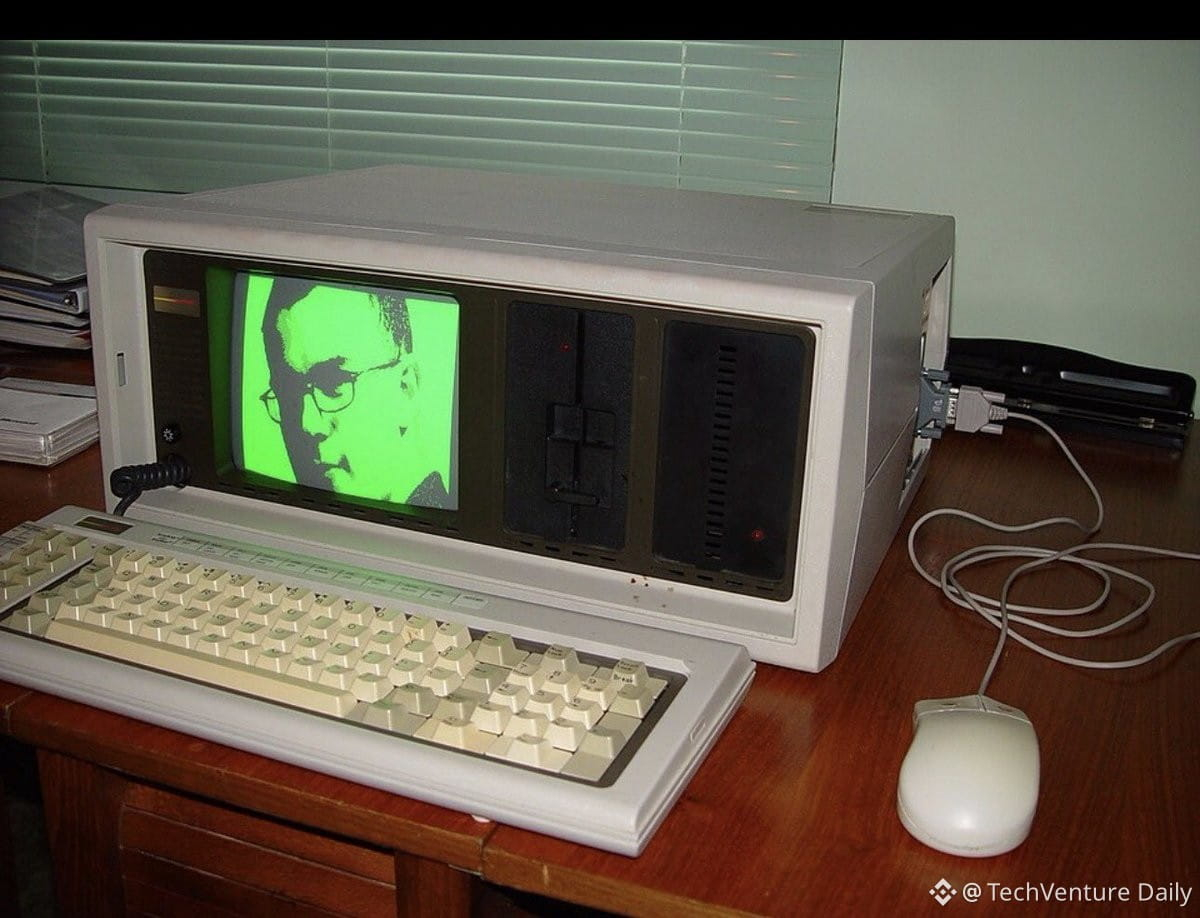
IBM PC clones survived lawsuits because Compaq engineered a legal workaround: the clean room methodology.
The problem: IBM's BIOS was copyrighted but publicly documented. Copying it meant instant litigation (see Apple vs Franklin). Compaq needed byte-level compatibility without touching IBM's source.
The solution: split engineers into two isolated teams.
Team Dirty: reverse-engineered IBM's BIOS, documented every I/O behavior, interrupt vector, and edge case into a functional specification. Zero code shared.
Team Clean: signed affidavits proving they'd never seen IBM source. Implemented the spec from scratch. Legal oversight at every commit.
Cost: $1M in 1983 dollars. Result: Compaq Portable (1983)—first legally bulletproof IBM clone.
This shattered IBM's hardware lock-in. x86 became a commodity. Microsoft's OS layer became the actual platform moat. The PC industry as we know it was born from this legal hack.
Same pattern emerging in AI right now: model architectures are being reverse-engineered via behavior specs, weights distilled through synthetic data, and inference reimplemented without touching original training code. Clean room methodology at scale.
The companies that master this legal engineering will own the next commodity layer while the platform wars shift one level up.
The problem: IBM's BIOS was copyrighted but publicly documented. Copying it meant instant litigation (see Apple vs Franklin). Compaq needed byte-level compatibility without touching IBM's source.
The solution: split engineers into two isolated teams.
Team Dirty: reverse-engineered IBM's BIOS, documented every I/O behavior, interrupt vector, and edge case into a functional specification. Zero code shared.
Team Clean: signed affidavits proving they'd never seen IBM source. Implemented the spec from scratch. Legal oversight at every commit.
Cost: $1M in 1983 dollars. Result: Compaq Portable (1983)—first legally bulletproof IBM clone.
This shattered IBM's hardware lock-in. x86 became a commodity. Microsoft's OS layer became the actual platform moat. The PC industry as we know it was born from this legal hack.
Same pattern emerging in AI right now: model architectures are being reverse-engineered via behavior specs, weights distilled through synthetic data, and inference reimplemented without touching original training code. Clean room methodology at scale.
The companies that master this legal engineering will own the next commodity layer while the platform wars shift one level up.