Agricultural commodities diverge as soybeans gain on China expectations while wheat faces supply pressure
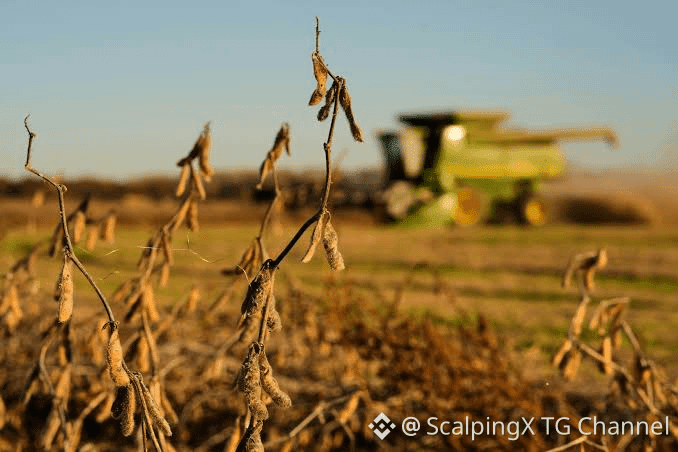
🌱 U.S. soybeans were a key outperformer during September 21–25, with November futures closing near 13.19 USD/bu, up 15.5 cents for the week. Support came mainly from expectations of stronger Chinese purchases following fresh trade signals, although the roughly 17 billion USD agricultural commitment still lacks a detailed product breakdown or shipment schedule.
📊 Positioning shows that speculators have already leaned heavily into this theme. Managed money holds a net long of around 281,000 soybean contracts, the highest level in 52 weeks, increasing the potential for a sharp reaction if upcoming purchase details differ from expectations.
🌾 Wheat moved in the opposite direction. SRW fell about 11 cents for the week, HRW lost more than 21 cents, and spring wheat declined nearly 28 cents. Russian and Ukrainian exports remain well below year-ago levels, but Russian grain is still reaching the market through Baltic routes, limiting the premium for a severe supply disruption.
🌽 Corn finished nearly flat as supportive and bearish factors offset each other. USDA has reduced its U.S. production outlook on weaker yields, while harvest progress remains ahead of average and Argentine supply continues moving into export channels.
☕ In soft commodities, Arabica remained under pressure as Brazil’s weather outlook improved and ICE inventories recovered from multi-year lows. Cocoa gained around 5.5% for the week, although the 2025/26 supply outlook still points toward a surplus, making the move look more like a recovery than a renewed shortage cycle.
🔎 Next week, attention turns to details on Chinese agricultural purchases and the USDA Grain Stocks report, which could determine whether the current soybean premium has enough fundamental support to persist.
#Commodities $SUSHI
🌱 U.S. soybeans were a key outperformer during September 21–25, with November futures closing near 13.19 USD/bu, up 15.5 cents for the week. Support came mainly from expectations of stronger Chinese purchases following fresh trade signals, although the roughly 17 billion USD agricultural commitment still lacks a detailed product breakdown or shipment schedule.
📊 Positioning shows that speculators have already leaned heavily into this theme. Managed money holds a net long of around 281,000 soybean contracts, the highest level in 52 weeks, increasing the potential for a sharp reaction if upcoming purchase details differ from expectations.
🌾 Wheat moved in the opposite direction. SRW fell about 11 cents for the week, HRW lost more than 21 cents, and spring wheat declined nearly 28 cents. Russian and Ukrainian exports remain well below year-ago levels, but Russian grain is still reaching the market through Baltic routes, limiting the premium for a severe supply disruption.
🌽 Corn finished nearly flat as supportive and bearish factors offset each other. USDA has reduced its U.S. production outlook on weaker yields, while harvest progress remains ahead of average and Argentine supply continues moving into export channels.
☕ In soft commodities, Arabica remained under pressure as Brazil’s weather outlook improved and ICE inventories recovered from multi-year lows. Cocoa gained around 5.5% for the week, although the 2025/26 supply outlook still points toward a surplus, making the move look more like a recovery than a renewed shortage cycle.
🔎 Next week, attention turns to details on Chinese agricultural purchases and the USDA Grain Stocks report, which could determine whether the current soybean premium has enough fundamental support to persist.
#Commodities $SUSHI