How STON.fi Cross-Chain Moves Assets from TRON to TON
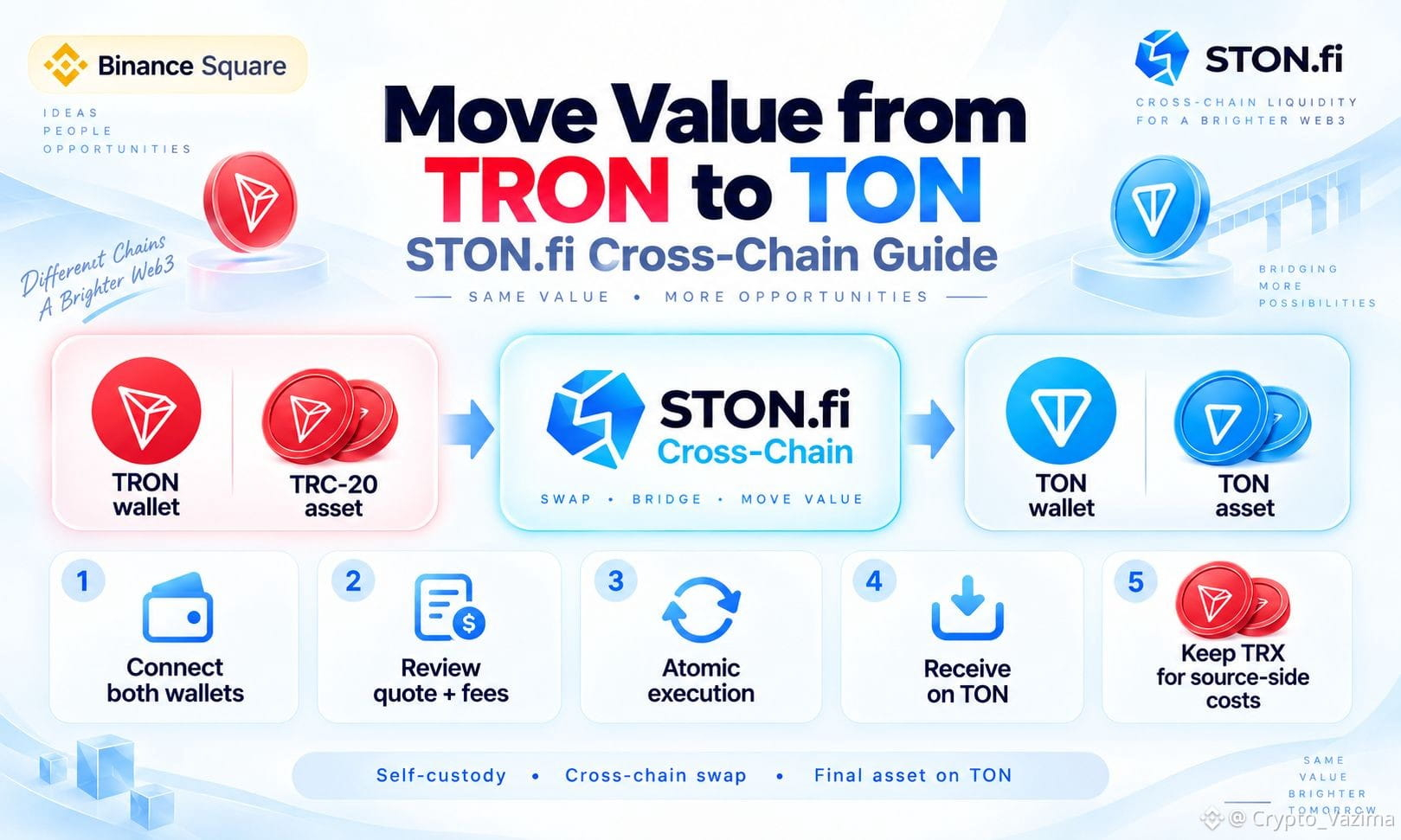
STON.fi supports atomic cross-chain swaps from TRON to TON through Omniston, so a TRON-side asset such as TRC-20 USDT can become a selected TON-side asset in one coordinated flow. That is different from a normal token transfer and different from parking funds on a centralized exchange.
🔥 Why a Direct Transfer Does Not Work
- A wallet transfer stays inside one chain.
- TRC-20 USDT and TON USDT share a ticker, but they are separate on-chain assets.
- Copying a TON address into a TRON transfer will not deliver the destination Jetton.
⚡ What Changes with STON.fi
Instead of deposit, convert, withdraw, or bridge then swap again, STON.fi treats the destination outcome as one route. You pick the source asset on TRON, the final asset on TON, and review the quote before signing.
🧠 How the Atomic Route Works
Omniston uses resolver liquidity and HTLC settlement. A hashlock and a timelock tie the TRON-side value to the TON-side value, so both legs complete or the protocol refunds according to its conditions.
🚀 Steps for a TRON to TON Swap
1. Prepare a TRON wallet with the source asset and a TON wallet for receipt.
2. Set source to TRON and destination to TON, then verify both assets.
3. Read the live route, output, and fees before you approve.
4. Keep TRX available for Bandwidth and Energy on the source side.
5. Check the TON wallet balance after execution.
💬 Why This Is Worth Watching
The interesting part is not just moving value. It is receiving the exact TON-side asset you wanted without assembling several independent operations yourself.
Would you use STON.fi to convert TRON USDT into TON USDT in one route? 👇
Share the check you never skip before signing a cross-chain quote.
Not investment advice - research on your own! 🚀
$GRAM @STONfi DEX
STON.fi supports atomic cross-chain swaps from TRON to TON through Omniston, so a TRON-side asset such as TRC-20 USDT can become a selected TON-side asset in one coordinated flow. That is different from a normal token transfer and different from parking funds on a centralized exchange.
🔥 Why a Direct Transfer Does Not Work
- A wallet transfer stays inside one chain.
- TRC-20 USDT and TON USDT share a ticker, but they are separate on-chain assets.
- Copying a TON address into a TRON transfer will not deliver the destination Jetton.
⚡ What Changes with STON.fi
Instead of deposit, convert, withdraw, or bridge then swap again, STON.fi treats the destination outcome as one route. You pick the source asset on TRON, the final asset on TON, and review the quote before signing.
🧠 How the Atomic Route Works
Omniston uses resolver liquidity and HTLC settlement. A hashlock and a timelock tie the TRON-side value to the TON-side value, so both legs complete or the protocol refunds according to its conditions.
🚀 Steps for a TRON to TON Swap
1. Prepare a TRON wallet with the source asset and a TON wallet for receipt.
2. Set source to TRON and destination to TON, then verify both assets.
3. Read the live route, output, and fees before you approve.
4. Keep TRX available for Bandwidth and Energy on the source side.
5. Check the TON wallet balance after execution.
💬 Why This Is Worth Watching
The interesting part is not just moving value. It is receiving the exact TON-side asset you wanted without assembling several independent operations yourself.
Would you use STON.fi to convert TRON USDT into TON USDT in one route? 👇
Share the check you never skip before signing a cross-chain quote.
Not investment advice - research on your own! 🚀
$GRAM @STONfi DEX