
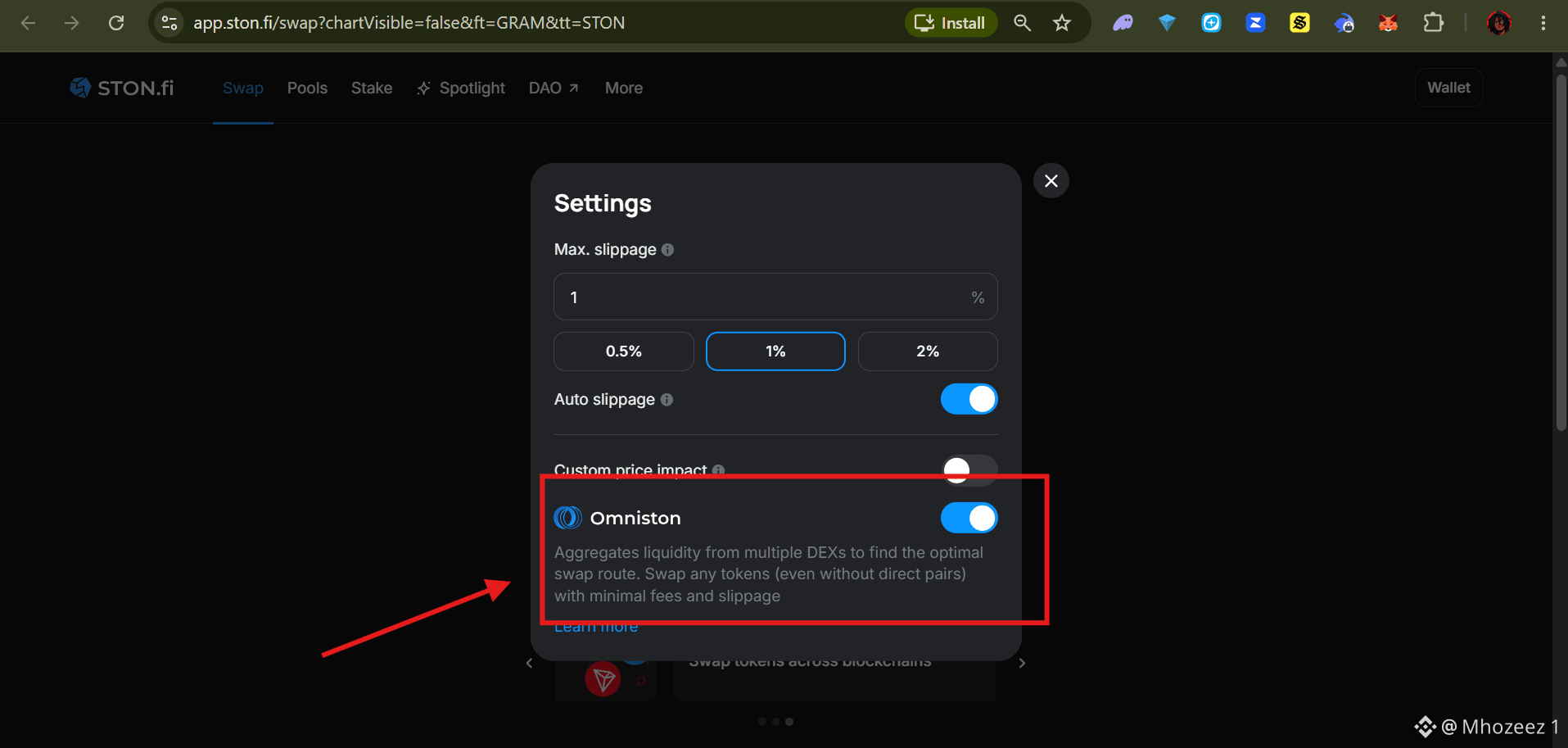
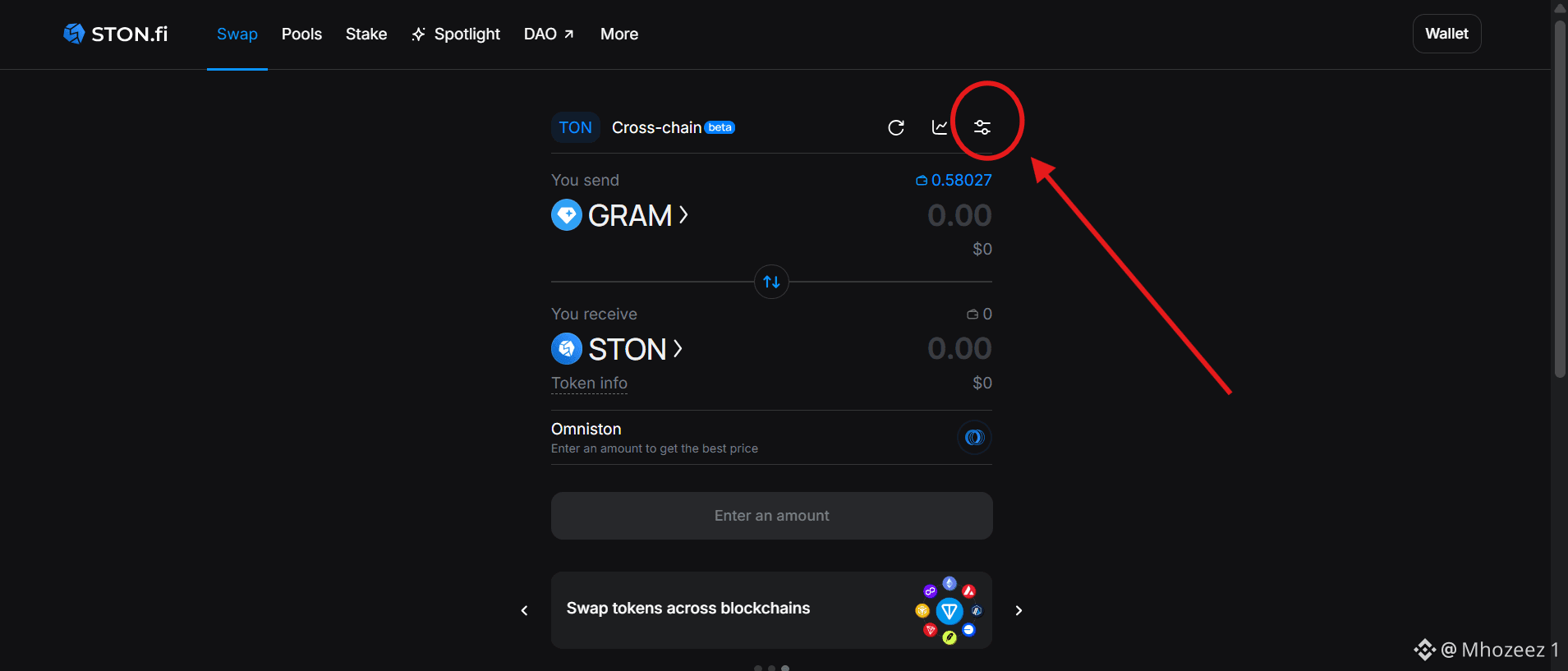
🚨WHY ONE TOKEN CAN HAVE DIFFERENT PRICINGS ACROSS MULTIPLE DEXs •••••••••••••••••••••• If you open two different DEXs like STONfi and DEDUST to check the same token pair, you'll often see two slightly different prices. The truth of the matter is that none of them are wrong. The prices youre seeing are simply reflecting according to each pools of the two DEXs. That is because TONs liquidity isn't in a single DEX, but rather spread across multiple DEXs with each of these DEXs running separate pools with separate reserves. A token pair might have decent liquidity on one platform and almost none on another, and each pool prices trades based only on what's inside it not on what any other pool offers as it price at a specific time. PRICE COMPARISMS AND CHOICE PICKS This is where most traders utilize the manual fix method in order to choose the best price without realizing it's inefficient because it's slow, and by the time you've checked the second platform, the first quote price may have already moved. THIS IS WHERE STONfi AGGREGATOR COMES IN A DEX aggregator exists to remove that manual method that people utilize to search for the best price by scanning through multiple connected liquidity sources at once including routes that split or hop across several pools and surfaces the best available result from what it's connected to. On STONfi, this feature is called OMNIston. It compares liquidity across connected TON sources, including that of STONfi's and other integrated DEXs, and routes your swap through whichever combination produces the best quoted output, including multi-hop paths a manual search would likely miss. $NEO $GRAM

Veröffentlichen
Haftungsausschluss: Enthält Meinungen von Drittanbietern. Keine Beratung. Binance AI wird ohne Gewähr bereitgestellt. Siehe AGB.