How STON.fi DAO Governance Links On-Chain Votes to Foundation Execution
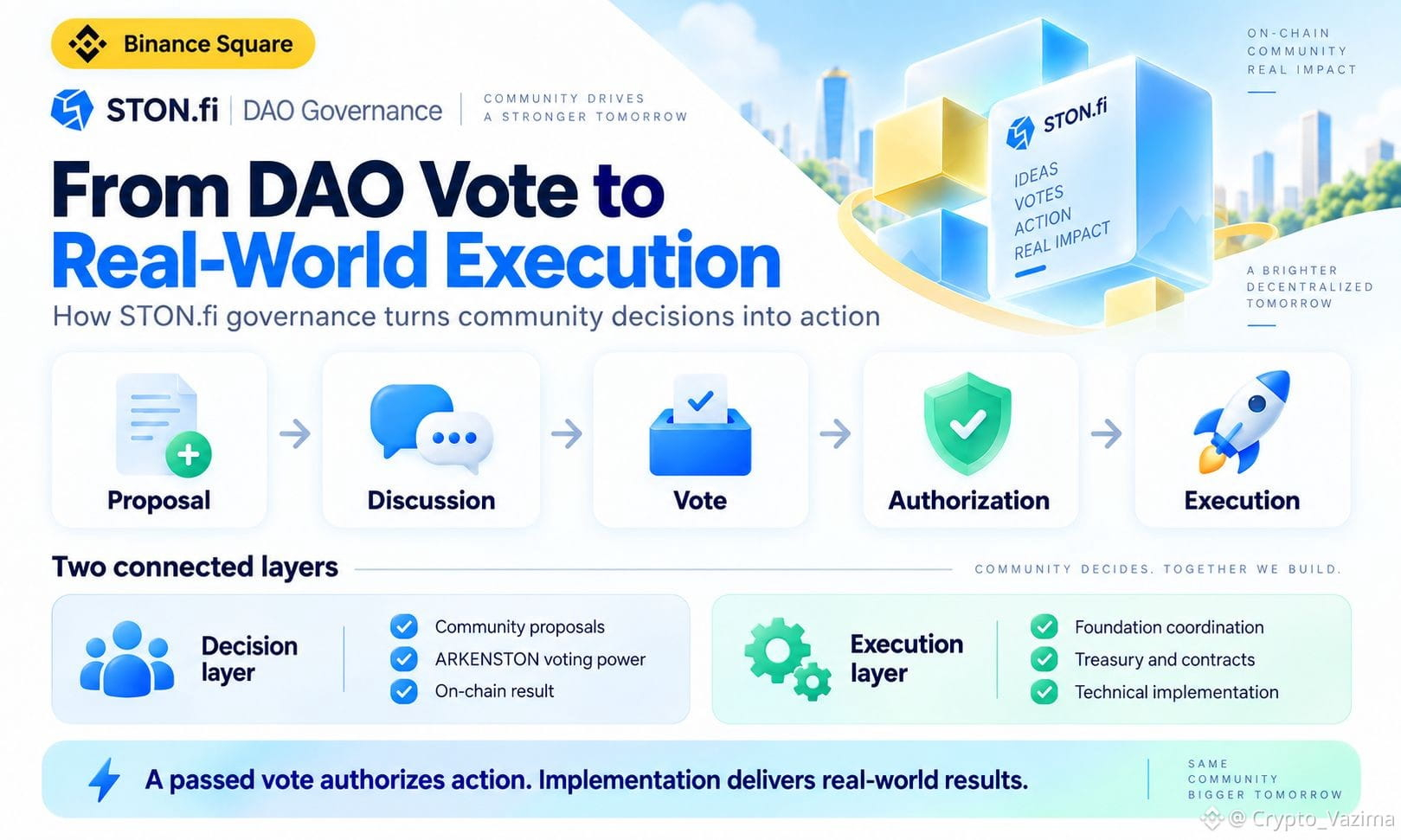
STON.fi DAO governance does not end when a proposal wins. Community members stake STON, vote with ARKENSTON, and authorize direction, while Ston Foundation coordinates the real-world work that votes cannot perform alone.
🔥 What the Two Governance Layers Do
- The DAO records proposals, discussion, quorum, and the on-chain result.
- Ston Foundation handles contracts, treasury work, deployments, and coordination.
- A passed vote is authorization. Implemented means the action actually happened.
🚀 How STON.fi Turns Staking into Votes
- STON is locked for 3 to 24 months to create ARKENSTON voting power.
- ARKENSTON is soulbound, so governance weight stays tied to the stake.
- Larger and longer locks can create more influence than a short, small stake.
- Unstaked STON does not give the same DAO voting power.
🧠 The Path After a Proposal Goes Live
1. A draft is published and the community gets 7 days to discuss it.
2. Eligible holders then vote For or Against for 14 days.
3. A 72-hour window can extend voting if quorum or the result shifts late.
4. Acceptance authorizes the scope. Execution still needs people and work.
5. Once that work is done, the proposal can be marked Implemented.
⚡ Why This Model Matters
A December 2025 vote made Ston Foundation the DAO's authorized representative because the DAO cannot sign every contract as a legal entity. The 2026 operational budget set a $2.5 million cap plus 4 million STON, with mandate limits and quarterly reporting. Timelocks plus legal or security checks can still pause execution.
The takeaway: a STON.fi vote is powerful, but the full story is mandate, limits, execution, and Implemented status.
Would you treat a STON.fi passed vote as finished, or wait for Implemented? 👇
Share the proposal type you find hardest to track after voting ends.
Not investment advice - research on your own! 🚀
$GRAM @STONfi DEX
STON.fi DAO governance does not end when a proposal wins. Community members stake STON, vote with ARKENSTON, and authorize direction, while Ston Foundation coordinates the real-world work that votes cannot perform alone.
🔥 What the Two Governance Layers Do
- The DAO records proposals, discussion, quorum, and the on-chain result.
- Ston Foundation handles contracts, treasury work, deployments, and coordination.
- A passed vote is authorization. Implemented means the action actually happened.
🚀 How STON.fi Turns Staking into Votes
- STON is locked for 3 to 24 months to create ARKENSTON voting power.
- ARKENSTON is soulbound, so governance weight stays tied to the stake.
- Larger and longer locks can create more influence than a short, small stake.
- Unstaked STON does not give the same DAO voting power.
🧠 The Path After a Proposal Goes Live
1. A draft is published and the community gets 7 days to discuss it.
2. Eligible holders then vote For or Against for 14 days.
3. A 72-hour window can extend voting if quorum or the result shifts late.
4. Acceptance authorizes the scope. Execution still needs people and work.
5. Once that work is done, the proposal can be marked Implemented.
⚡ Why This Model Matters
A December 2025 vote made Ston Foundation the DAO's authorized representative because the DAO cannot sign every contract as a legal entity. The 2026 operational budget set a $2.5 million cap plus 4 million STON, with mandate limits and quarterly reporting. Timelocks plus legal or security checks can still pause execution.
The takeaway: a STON.fi vote is powerful, but the full story is mandate, limits, execution, and Implemented status.
Would you treat a STON.fi passed vote as finished, or wait for Implemented? 👇
Share the proposal type you find hardest to track after voting ends.
Not investment advice - research on your own! 🚀
$GRAM @STONfi DEX