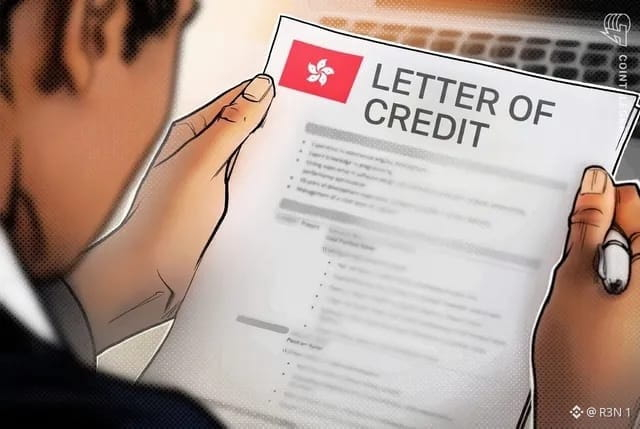
A retail banker with no authority over commercial credit facilities managed to authenticate $1.6 billion in fake letters of credit. That gap between his actual job and what he pulled off is the part worth sitting with.
Lam Chun-yin, 32, was a customer relationship manager at China Construction Bank (Asia), working in retail banking for individual customers, not commercial credit. Between April and June 2022 he took over $470,000 in USDT to falsely authenticate several standby letters of credit, including two forged collateral letters tied to more than $1.6 billion in claimed value, linked to transactions involving defunct insurtech Vesttoo. He pleaded guilty in Hong Kong's District Court and got four years, plus restitution of roughly HK$3.7 million, the full value of what he took.
What stands out to me is the leverage ratio here. Under $500,000 in crypto bribes unlocked access to a major bank's credibility, used to support fraud over 3,000 times that size. Less a story about a banker going rogue for money, more about how thin the verification layer was behind documents that size.
Worth being direct about the crypto angle here, since that's driving the headline. USDT wasn't incidental, it was the payment method, and the ICAC has flagged that corrupt networks are increasingly using stablecoins for this kind of transaction, fast, less visible than a bank wire, no correspondent bank asking questions.
The case isn't closed. The ICAC has outstanding warrants for others involved, and Lam faced a separate charge for using false instruments that the court left on file without prosecuting.
The open question is what those remaining warrants turn up, whether this was one banker exploiting a gap, or a wider network that used crypto specifically because it moved faster than the compliance checks built for traditional trade finance.
$BTC #BTC Price Analysis# $ETH #Meme Alpha#
Lam Chun-yin, 32, was a customer relationship manager at China Construction Bank (Asia), working in retail banking for individual customers, not commercial credit. Between April and June 2022 he took over $470,000 in USDT to falsely authenticate several standby letters of credit, including two forged collateral letters tied to more than $1.6 billion in claimed value, linked to transactions involving defunct insurtech Vesttoo. He pleaded guilty in Hong Kong's District Court and got four years, plus restitution of roughly HK$3.7 million, the full value of what he took.
What stands out to me is the leverage ratio here. Under $500,000 in crypto bribes unlocked access to a major bank's credibility, used to support fraud over 3,000 times that size. Less a story about a banker going rogue for money, more about how thin the verification layer was behind documents that size.
Worth being direct about the crypto angle here, since that's driving the headline. USDT wasn't incidental, it was the payment method, and the ICAC has flagged that corrupt networks are increasingly using stablecoins for this kind of transaction, fast, less visible than a bank wire, no correspondent bank asking questions.
The case isn't closed. The ICAC has outstanding warrants for others involved, and Lam faced a separate charge for using false instruments that the court left on file without prosecuting.
The open question is what those remaining warrants turn up, whether this was one banker exploiting a gap, or a wider network that used crypto specifically because it moved faster than the compliance checks built for traditional trade finance.
$BTC #BTC Price Analysis# $ETH #Meme Alpha#