
🌍 @PositiveMindsGlobalResults — @Binance Square Official
Saturday, September 19, 2026
U.S. SANCTIONS TARGET IRANIAN CRYPTO EXCHANGE
On September 17, the U.S. Treasury Department’s Office of Foreign Assets Control (OFAC) sanctioned BitBank, an Iranian cryptocurrency exchange associated with sanctioned financier Babak Zanjani.
According to Treasury, BitBank facilitated hundreds of millions of dollars in Bitcoin transfers to Iran’s Islamic Revolutionary Guard Corps (IRGC) between June and July. Treasury also said the exchange was involved in processing payments connected to Hormuz Safe Marine Services Authority.
OFAC also designated BitBank’s software developer, Pishtaz Simorgh Electronic Trade Company, along with three individuals linked to Zanjani’s network.
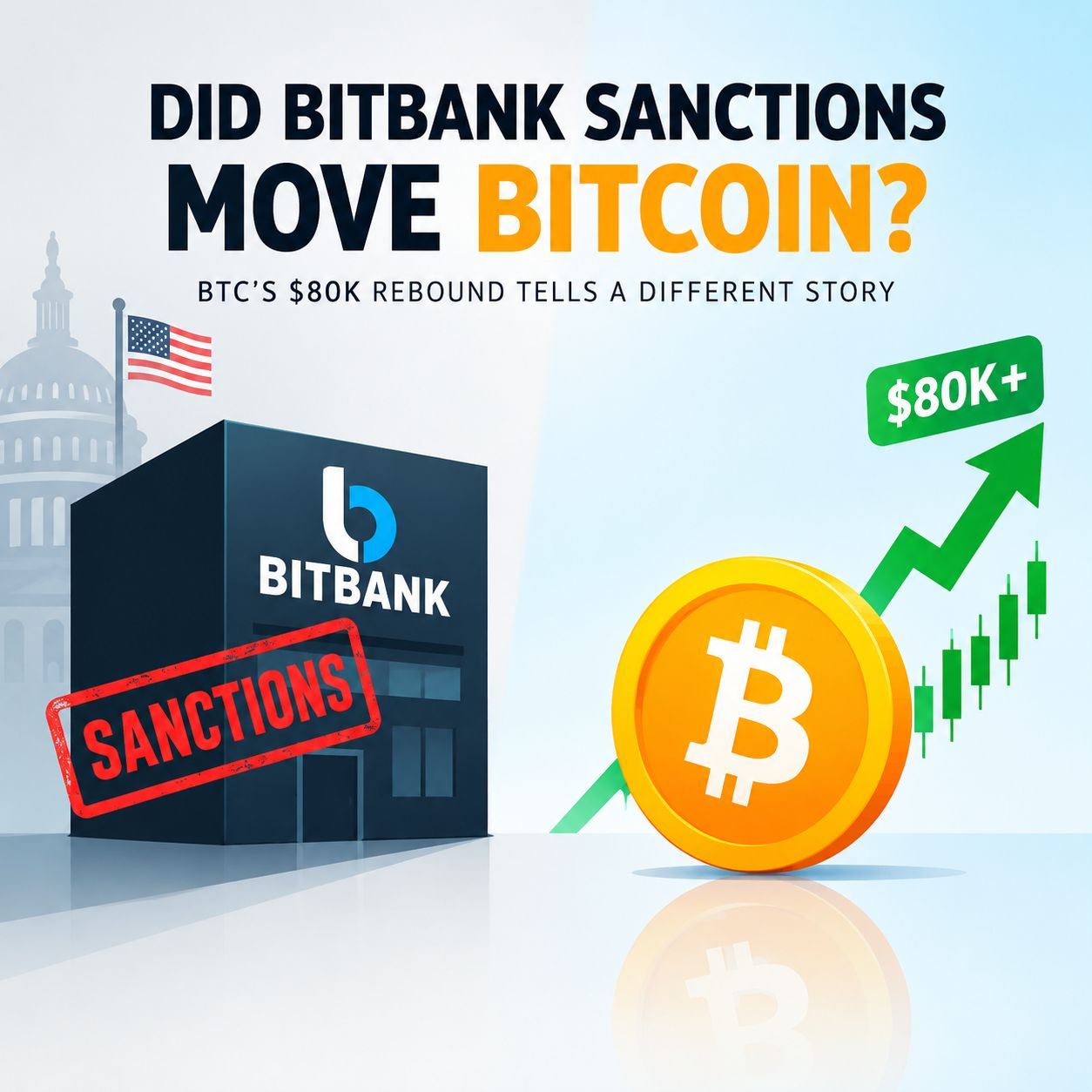
📊 BUT DID THE SANCTIONS TRIGGER BTC’S MOVE?
Bitcoin’s immediate price action tells a different story.
Rather than selling off sharply after the announcement, BTC rebounded above $80,000 on September 18, reaching approximately $80,587–$80,703 during U.S. trading.
The rally occurred alongside renewed demand for Bitcoin, improving risk sentiment and a rebound in U.S. spot Bitcoin ETF flows. Reported data showed approximately $159.5 million of net ETF inflows on September 17, with additional inflows reported for September 18.
That does not prove the BitBank sanctions had no market impact. However, the price response suggests traders did not interpret the action as a systemic threat to Bitcoin’s global market structure.
🔍 THE BIGGER ISSUE: COMPLIANCE RISK
The BitBank case highlights a broader regulatory trend: authorities are increasingly targeting exchanges, developers, intermediaries and financial networks, rather than focusing only on individual wallet addresses.
For crypto businesses, that could increase pressure around:
• KYC/AML controls
• Sanctions screening
• Transaction monitoring
• Counterparty risk management
• Blockchain analytics and tracing
₿ WHAT DOES IT MEAN FOR BITCOIN?
The key distinction is between Bitcoin’s protocol and the centralized businesses operating around it.
BitBank is an exchange. Its sanctions exposure does not mean Bitcoin itself has been sanctioned or that the Bitcoin network has been disrupted.
The case could still contribute to short-term volatility if additional exchanges or intermediaries face enforcement actions. But one sanctioned exchange does not automatically translate into a global BTC liquidity shock.
For now, the market appears more focused on ETF flows, Federal Reserve policy, Treasury yields, liquidity and broader risk sentiment than on BitBank alone.
📌 BOTTOM LINE: BitBank is an important regulatory development, but the available price action does not establish the sanctions as the cause of Bitcoin’s latest rally.
BTC’s move above $80K has shifted attention toward whether the cryptocurrency can maintain that psychological level and build sustained acceptance above it.
This article is for educational and informational purposes only and does not constitute financial, investment, trading or legal advice.
Cryptocurrency and financial markets are highly volatile and can react rapidly to monetary policy, inflation, geopolitical developments, energy prices, liquidity and changes in market sentiment.
Always conduct your own research (DYOR), assess your risk tolerance and consider your personal financial circumstances before making investment decisions.
#PositiveMindsGlobalResults #ThinkPositiveGlobal #BinanceSquare #BreakingNews #Bitcoin #BTC #Crypto #CryptoMarket #Macro #USMarkets #FederalReserve #Fed #InterestRates #TreasuryYields #WallStreet #Trading #BNB #BNBChain #Altcoins #BNBPrice