Agricultural markets diverge as cocoa tumbles while soybeans hold firm
🌾 Agricultural markets showed mixed performance during the week of September 14–18, with U.S. soybeans still posting a weekly gain while corn and wheat came under pressure from faster harvest progress and fund positioning adjustments.
🌱 Soybeans continued to receive support from Chinese demand, with around 1 million tonnes of U.S. supplies purchased during the week and another 111,000 tonnes reported by the USDA on September 18. Despite a pullback in the final session, the market continues to benefit from the seasonal window before Brazil’s new crop becomes available.
🌽 Corn faced pressure as the U.S. harvest reached around 8% of planted area, ahead of the five-year average. Wheat remained weaker as funds reduced exposure while competitively priced Black Sea supplies continued to limit the market’s response to slower exports from Russia and Ukraine.
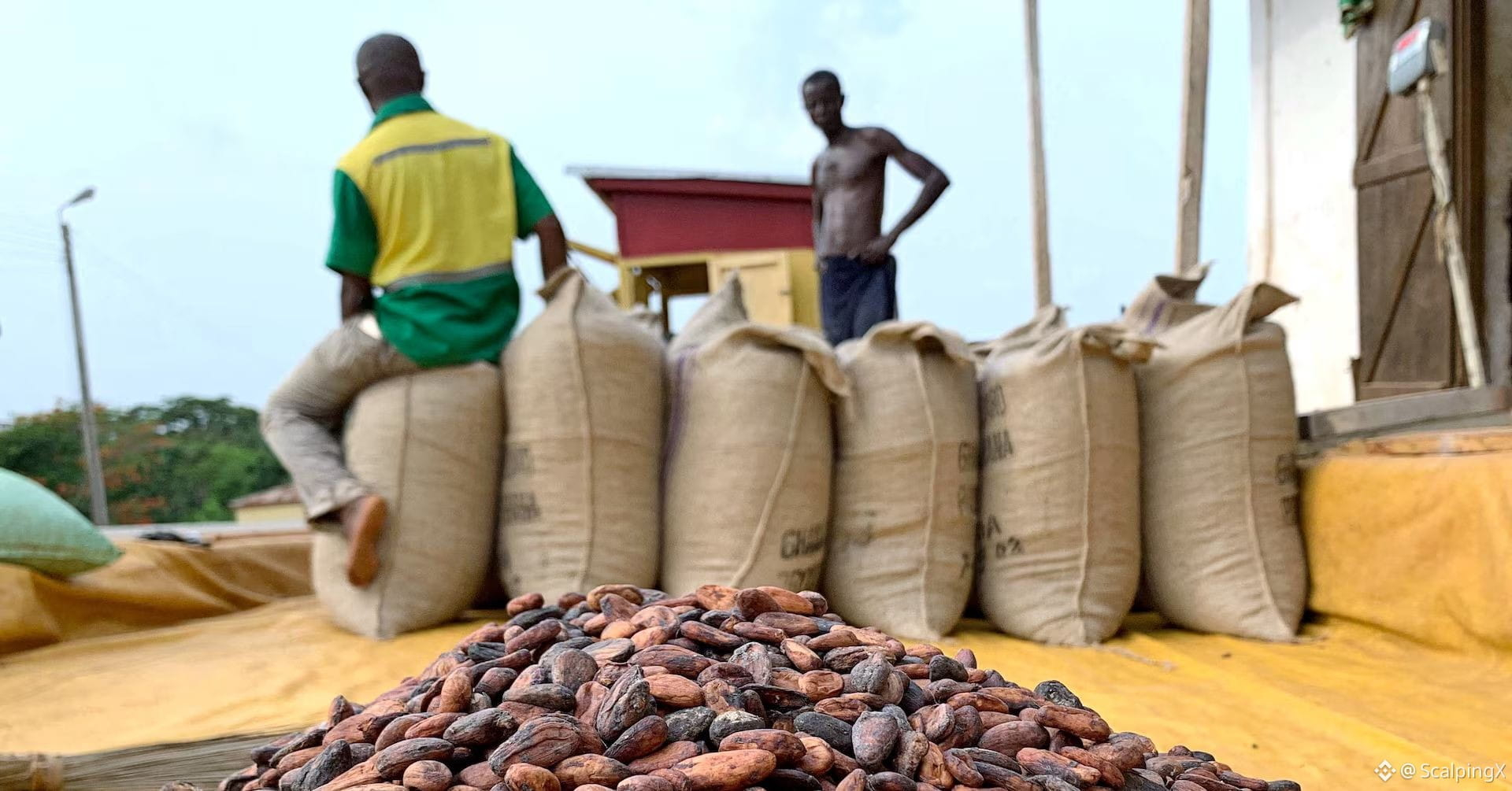
🍫 Cocoa recorded the sharpest move, with the ICE December contract falling 7.7% in the final session to around $5,330 per tonne. Alongside technical pressure, financial strains within Ghana’s cocoa purchasing chain continue to add uncertainty to the market.
☕ Coffee also had a weak week as favorable Brazilian weather and an improving crop outlook weighed on prices before a late-week rebound. Sugar remained under pressure near multi-week lows as weaker crude oil reduced the incentive to divert more cane toward ethanol production.
🌴 Malaysian palm oil declined on Friday but still gained around 1.7% for the week. Going into the new week, markets will continue to watch U.S. harvest progress, Chinese soybean demand, Brazilian weather conditions, and Black Sea supply developments.
#Agriculture $BTC $ETH $SOL
🌾 Agricultural markets showed mixed performance during the week of September 14–18, with U.S. soybeans still posting a weekly gain while corn and wheat came under pressure from faster harvest progress and fund positioning adjustments.
🌱 Soybeans continued to receive support from Chinese demand, with around 1 million tonnes of U.S. supplies purchased during the week and another 111,000 tonnes reported by the USDA on September 18. Despite a pullback in the final session, the market continues to benefit from the seasonal window before Brazil’s new crop becomes available.
🌽 Corn faced pressure as the U.S. harvest reached around 8% of planted area, ahead of the five-year average. Wheat remained weaker as funds reduced exposure while competitively priced Black Sea supplies continued to limit the market’s response to slower exports from Russia and Ukraine.
🍫 Cocoa recorded the sharpest move, with the ICE December contract falling 7.7% in the final session to around $5,330 per tonne. Alongside technical pressure, financial strains within Ghana’s cocoa purchasing chain continue to add uncertainty to the market.
☕ Coffee also had a weak week as favorable Brazilian weather and an improving crop outlook weighed on prices before a late-week rebound. Sugar remained under pressure near multi-week lows as weaker crude oil reduced the incentive to divert more cane toward ethanol production.
🌴 Malaysian palm oil declined on Friday but still gained around 1.7% for the week. Going into the new week, markets will continue to watch U.S. harvest progress, Chinese soybean demand, Brazilian weather conditions, and Black Sea supply developments.
#Agriculture $BTC $ETH $SOL