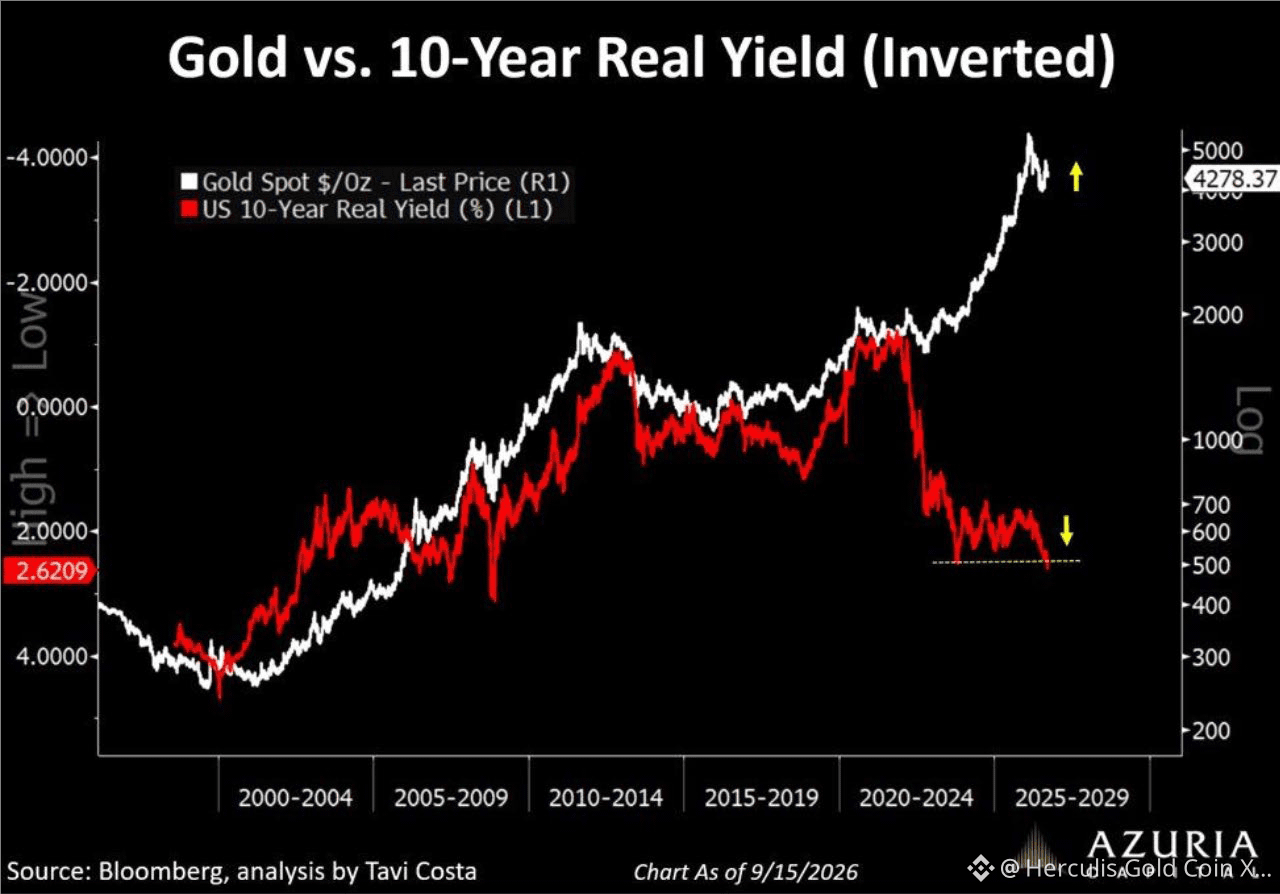
For decades, the rule was simple: rising real rates meant falling gold prices. This relationship worked because Treasuries served as the ultimate collateral—politically neutral and financially liquid. Since the freezing of Russian reserves in 2022, that neutrality has vanished. A dollar-denominated asset is no longer just a claim on the U.S.; it is also a claim subject to U.S. jurisdiction.
Gold is therefore no longer purchased solely as a hedge against inflation. It is acquired as collateral, without sanctions risk. This is why gold can rise alongside real interest rates. It is not a correlation anomaly. It is a revaluation of the political risk embedded in foreign exchange reserves.
And no one understands this shift better than Beijing. China’s officially reported holdings of Treasuries fell to $618 billion in July, their lowest level since August 2008, down from more than $1,300 billion at their peak in November 2013.
China is not engaging in a dramatic sell-off, as it has no interest in collapsing the asset it is divesting. It is orchestrating a slow, disciplined, and strategic shift toward gold, agency bonds, certain real assets, and its own financial ecosystem. Investors should follow suit.
China is not betting on the sudden collapse of the U.S.; it is protecting itself against the gradual erosion of the U.S.’s privilege. It isn’t selling a price. It’s selling a dependency.
Gold is therefore no longer purchased solely as a hedge against inflation. It is acquired as collateral, without sanctions risk. This is why gold can rise alongside real interest rates. It is not a correlation anomaly. It is a revaluation of the political risk embedded in foreign exchange reserves.
And no one understands this shift better than Beijing. China’s officially reported holdings of Treasuries fell to $618 billion in July, their lowest level since August 2008, down from more than $1,300 billion at their peak in November 2013.
China is not engaging in a dramatic sell-off, as it has no interest in collapsing the asset it is divesting. It is orchestrating a slow, disciplined, and strategic shift toward gold, agency bonds, certain real assets, and its own financial ecosystem. Investors should follow suit.
China is not betting on the sudden collapse of the U.S.; it is protecting itself against the gradual erosion of the U.S.’s privilege. It isn’t selling a price. It’s selling a dependency.