JPMorgan just admitted it can't model this war anymore, and the reason why is more interesting than the headline itself.
"For the first time since the start of the Iran conflict, we don't have a baseline view," said Natasha Kaneva, JPMorgan's head of global commodities strategy. "We simply don't know how to model the endgame." Forecasting uncertainty is normal for a bank's commodities desk. Publicly abandoning the attempt is not.
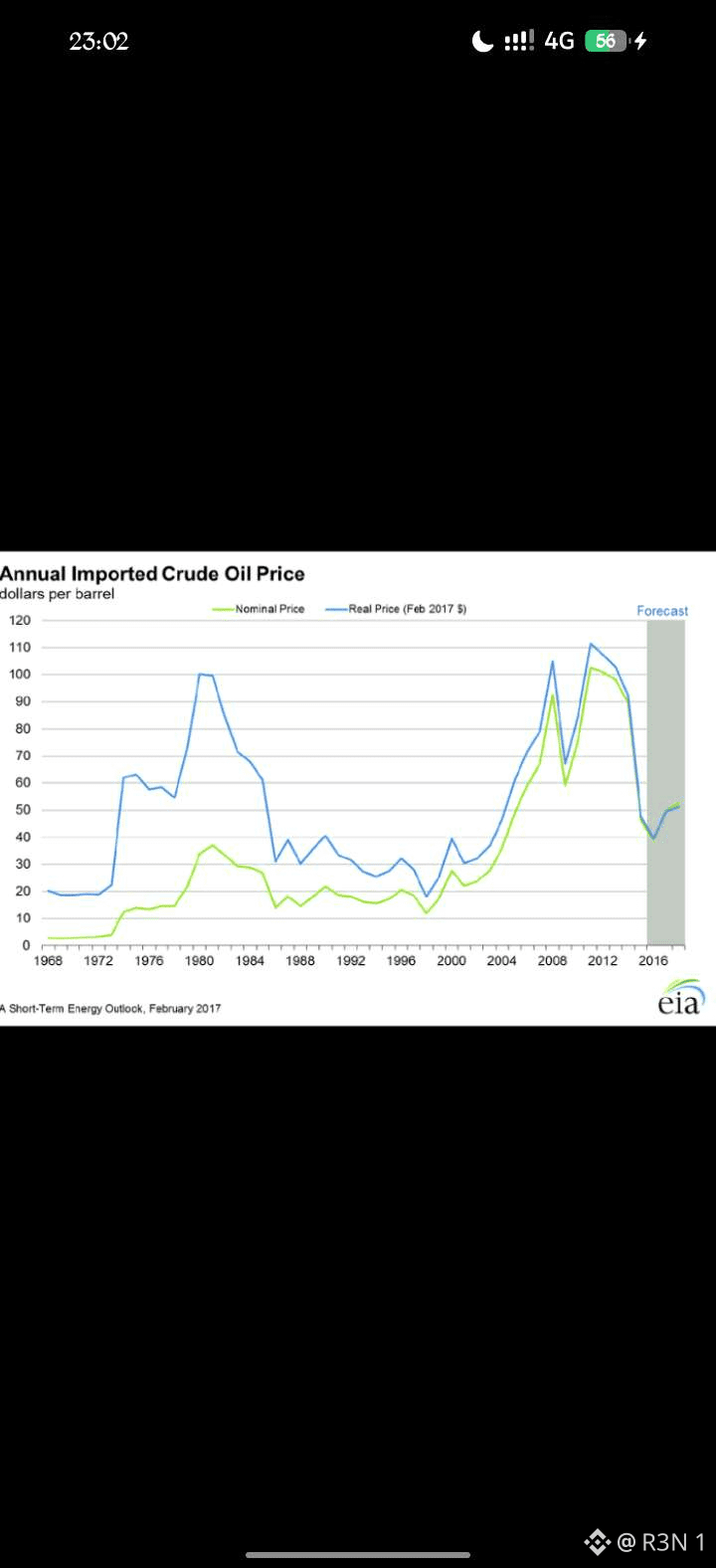
Here's what broke their model. JPMorgan built its forecast around economic red lines they assumed Trump wouldn't let the US cross, oil above $100, gas near $5 a gallon, 10-year Treasury yields above 5%. Six months in, all three have been crossed. Brent's trading near $105, touched close to $110 this week, well above JPMorgan's own fair value estimate of $90. The lines meant to force a deal got crossed, and the deal still hasn't happened.
What stands out to me is the inventory data underneath this. JPMorgan projected a 1.4 to 1.6 billion barrel drawdown in global stocks. Actual drawdown has been roughly 555 million barrels, about a third of forecast. The market hasn't drained the way the bank expected, it's rebalanced mostly through demand destruction, global oil demand running over 4 million barrels per day below last year's levels since March.
That's the real reason prices haven't spiraled further. Deep inventories in China, Europe, Japan, and South Korea are acting as a buffer, and JPMorgan itself said there's still enough dry powder to keep prices contained "for now," language doing a lot of work in that sentence.
Worth being precise about the scenarios the bank is still willing to model, even without a baseline. If the war drags on indefinitely, Kaneva estimates oil stabilizes around $87. If it ends, the estimate drops to $64. The gap between those two numbers is the entire trade here, and JPMorgan is saying it no longer has a view on which one wins.
$BTC #Meme Alpha# #BTC Price Analysis#
"For the first time since the start of the Iran conflict, we don't have a baseline view," said Natasha Kaneva, JPMorgan's head of global commodities strategy. "We simply don't know how to model the endgame." Forecasting uncertainty is normal for a bank's commodities desk. Publicly abandoning the attempt is not.
Here's what broke their model. JPMorgan built its forecast around economic red lines they assumed Trump wouldn't let the US cross, oil above $100, gas near $5 a gallon, 10-year Treasury yields above 5%. Six months in, all three have been crossed. Brent's trading near $105, touched close to $110 this week, well above JPMorgan's own fair value estimate of $90. The lines meant to force a deal got crossed, and the deal still hasn't happened.
What stands out to me is the inventory data underneath this. JPMorgan projected a 1.4 to 1.6 billion barrel drawdown in global stocks. Actual drawdown has been roughly 555 million barrels, about a third of forecast. The market hasn't drained the way the bank expected, it's rebalanced mostly through demand destruction, global oil demand running over 4 million barrels per day below last year's levels since March.
That's the real reason prices haven't spiraled further. Deep inventories in China, Europe, Japan, and South Korea are acting as a buffer, and JPMorgan itself said there's still enough dry powder to keep prices contained "for now," language doing a lot of work in that sentence.
Worth being precise about the scenarios the bank is still willing to model, even without a baseline. If the war drags on indefinitely, Kaneva estimates oil stabilizes around $87. If it ends, the estimate drops to $64. The gap between those two numbers is the entire trade here, and JPMorgan is saying it no longer has a view on which one wins.
$BTC #Meme Alpha# #BTC Price Analysis#