
The oil market is getting hit from both sides — production and transportation.
Since the U.S.-Iran war began on February 28, 2026, tanker shipping costs have exploded as vessels face higher security risks, insurance costs and major disruptions around the Strait of Hormuz. Traffic through the waterway has fallen by more than 80%, while tanker rates have reached record levels.
And the market is putting a huge number on that stress.
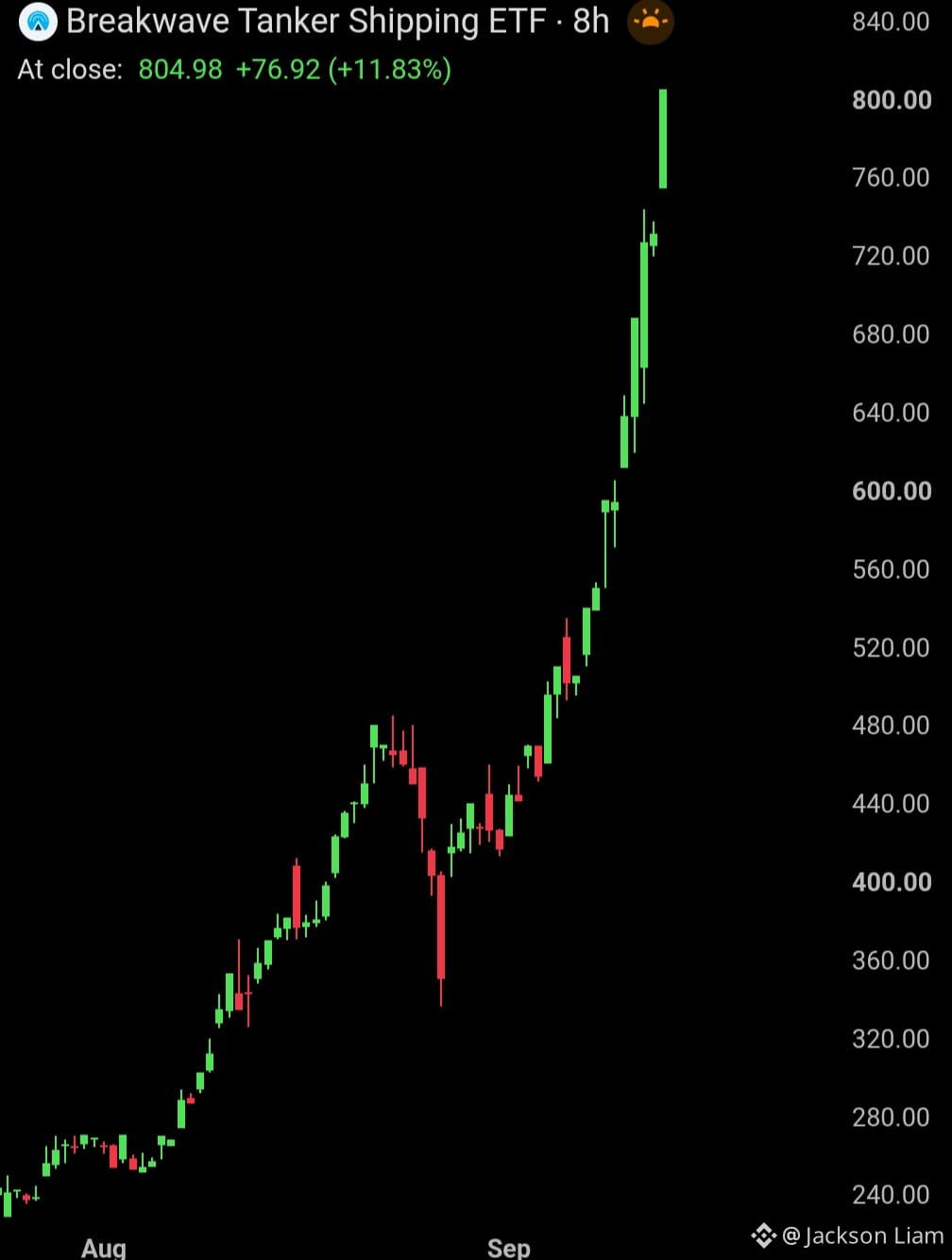
$BWET, the Breakwave Tanker Shipping ETF, is up roughly 1,300% since the war began, with another 10% move in pre-market trading today.
Think about what that means.
It is no longer just about the price of crude oil.
The cost of getting that oil from the producer to the buyer is becoming a major part of the story. War-risk premiums and insurance costs have jumped sharply, while fewer ships are willing or able to move through the region.
That creates a dangerous feedback loop:
Higher risk → fewer available tankers → higher freight rates → more expensive oil transportation → higher pressure on the entire energy supply chain.
And with Hormuz still under heavy pressure, this problem could remain bigger than a one-day market shock.
**Oil isn't just becoming more expensive to produce.
It's becoming dramatically more expensive to move.**
The big question now is: **how high can energy and shipping costs go if the disruption continues?**
Since the U.S.-Iran war began on February 28, 2026, tanker shipping costs have exploded as vessels face higher security risks, insurance costs and major disruptions around the Strait of Hormuz. Traffic through the waterway has fallen by more than 80%, while tanker rates have reached record levels.
And the market is putting a huge number on that stress.
$BWET, the Breakwave Tanker Shipping ETF, is up roughly 1,300% since the war began, with another 10% move in pre-market trading today.
Think about what that means.
It is no longer just about the price of crude oil.
The cost of getting that oil from the producer to the buyer is becoming a major part of the story. War-risk premiums and insurance costs have jumped sharply, while fewer ships are willing or able to move through the region.
That creates a dangerous feedback loop:
Higher risk → fewer available tankers → higher freight rates → more expensive oil transportation → higher pressure on the entire energy supply chain.
And with Hormuz still under heavy pressure, this problem could remain bigger than a one-day market shock.
**Oil isn't just becoming more expensive to produce.
It's becoming dramatically more expensive to move.**
The big question now is: **how high can energy and shipping costs go if the disruption continues?**