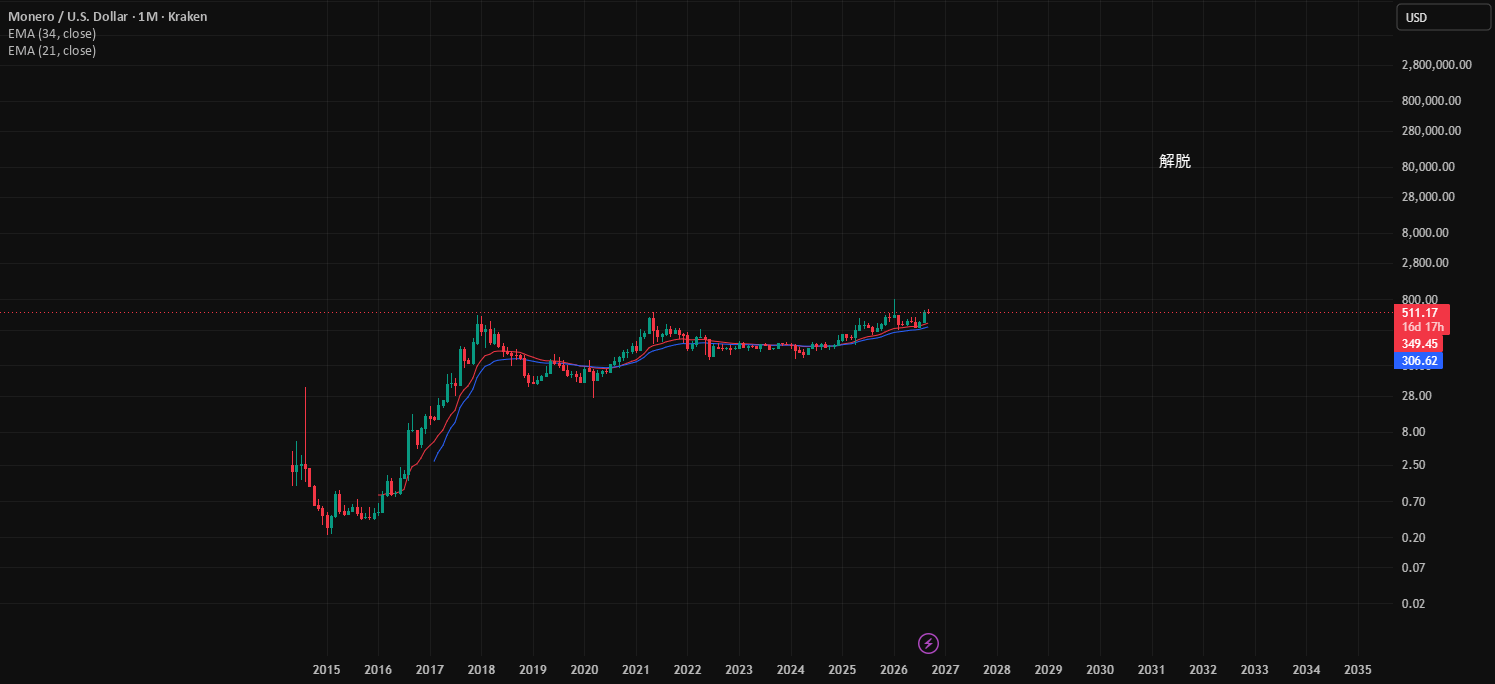

Personal investment thesis and conditions for validity — 14 September 2026
I see Monero as a leading candidate for a monetary revaluation during a period of systemic disruption. My conviction is that markets underestimate the value of being able to hold and transfer an asset without depending on an intermediary’s permission or the stability of a particular monetary order. Under certain conditions, this flexibility could become valuable enough to make XMR one of the decades to come best-performing investments.
A hypothesis of systemic disruption
My starting hypothesis is that the economic, political and social resources sustaining major state structures are under increasing strain. Relatively linear projections of the future seem to underestimate the possibility of rapid regime changes: sovereign debt crises, devaluations, capital controls, military conflict and fragmentation of trade. This is my macroeconomic premise, not a demonstrated collapse or a certain timetable.
In this setting, the risk to wealth extends beyond falling prices. An asset can remain legally owned and retain a quoted price while becoming unusable for its owner. The ability to sell it, move the proceeds or pay a counterparty then becomes an economic property distinct from its stated value.
Privacy is the visible surface
To me, presenting Monero primarily as a tool against mass surveillance remains a surface-level, “normie” reading of what could be at stake. Privacy matters, but the potential issue goes beyond personal privacy: it concerns the continuity of economic agency when monetary systems compete, close themselves off or become disorganized.
What I seek is the ability to maintain an accessible reserve and settle an exchange between parties that no longer share the same infrastructure of trust. Privacy supports this function by reducing participants’ exposure. It forms part of a broader autonomy combining self-custody, mobility, neutrality and censorship resistance.