Exact Input vs Exact Output on STON.fi: Which Side of the Swap You Lock First
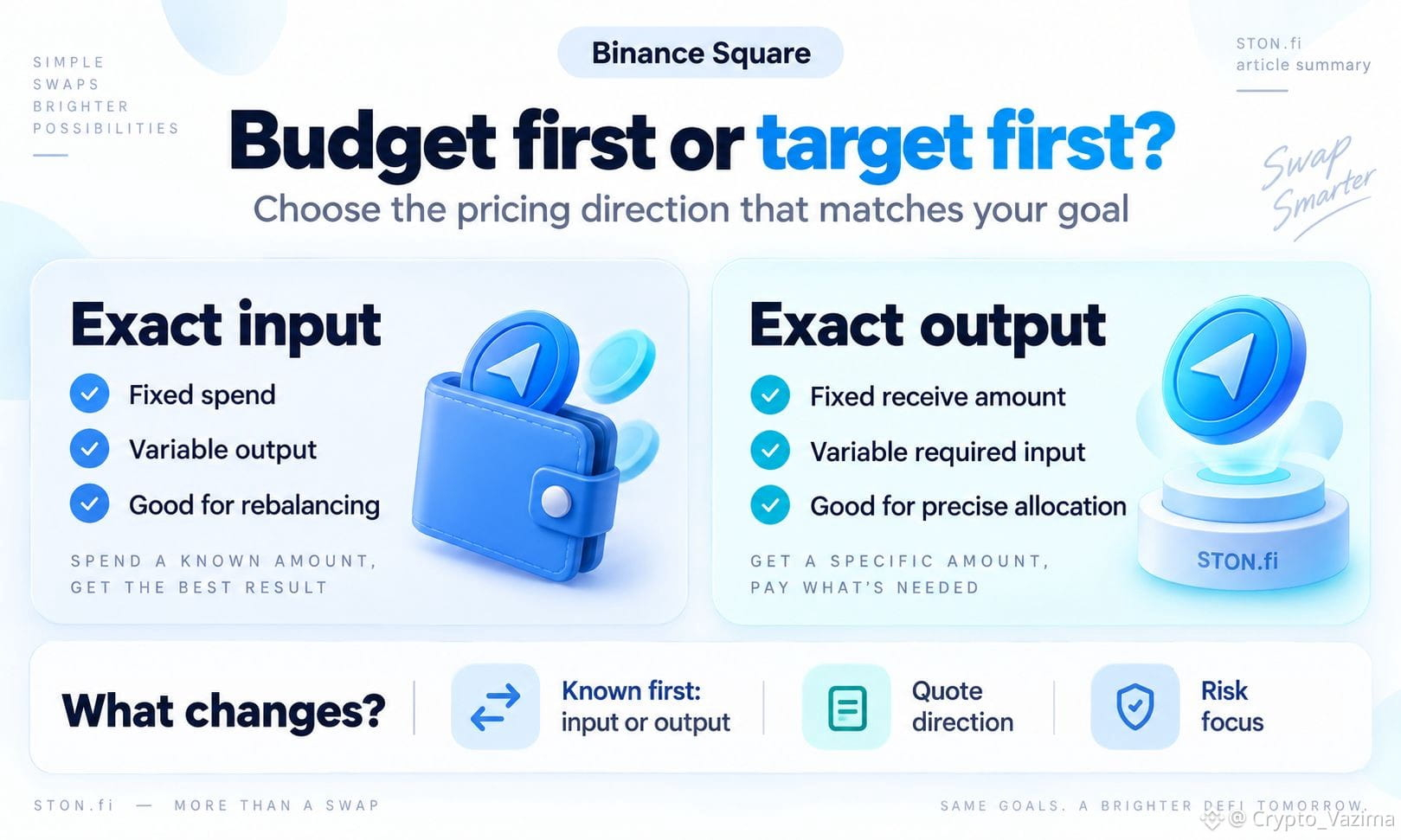
STON.fi can price a trade from the spend side or the receive side. Exact input locks your budget and estimates output. Exact output locks a target quantity and estimates the TON or token input required.
🔥 Two ways to start the same STON.fi swap
- Input-first thinking fits a fixed wallet amount, such as spending 10 TON.
- Output-first thinking fits a fixed target, such as needing 1,000 destination tokens.
- The market can be identical. The quote engine simply solves for a different unknown.
🚀 How STON.fi turns that choice into a quote
- Standard swap simulation takes offerUnits and returns expected output plus minAskUnits.
- Reverse swap simulation calculates the input needed to receive a specified amount.
- When the swap is built, DEX v2 uses offerAmount for what you send and minAskAmount as the floor on what you accept.
🧠 What actually gets signed
A reverse simulation is pricing help, not proof of a completely separate on-chain exact-output method. STON.fi first answers the quote question, then maps the result into the documented offer-plus-minimum-output execution fields.
⚡ Slippage still sits between quote and fill
- Do not treat exact as a frozen price.
- Recheck sending asset, receiving asset, expected amounts and the protection number.
- Compare routes with one side fixed: same input versus output, or same output versus required input.
My take is simple. Decide which quantity cannot move for your goal, then inspect the other side and the minimum-output guard before you sign.
Would you rather lock spend or lock received tokens on STON.fi? 👇
Share the last quote field you double-checked before confirming.
Not investment advice - research on your own! 🚀
$GRAM @STONfi DEX
STON.fi can price a trade from the spend side or the receive side. Exact input locks your budget and estimates output. Exact output locks a target quantity and estimates the TON or token input required.
🔥 Two ways to start the same STON.fi swap
- Input-first thinking fits a fixed wallet amount, such as spending 10 TON.
- Output-first thinking fits a fixed target, such as needing 1,000 destination tokens.
- The market can be identical. The quote engine simply solves for a different unknown.
🚀 How STON.fi turns that choice into a quote
- Standard swap simulation takes offerUnits and returns expected output plus minAskUnits.
- Reverse swap simulation calculates the input needed to receive a specified amount.
- When the swap is built, DEX v2 uses offerAmount for what you send and minAskAmount as the floor on what you accept.
🧠 What actually gets signed
A reverse simulation is pricing help, not proof of a completely separate on-chain exact-output method. STON.fi first answers the quote question, then maps the result into the documented offer-plus-minimum-output execution fields.
⚡ Slippage still sits between quote and fill
- Do not treat exact as a frozen price.
- Recheck sending asset, receiving asset, expected amounts and the protection number.
- Compare routes with one side fixed: same input versus output, or same output versus required input.
My take is simple. Decide which quantity cannot move for your goal, then inspect the other side and the minimum-output guard before you sign.
Would you rather lock spend or lock received tokens on STON.fi? 👇
Share the last quote field you double-checked before confirming.
Not investment advice - research on your own! 🚀
$GRAM @STONfi DEX