

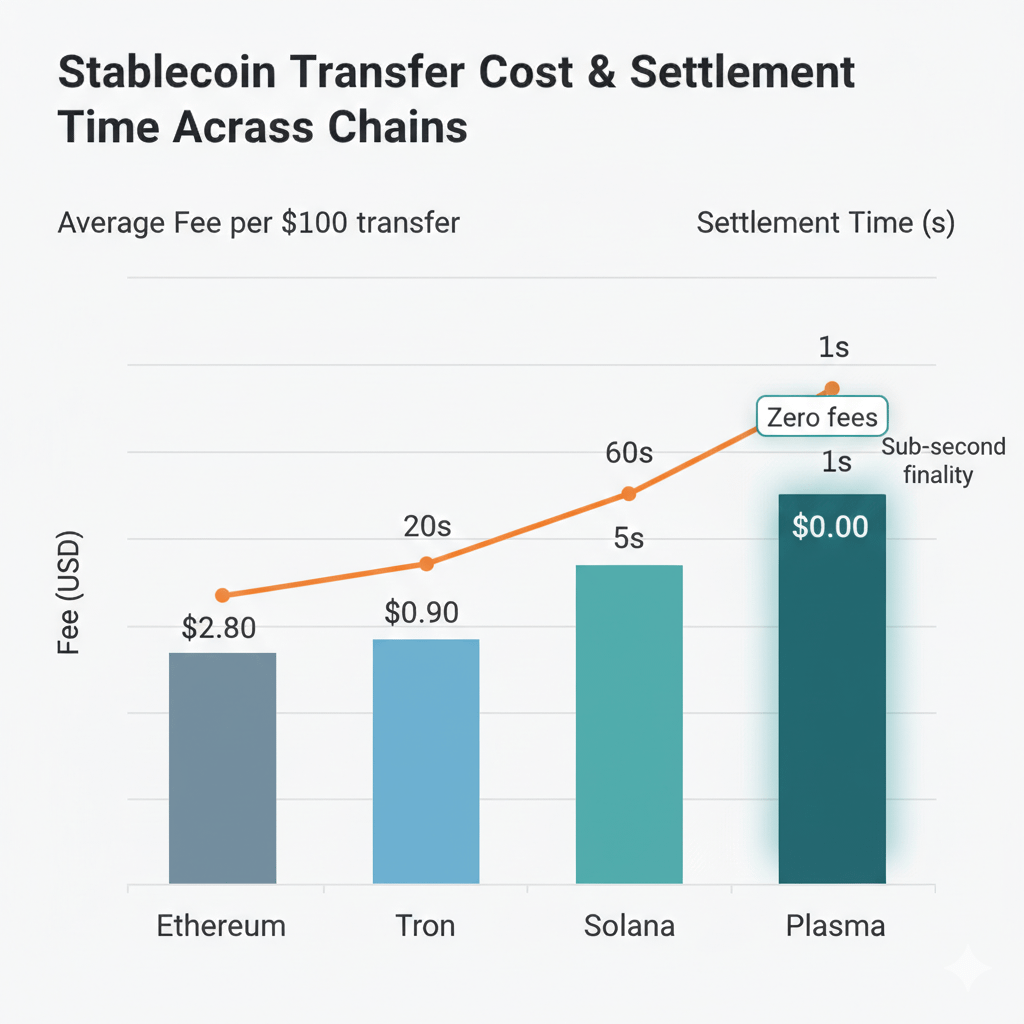
When you actually read the discussions around Plasma lately, a clear pattern shows up: most blockchains talk about transactions or DeFi TVL; Plasma talks about payments as rails, predictable settlement, and real economic flows moving through a network that was designed for money, not just code.
None of this starts with hype. It starts with the realization that stablecoins like USDT aren’t a “feature” — they’re the digital form of money that people use when everything else falters or slows down. But on most networks, sending that same stablecoin is still expensive, clunky, or unpredictable. Plasma changes that by building a chain where fee-less stablecoin moves are less of a gimmick and more of a protocol-level default.
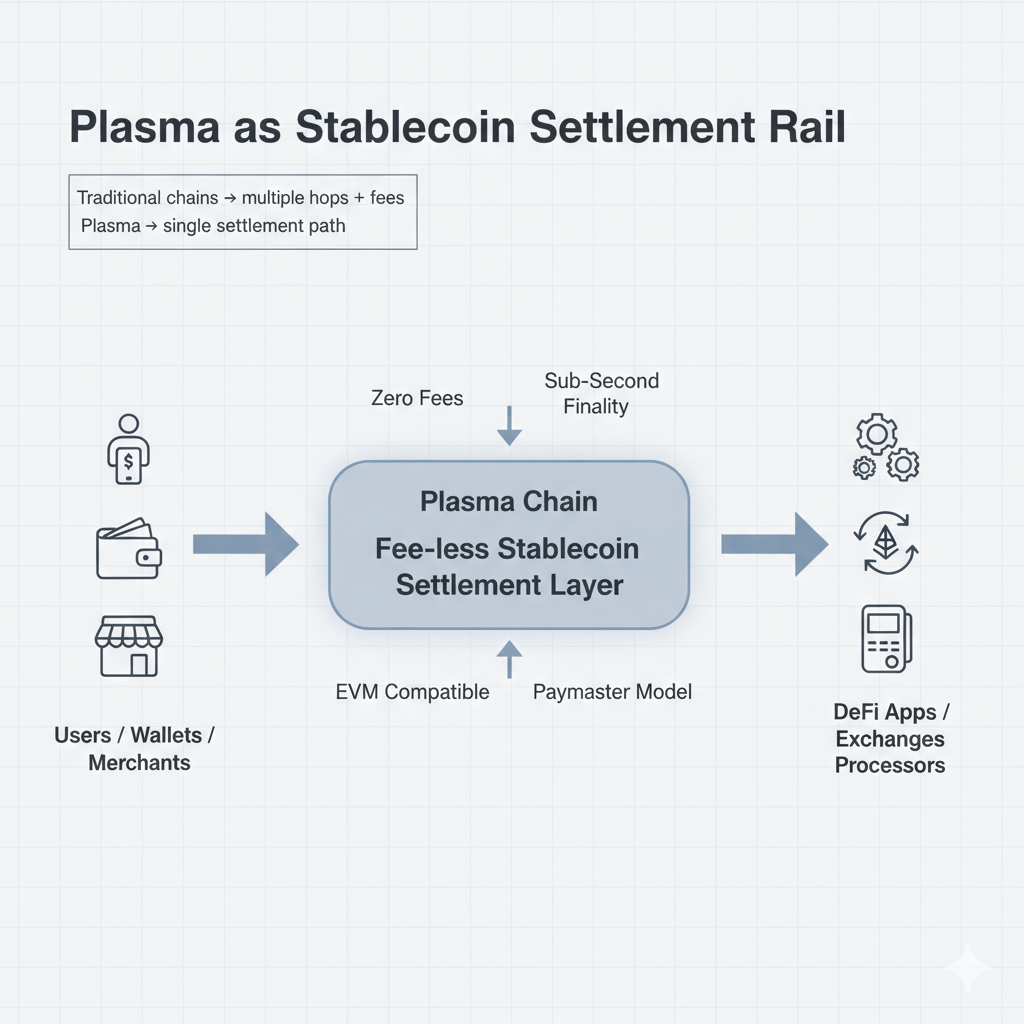
Why Plasma’s Foundation Is Not Like Other Layer-1s
Most early chains were built on the promise of smart contract universality. Plasma was built on a different assumption: stable value movement has to be usable, not just possible. That means:
Zero fees on core stablecoin transfers due to an internal paymaster mechanism.
Consensus engineered for sub-second finality — not just “fast for crypto,” but competitive with traditional rails.
EVM compatibility so developers don’t have to rewrite tooling to build on it.
This isn’t an optimization on top of an existing stack. It’s a rethinking of why a chain should exist in the first place. Cas and others remark that this flips the usual sequence on its head — it’s not “blockchain first, payments later.” It’s “payments first, everything else optional.”
The Argument Many Miss: It’s Not Just About Transfers
What makes Plasma structurally different is its implicit message: settlement unpredictability is the hidden barrier to real adoption. Fees that swing wildly, the need to hold a separate native token just to send value, and latency under load — these aren’t features developers want to explain to real users. They’re bugs in experience. Plasma’s architecture removes most of those bugs, not by lofting a narrative but by acknowledging what businesses and users actually care about.
This is why some commentary even reframes Plasma not as “just a payment chain” but as something closer to settlement infrastructure — a glue layer that exists because stablecoins have already become the most used on-chain asset class.
$XPL Token: Subtle, Not Speculative
Unlike many tokens that promise fast riches or ephemeral cycles, $XPL’s design is quiet and functional:
it secures the consensus layer,
it aligns validator incentives,
and it underpins network economics around real activity.
That’s why you see narratives emerging that long-term holders aren’t just speculating — they’re positioning for utility growth, especially as stablecoin payment rails become more widely adopted.
The Merchant Story: A Shift in Strategy
One of the more interesting angles circulating lately isn’t about wallets or retail adoption — it’s about merchants and settlement services. Instead of chasing the front end of consumer wallets, Plasma’s integration strategy points toward backend systems that power merchant flows. That’s a subtle but powerful shift: if businesses start handling stablecoin settlement through Plasma because it’s cheaper and faster, end users will use the chain without even knowing it’s happening.
This is how traditional financial rails evolved — not by advertising wider usage first, but by silently capturing settlement flows at scale.
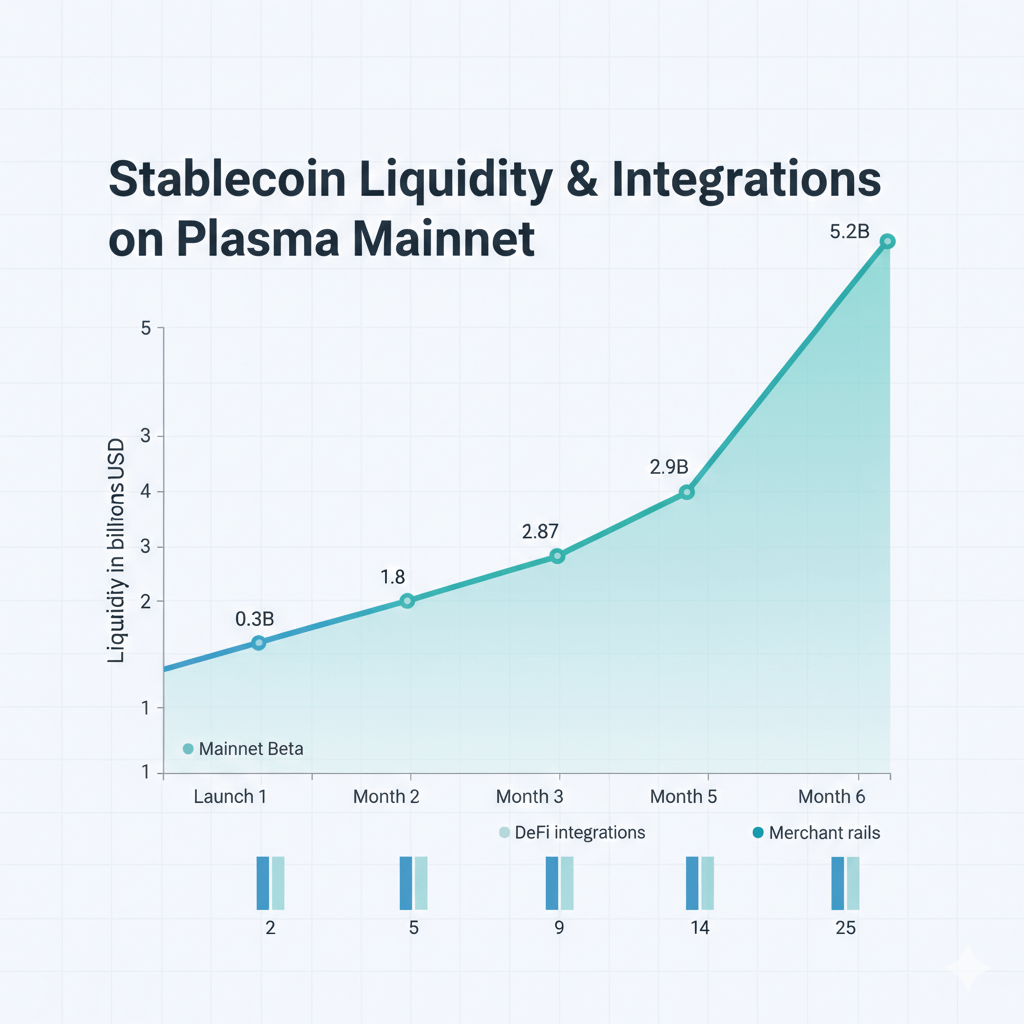
Real Adoption Evidence Isn’t In Headlines — It’s In Liquidity and Integration
Official data shows Plasma’s mainnet beta attracted billions in stablecoin liquidity soon after launch, and multiple integrations with DeFi partners signal that developers aren’t just testing the network — they’re using it.
That’s not hype. That’s adoption momentum.
Final Thought
When you step back from the noise and actually look at the context of the discussion — the way Cas and other informed creators position Plasma — it becomes clear: this project is not trying to be bigger than stablecoins.
It’s trying to make stablecoins work the way money actually needs to work — predictable, cheap, composable, and scalable.
If digital dollars are going to become next-gen settlement rails, the chain that makes them feel like money instead of merely tokens matters — and Plasma is staking that ground today.

