Ich habe in letzter Zeit Dusk aus einem etwas anderen Blickwinkel betrachtet: nicht nur die Privatsphäre-Technologie, sondern auch die Art und Weise, wie das Netzwerk die langweilige, aber wichtige Ingenieursarbeit darunter bewältigt.
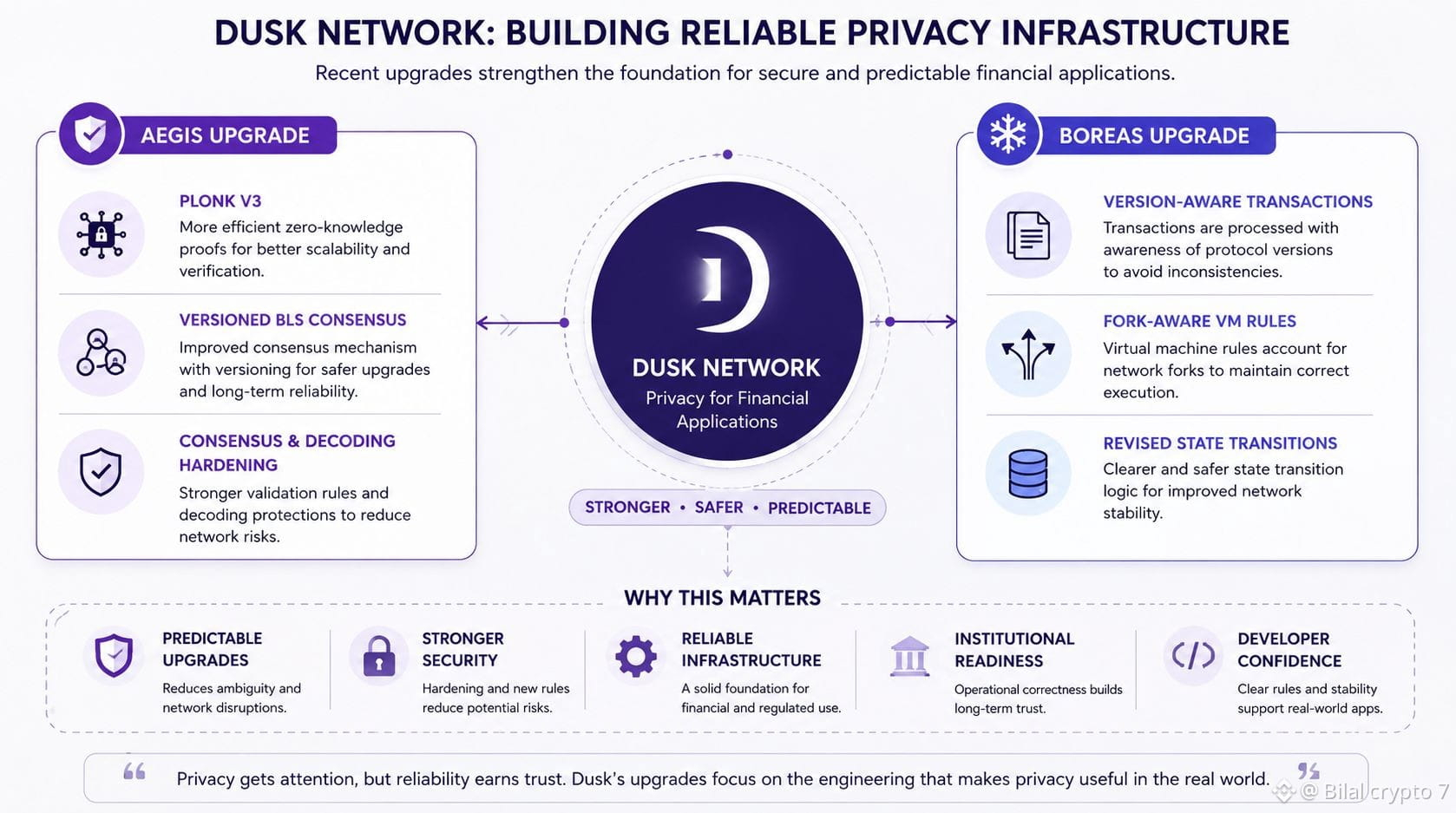
Aktuelle Upgrades wie Aegis und Boreas haben meine Aufmerksamkeit erregt, weil sie sich auf Dinge konzentrieren wie Konsensänderungen, das Transaktionshandling, VM-Regeln und die Härtung des Netzwerks. Das ist nicht die Art von Update, die viel Aufregung erzeugt, aber ich denke, es ist wichtig, wenn Dusk ernsthafte Finanzanwendungen unterstützen will.
Privatsphäre sehe ich dabei nur als ein Teil des Puzzles. Wenn sich das zugrunde liegende Netzwerk nicht sicher und vorhersehbar weiterentwickeln kann, wird Privatsphäre allein nicht viel lösen.
Gleichzeitig bin ich aber weiterhin vorsichtig. Über Verbesserungen des Protokolls zu lesen, ist etwas völlig anderes, als dabei zuzusehen, wie sie sich unter starker Nutzung, bei unerwarteten Ausfällen oder in komplexen Anwendungen bewähren.
Was ich an Dusk interessant finde, ist, dass das Team offenbar Zeit in diese weniger sichtbaren Schichten der Infrastruktur investiert.
Ich bin gespannt, ob diese sorgfältige Ingenieursarbeit irgendwann zu einem der stärksten Vorteile von Dusk werden kann.
@Dusk #dusk $DUSK
Aktuelle Upgrades wie Aegis und Boreas haben meine Aufmerksamkeit erregt, weil sie sich auf Dinge konzentrieren wie Konsensänderungen, das Transaktionshandling, VM-Regeln und die Härtung des Netzwerks. Das ist nicht die Art von Update, die viel Aufregung erzeugt, aber ich denke, es ist wichtig, wenn Dusk ernsthafte Finanzanwendungen unterstützen will.
Privatsphäre sehe ich dabei nur als ein Teil des Puzzles. Wenn sich das zugrunde liegende Netzwerk nicht sicher und vorhersehbar weiterentwickeln kann, wird Privatsphäre allein nicht viel lösen.
Gleichzeitig bin ich aber weiterhin vorsichtig. Über Verbesserungen des Protokolls zu lesen, ist etwas völlig anderes, als dabei zuzusehen, wie sie sich unter starker Nutzung, bei unerwarteten Ausfällen oder in komplexen Anwendungen bewähren.
Was ich an Dusk interessant finde, ist, dass das Team offenbar Zeit in diese weniger sichtbaren Schichten der Infrastruktur investiert.
Ich bin gespannt, ob diese sorgfältige Ingenieursarbeit irgendwann zu einem der stärksten Vorteile von Dusk werden kann.
@Dusk #dusk $DUSK