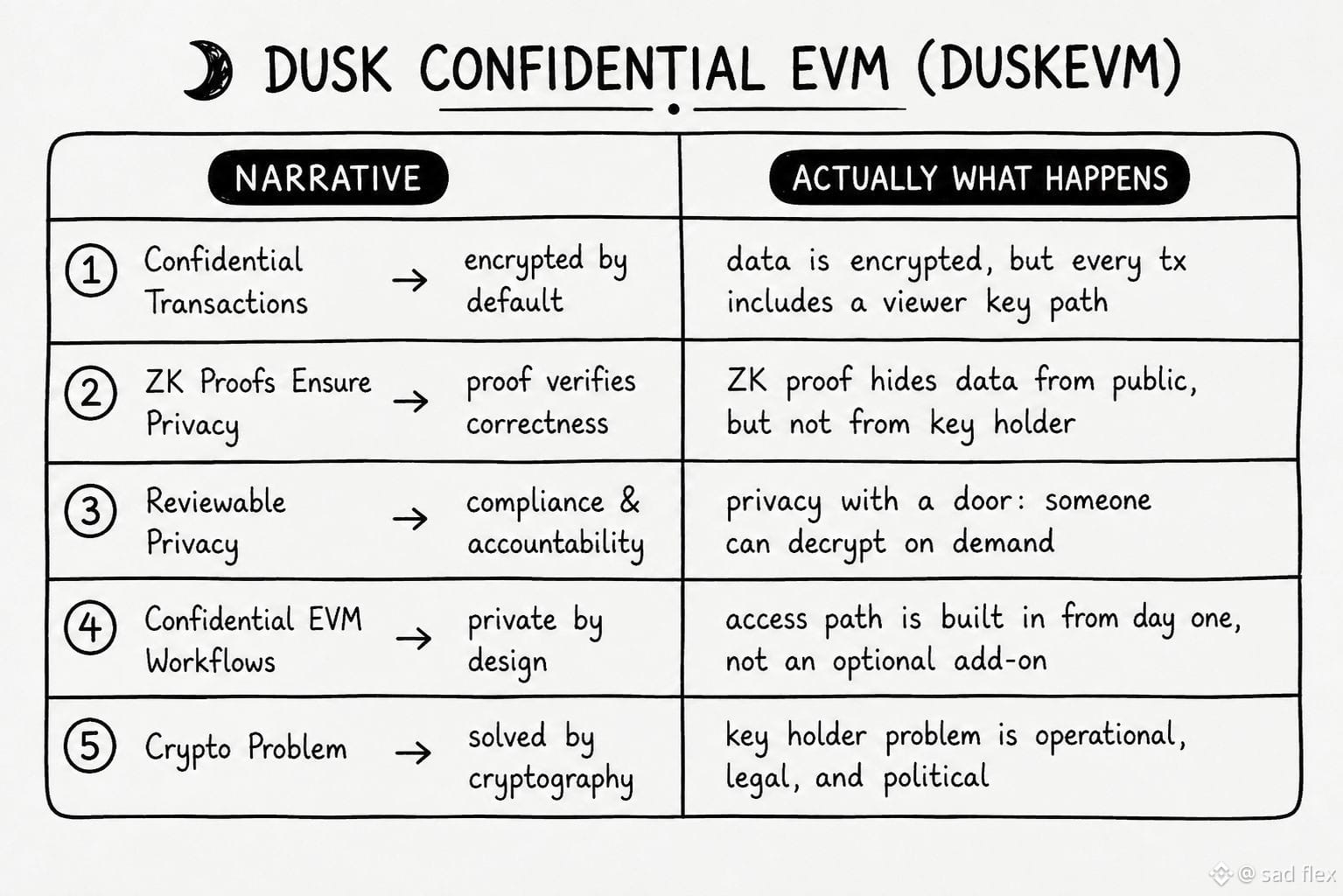
#dusk $DUSK @Dusk war gerade in den DuskEVM-Dokumenten über Hedger unterwegs und wäre fast an dem Offenlegungs-Flowchart vorbeigeschrammt... dann habe ich die Box mit dem „Viewer Key“ bemerkt, die ganz still am Rand jeder vertraulichen Transaktion sitzt
vertraulich gegenüber der Öffentlichkeit, klar. aber jeder Workflow läuft trotzdem über einen Schlüssel, mit dem jemand die zugrunde liegenden Daten auf Anfrage entschlüsseln kann. die Dokus nennen das „prüfbare Privatsphäre“. wenn man das langsam liest, heißt das im Grunde Privatsphäre mit einer Tür – und die Tür hat einen Schlüssel, und irgendjemand hält diesen Schlüssel
das war der Teil, der hängen blieb. das Marketing-Framework ist „vertrauliche EVM-Workflows“, aber was eigentlich beschrieben wird, ist „verschlüsselt per default“ mit einem von Tag eins eingebauten Zugangsweg – nicht „verschlüsselt für immer ohne Ausnahme“
Moment, das ist irgendwie das Gegenteil von dem, was die meisten Privacy-L1-Threads implizieren, wenn sie „Zero-Knowledge“ sagen: Default-Annahme ist, dass niemand es sehen kann, Punkt.
was in den Dokus tatsächlich passiert, ist: die ZK-„Proof“ bestätigt, dass die Berechnung korrekt war, ohne die Daten öffentlich offenzulegen. aber der Viewer Key ist ein separates, paralleles Mechanismus – und wer diesen Schlüssel hält, ist dann keine Krypto-Frage mehr, sondern eine Frage der operativen Praxis und der rechtlichen Rahmenbedingungen.
lässt mich fragen, wie viele „vertrauliche“ Onchain-Erzählungen stillschweigend davon ausgehen, dass das Problem mit dem Key-Holder längst gelöst ist
vertraulich gegenüber der Öffentlichkeit, klar. aber jeder Workflow läuft trotzdem über einen Schlüssel, mit dem jemand die zugrunde liegenden Daten auf Anfrage entschlüsseln kann. die Dokus nennen das „prüfbare Privatsphäre“. wenn man das langsam liest, heißt das im Grunde Privatsphäre mit einer Tür – und die Tür hat einen Schlüssel, und irgendjemand hält diesen Schlüssel
das war der Teil, der hängen blieb. das Marketing-Framework ist „vertrauliche EVM-Workflows“, aber was eigentlich beschrieben wird, ist „verschlüsselt per default“ mit einem von Tag eins eingebauten Zugangsweg – nicht „verschlüsselt für immer ohne Ausnahme“
Moment, das ist irgendwie das Gegenteil von dem, was die meisten Privacy-L1-Threads implizieren, wenn sie „Zero-Knowledge“ sagen: Default-Annahme ist, dass niemand es sehen kann, Punkt.
was in den Dokus tatsächlich passiert, ist: die ZK-„Proof“ bestätigt, dass die Berechnung korrekt war, ohne die Daten öffentlich offenzulegen. aber der Viewer Key ist ein separates, paralleles Mechanismus – und wer diesen Schlüssel hält, ist dann keine Krypto-Frage mehr, sondern eine Frage der operativen Praxis und der rechtlichen Rahmenbedingungen.
lässt mich fragen, wie viele „vertrauliche“ Onchain-Erzählungen stillschweigend davon ausgehen, dass das Problem mit dem Key-Holder längst gelöst ist