
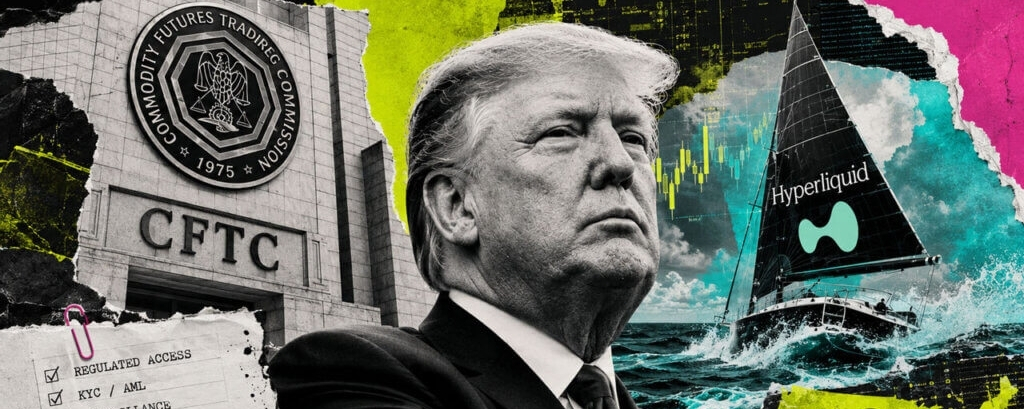
The CFTC is exploring a legal path for Hyperliquid as Trump pushes to bring the $200 billion-a-month on-chain venue into the US.
resident Donald Trump said Aug. 19 that CFTC Chair Michael Selig is working to bring Hyperliquid to the US in a fully compliant, legal way.
Hyperliquid's official interface currently keeps US persons off the platform, part of the regulatory geography that let crypto's largest perpetual futures venue grow up outside American oversight.
Hyperliquid processed over $114 billion of perpetual futures trading volume in August and carries open interest above $10 billion. It has crossed $5 trillion in cumulative perpetual volume and generates close to $50 million in protocol fees every month.
If regulators build a working crypto asset market category, the significance extends well past Hyperliquid gaining US access. Other offshore and on-chain perpetual venues would finally have a concrete checklist after years of regulatory guesswork.
Competition among them will become a question of who can satisfy the new US framework without abandoning the model that built their liquidity in the first place.
The SEC's Aug. 18 Regulation Crypto Assets proposal and the March SEC-CFTC harmonization framework both point toward keeping crypto activity inside US oversight. Hyperliquid is now the concrete market both agencies' efforts would have to work against.
A public registration application, a confirmed legal entity to operate a US business, a disclosed list of required protocol changes, a published KYC architecture, and a confirmed list of tradable products all remain outstanding.
The bull case is that the CFTC formalizes its crypto asset market category for both registrants and non-registrant crypto exchanges. Hyperliquid becomes the first major test case, and rival venues gain a genuine checklist to follow.
Offshore and on-chain perpetual markets are starting to compete for US liquidity under federal oversight.
The bear case has regulators concluding that meaningful US access still requires routing activity through a conventional designated contract market, clearing, and brokerage stack.
Trump gave regulators a name, and Selig gave them a possible structure. What still has to happen is the hardest part: building a category that can hold a $200 billion-a-month on-chain market without turning it into something it was never designed to be.