Ein fester Zinssatz klingt nach Sicherheit – bis man fragt, wer die Unsicherheit dahinter trägt.
In @TermMax fixieren Festzins-Darlehen und -Kredite den Zinssatz für eine definierte Laufzeit, sodass der Kreditnehmer die Zinskosten im Voraus kennt und der Kreditgeber eine planbare Rendite erhält. Die Benutzeroberfläche von TermMax trennt diese Festzinsmärkte nach Laufzeit, wobei Nutzer sich für konkrete Laufzeiten entscheiden statt unbestimmt im Floating-Modus zu bleiben. (TermMax)
Diese Planbarkeit beseitigt aber kein Zinsänderungsrisiko. Sie verlagert lediglich, wo es sitzt.
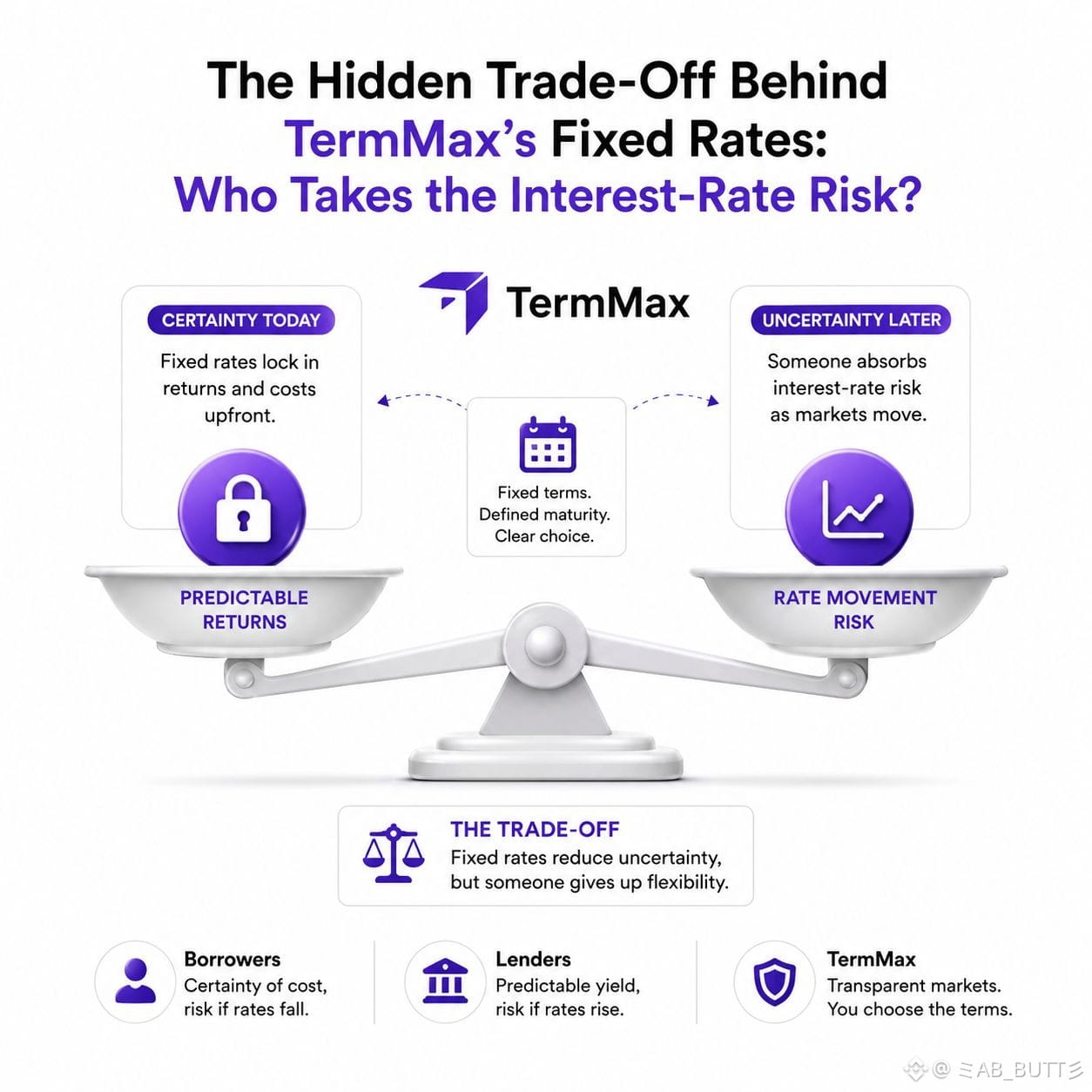
Mein Eindruck ist, dass die Partei, die den festen Zinssatz festschreibt, später einen Teil der Flexibilität aufgibt, falls sich die Marktzinsen ändern. Wenn die Zinsen fallen, kann ein Kreditnehmer darauf festgelegt sein, den vereinbarten Satz zu zahlen; wenn die Zinsen steigen, kann ein Kreditgeber anderswo bessere Chancen verpassen.
Das ist die versteckte Gegenleistung: Feste Renditen senken die Zinsunsicherheit, können jedoch auch Opportunitätskosten verursachen.
Die spannende Frage ist also nicht, ob der Zinssatz fix ist. Sondern: Wer profitiert, wenn sich der Markt von diesem festen Zinssatz entfernt? #termmax @TermMax
In @TermMax fixieren Festzins-Darlehen und -Kredite den Zinssatz für eine definierte Laufzeit, sodass der Kreditnehmer die Zinskosten im Voraus kennt und der Kreditgeber eine planbare Rendite erhält. Die Benutzeroberfläche von TermMax trennt diese Festzinsmärkte nach Laufzeit, wobei Nutzer sich für konkrete Laufzeiten entscheiden statt unbestimmt im Floating-Modus zu bleiben. (TermMax)
Diese Planbarkeit beseitigt aber kein Zinsänderungsrisiko. Sie verlagert lediglich, wo es sitzt.
Mein Eindruck ist, dass die Partei, die den festen Zinssatz festschreibt, später einen Teil der Flexibilität aufgibt, falls sich die Marktzinsen ändern. Wenn die Zinsen fallen, kann ein Kreditnehmer darauf festgelegt sein, den vereinbarten Satz zu zahlen; wenn die Zinsen steigen, kann ein Kreditgeber anderswo bessere Chancen verpassen.
Das ist die versteckte Gegenleistung: Feste Renditen senken die Zinsunsicherheit, können jedoch auch Opportunitätskosten verursachen.
Die spannende Frage ist also nicht, ob der Zinssatz fix ist. Sondern: Wer profitiert, wenn sich der Markt von diesem festen Zinssatz entfernt? #termmax @TermMax