#termmax @TermMax
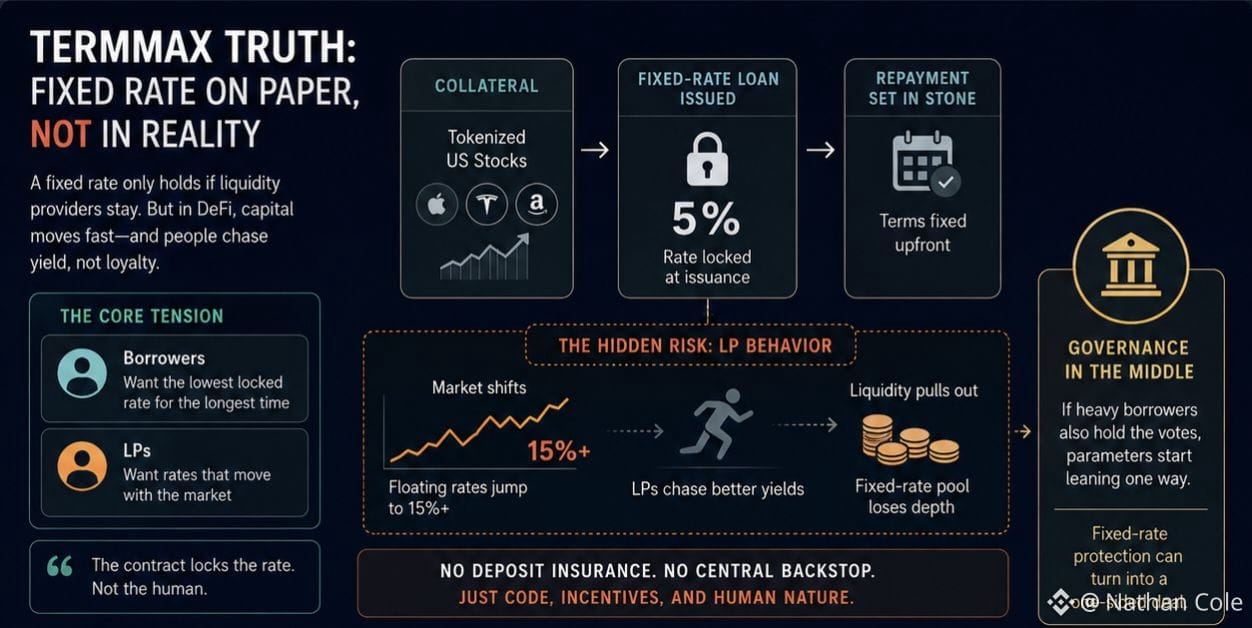
Ich habe heute Nacht wieder bei diesen TermMax-Dokumenten auf genau diese Stelle gestarrt. Du hinterlegst tokenisierte US-Aktien als Sicherheit, legst im Moment der Ausgabe einen Darlehenszinssatz von 5% fest—die Rückzahlung ist bereits wie in Stein gemeißelt. Auf dem Papier wirkt das sauber. Aber dieses „fix“ gilt nur, wenn die andere Seite auch wirklich bereit ist, bei genau diesem Satz stillzuhalten.
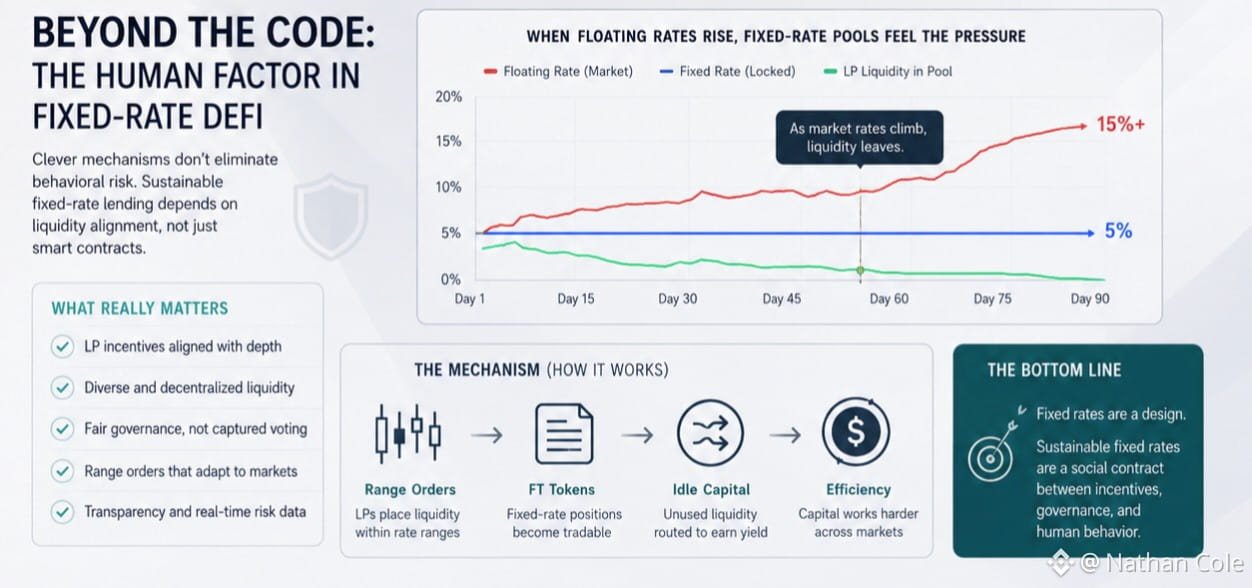
Ich kenne dieses Kino. LPs in DeFi sitzen nicht einfach still. Ihr Geld ist immer auf der Suche nach der nächsten besseren Zahl. Wenn die Kreditnachfrage anspringt und variable Zinsen auf 15% hochschnellen, beginnt derjenige, der auf 5% festgenagelt ist, auszurechnen, wie schnell er seine Liquidität abziehen kann. Der Vertrag fixiert den Zinssatz, nicht den Menschen. Keine Einlagenversicherung, kein Backstop der Zentralbank—nur ein Smart Contract und die stille Hoffnung, dass sich die Leute wie Einlagenzahler bei Banken verhalten, statt wie die Yield-Jäger, die sie tatsächlich sind.
Die Governance sitzt genau in der Mitte dieser Spannung. Kreditnehmer wollen den niedrigsten fixierten Zinssatz für die längste Zeit. LPs wollen, dass sich die Kurve bewegt, wenn sich der Markt bewegt. Wenn dieselben Wallets, die den Großteil der Kreditaufnahme stemmen, auch die Stimmen halten, beginnen die Parameter in eine Richtung zu kippen. Der Festzinssatz fühlt sich dann nicht mehr wie Schutz an und sieht zunehmend mehr nach einem einseitigen Deal aus.
Das Mechanismus-Design selbst ist clever—Range Orders, FT-Tokens, inaktive Mittel, die zu Floating-Protokollen umgeleitet werden. Ich habe genug Zyklen gesehen, um zu wissen: Ein cleveres Design preist nicht automatisch ein, wie die Menschen darin sich tatsächlich verhalten. Die Doku schreibt den Fixzins, als sei er längst entschieden. Ich bin mir immer noch nicht sicher, ob die Liquiditätsseite dem wirklich vollständig zugestimmt hat.
Ich habe heute Nacht wieder bei diesen TermMax-Dokumenten auf genau diese Stelle gestarrt. Du hinterlegst tokenisierte US-Aktien als Sicherheit, legst im Moment der Ausgabe einen Darlehenszinssatz von 5% fest—die Rückzahlung ist bereits wie in Stein gemeißelt. Auf dem Papier wirkt das sauber. Aber dieses „fix“ gilt nur, wenn die andere Seite auch wirklich bereit ist, bei genau diesem Satz stillzuhalten.
Ich kenne dieses Kino. LPs in DeFi sitzen nicht einfach still. Ihr Geld ist immer auf der Suche nach der nächsten besseren Zahl. Wenn die Kreditnachfrage anspringt und variable Zinsen auf 15% hochschnellen, beginnt derjenige, der auf 5% festgenagelt ist, auszurechnen, wie schnell er seine Liquidität abziehen kann. Der Vertrag fixiert den Zinssatz, nicht den Menschen. Keine Einlagenversicherung, kein Backstop der Zentralbank—nur ein Smart Contract und die stille Hoffnung, dass sich die Leute wie Einlagenzahler bei Banken verhalten, statt wie die Yield-Jäger, die sie tatsächlich sind.
Die Governance sitzt genau in der Mitte dieser Spannung. Kreditnehmer wollen den niedrigsten fixierten Zinssatz für die längste Zeit. LPs wollen, dass sich die Kurve bewegt, wenn sich der Markt bewegt. Wenn dieselben Wallets, die den Großteil der Kreditaufnahme stemmen, auch die Stimmen halten, beginnen die Parameter in eine Richtung zu kippen. Der Festzinssatz fühlt sich dann nicht mehr wie Schutz an und sieht zunehmend mehr nach einem einseitigen Deal aus.
Das Mechanismus-Design selbst ist clever—Range Orders, FT-Tokens, inaktive Mittel, die zu Floating-Protokollen umgeleitet werden. Ich habe genug Zyklen gesehen, um zu wissen: Ein cleveres Design preist nicht automatisch ein, wie die Menschen darin sich tatsächlich verhalten. Die Doku schreibt den Fixzins, als sei er längst entschieden. Ich bin mir immer noch nicht sicher, ob die Liquiditätsseite dem wirklich vollständig zugestimmt hat.