#dusk $DUSK @Dusk Je tiefer ich in Dusk blicke,
desto mehr denke ich, dass die interessante Frage nicht lautet „Kann Blockchain privat sein?“
Wir wissen bereits, dass Privatsphäre gebaut werden kann.
Die schwierigere Frage ist, was passiert, nachdem man etwas privat gemacht hat.
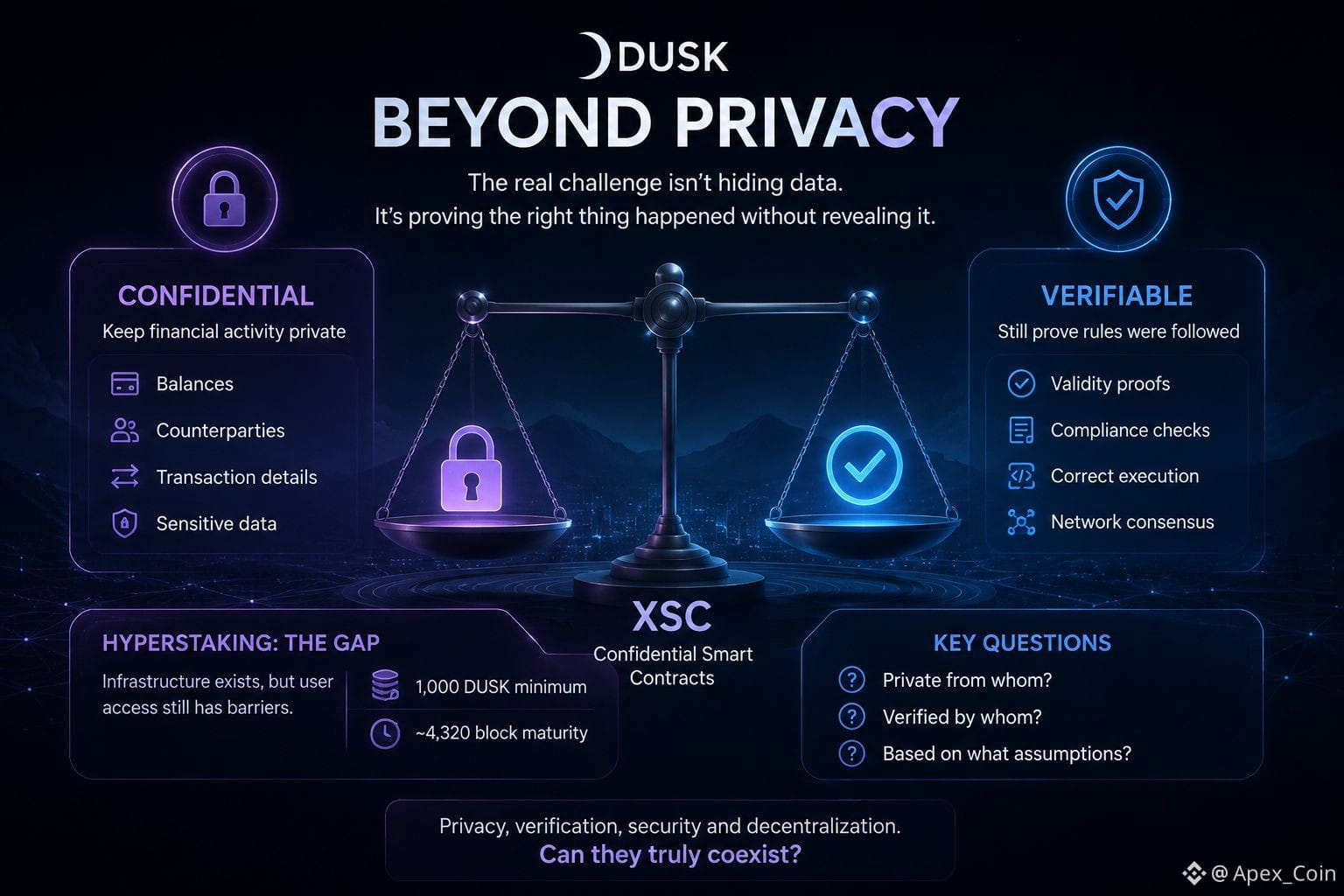
Wenn eine finanzielle Transaktion Salden, Gegenparteien oder sensible Daten verbirgt: Wie kann dann trotzdem jeder wissen, dass die Transaktion gültig war?
Genau hier wird Dusk für mich interessant.
Der Ansatz von XSC versucht, in diesem unbequemen Mittelbereich zu sitzen: Finanzaktivitäten vertraulich halten, aber gleichzeitig dem Netzwerk genug Beweise geben, um zu verifizieren, dass die Regeln befolgt und die Ausführung korrekt war.
Und ganz ehrlich: Hier denke ich, dass die meisten Privatsphäre-Erzählungen zu simpel werden.
Wenn Validatoren alles sehen können, was ist dann eigentlich privat?
Wenn sie die sensiblen Informationen nicht sehen können: Auf welche kryptografischen Annahmen verlassen wir uns dann?
Und wenn das System zu komplex wird, gewinnen wir zwar vielleicht Privatsphäre, verlieren aber Leistung, Komponierbarkeit oder sogar die Akzeptanz durch Entwickler?
Ich habe noch ein kleineres Beispiel gefunden, das ich mit Hyperstaking interessant fand.
Dusk kann Infrastruktur bereitstellen, in der Contracts stellvertretend für Nutzer staken können, aber das minimale 1.000-DUSK und die ungefähr 4.320-Block-Warte-/Reifeperiode sind für die tatsächliche Nutzererfahrung immer noch entscheidend.
Diese Unterscheidung ist leicht zu übersehen:
Infrastruktur kann für Entwickler zugänglich sein, ohne dass sie für Nutzer in gleichem Maße zugänglich ist.
Für mich ist Dusk deshalb keine „private Blockchain“-Story mehr.
Es geht vielmehr darum, ob Privatsphäre, Verifikation, Sicherheit und Dezentralisierung tatsächlich miteinander koexistieren können, ohne dass eine der anderen leise schwächt.
Das ist der Teil, den ich immer noch zu verstehen versuche.
Wenn eine Blockchain sagt, dass eine Aktivität privat ist, lautet die eigentliche Frage:
#dusk $DUSK @Dusk
privat wovon, verifiziert durch wen und basierend auf welchen Annahmen?
desto mehr denke ich, dass die interessante Frage nicht lautet „Kann Blockchain privat sein?“
Wir wissen bereits, dass Privatsphäre gebaut werden kann.
Die schwierigere Frage ist, was passiert, nachdem man etwas privat gemacht hat.
Wenn eine finanzielle Transaktion Salden, Gegenparteien oder sensible Daten verbirgt: Wie kann dann trotzdem jeder wissen, dass die Transaktion gültig war?
Genau hier wird Dusk für mich interessant.
Der Ansatz von XSC versucht, in diesem unbequemen Mittelbereich zu sitzen: Finanzaktivitäten vertraulich halten, aber gleichzeitig dem Netzwerk genug Beweise geben, um zu verifizieren, dass die Regeln befolgt und die Ausführung korrekt war.
Und ganz ehrlich: Hier denke ich, dass die meisten Privatsphäre-Erzählungen zu simpel werden.
Wenn Validatoren alles sehen können, was ist dann eigentlich privat?
Wenn sie die sensiblen Informationen nicht sehen können: Auf welche kryptografischen Annahmen verlassen wir uns dann?
Und wenn das System zu komplex wird, gewinnen wir zwar vielleicht Privatsphäre, verlieren aber Leistung, Komponierbarkeit oder sogar die Akzeptanz durch Entwickler?
Ich habe noch ein kleineres Beispiel gefunden, das ich mit Hyperstaking interessant fand.
Dusk kann Infrastruktur bereitstellen, in der Contracts stellvertretend für Nutzer staken können, aber das minimale 1.000-DUSK und die ungefähr 4.320-Block-Warte-/Reifeperiode sind für die tatsächliche Nutzererfahrung immer noch entscheidend.
Diese Unterscheidung ist leicht zu übersehen:
Infrastruktur kann für Entwickler zugänglich sein, ohne dass sie für Nutzer in gleichem Maße zugänglich ist.
Für mich ist Dusk deshalb keine „private Blockchain“-Story mehr.
Es geht vielmehr darum, ob Privatsphäre, Verifikation, Sicherheit und Dezentralisierung tatsächlich miteinander koexistieren können, ohne dass eine der anderen leise schwächt.
Das ist der Teil, den ich immer noch zu verstehen versuche.
Wenn eine Blockchain sagt, dass eine Aktivität privat ist, lautet die eigentliche Frage:
#dusk $DUSK @Dusk
privat wovon, verifiziert durch wen und basierend auf welchen Annahmen?