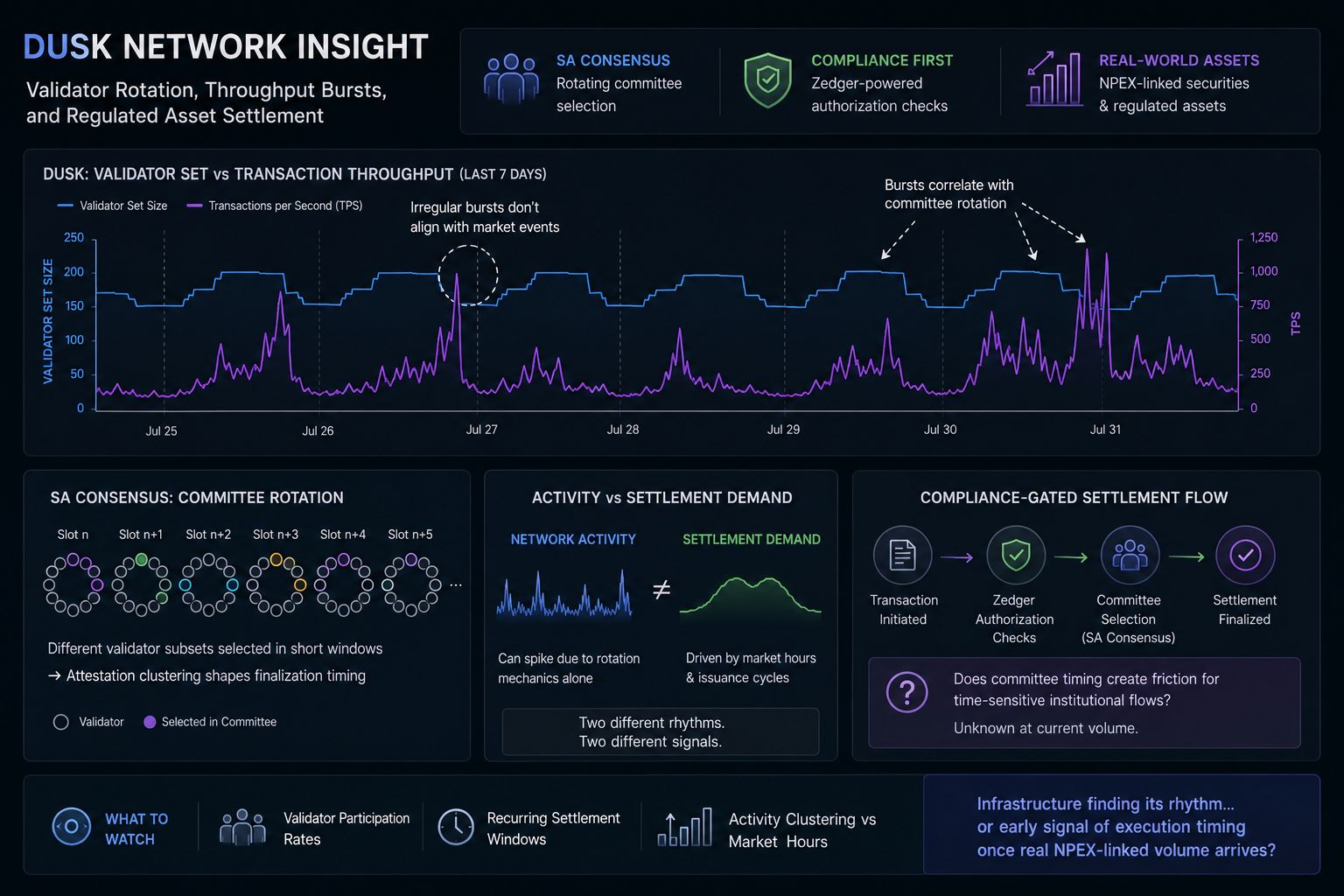
Dusk’ Validator-Set gegen seine Transaktionsdurchsatzleistung letzte Woche: Ich hatte angenommen, dass ein Netzwerk, das für regulierte Assets ausgelegt ist, stetige, fast schon langweilige Aktivitätsmuster zeigt. Stattdessen sah ich unregelmäßige Ausbrüche, die sich keinem offensichtlichen Marktereignis zuordnen ließen.
Bei genauerem Hinsehen verfolgte ich die Ausbrüche darauf zurück, wie Dusk bei SA Consensus die Auswahl der Committees in seiner Konsensrotation durchführt. Das war kein zufälliges Rauschen. Das Muster sah eher nach Attestations-Clustering aus: Bestimmte Validator-Subsets werden innerhalb kurzer Zeitfenster häufiger ausgewählt, was wiederum bestimmt, wann die settlement-schweren Aktivitäten tatsächlich finalisiert werden.
Dieser Unterschied ist wichtiger, als ich ihm zunächst zugestanden hatte. Ich hatte „Netzwerkaktivität“ und „Settlement-Nachfrage“ als im Grunde dasselbe Signal behandelt. Das sind sie nicht. Die Aktivität kann allein durch Mechaniken der Validator-Rotation in die Höhe schnellen, während die tatsächliche Settlement-Nachfrage – also die Art, die mit Assets zusammenhängt, die etwa aus NPEX stammen – sich in einem komplett anderen Rhythmus bewegt, der mit Marktzeiten und Emissionszyklen gekoppelt ist.
Was ich bislang noch nicht klären kann, ist, wie sich dieses Rotationsverhalten speziell auf compliance-gesteuerte Transaktionen auswirkt. Wenn zedger-basierte Wertpapiere vor dem Settlen bestimmte Autorisierungsprüfungen erfordern: Erzeugt das Timing der Committees dann überhaupt Reibung für zeitkritische institutionelle Flows, oder ist diese Reibung bei dem aktuellen Volumen vernachlässigbar? Mir fehlen dafür noch genug Datenpunkte, um das entweder zu bestätigen oder auszuschließen.
In Zukunft möchte ich die Beteiligungsraten der Validatoren zusammen mit allen wiederkehrenden Settlement-Windows beobachten – nicht nur die reinen Transaktionszahlen. Wenn sich die Aktivität regulierter Assets um bestimmte Committee-Rotationstakte statt um die Marktzeiten clusterte, würde mir das etwas darüber verraten, wie viel institutioneller Flow tatsächlich live ist, versus wie viel noch experimentell.
Ich frage mich, ob dieses Rotationsmuster einfach nur zeigt, wie sich die Infrastruktur ihren Rhythmus sucht, oder ob es ein frühes Signal dafür ist, wie sich das Ausführungstiming verhalten könnte, sobald echtes Volumen von NPEX-verknüpften Assets durch das System fließt. Ich glaube nicht, dass ich das schon beantworten kann.
@Dusk #Dusk
$DUSK
$HEMI
$TREE
Bei genauerem Hinsehen verfolgte ich die Ausbrüche darauf zurück, wie Dusk bei SA Consensus die Auswahl der Committees in seiner Konsensrotation durchführt. Das war kein zufälliges Rauschen. Das Muster sah eher nach Attestations-Clustering aus: Bestimmte Validator-Subsets werden innerhalb kurzer Zeitfenster häufiger ausgewählt, was wiederum bestimmt, wann die settlement-schweren Aktivitäten tatsächlich finalisiert werden.
Dieser Unterschied ist wichtiger, als ich ihm zunächst zugestanden hatte. Ich hatte „Netzwerkaktivität“ und „Settlement-Nachfrage“ als im Grunde dasselbe Signal behandelt. Das sind sie nicht. Die Aktivität kann allein durch Mechaniken der Validator-Rotation in die Höhe schnellen, während die tatsächliche Settlement-Nachfrage – also die Art, die mit Assets zusammenhängt, die etwa aus NPEX stammen – sich in einem komplett anderen Rhythmus bewegt, der mit Marktzeiten und Emissionszyklen gekoppelt ist.
Was ich bislang noch nicht klären kann, ist, wie sich dieses Rotationsverhalten speziell auf compliance-gesteuerte Transaktionen auswirkt. Wenn zedger-basierte Wertpapiere vor dem Settlen bestimmte Autorisierungsprüfungen erfordern: Erzeugt das Timing der Committees dann überhaupt Reibung für zeitkritische institutionelle Flows, oder ist diese Reibung bei dem aktuellen Volumen vernachlässigbar? Mir fehlen dafür noch genug Datenpunkte, um das entweder zu bestätigen oder auszuschließen.
In Zukunft möchte ich die Beteiligungsraten der Validatoren zusammen mit allen wiederkehrenden Settlement-Windows beobachten – nicht nur die reinen Transaktionszahlen. Wenn sich die Aktivität regulierter Assets um bestimmte Committee-Rotationstakte statt um die Marktzeiten clusterte, würde mir das etwas darüber verraten, wie viel institutioneller Flow tatsächlich live ist, versus wie viel noch experimentell.
Ich frage mich, ob dieses Rotationsmuster einfach nur zeigt, wie sich die Infrastruktur ihren Rhythmus sucht, oder ob es ein frühes Signal dafür ist, wie sich das Ausführungstiming verhalten könnte, sobald echtes Volumen von NPEX-verknüpften Assets durch das System fließt. Ich glaube nicht, dass ich das schon beantworten kann.
@Dusk #Dusk
$DUSK
$HEMI
$TREE