📈 Was stoppt diesen Zug? Das Diagramm sagt: nichts, und doch.
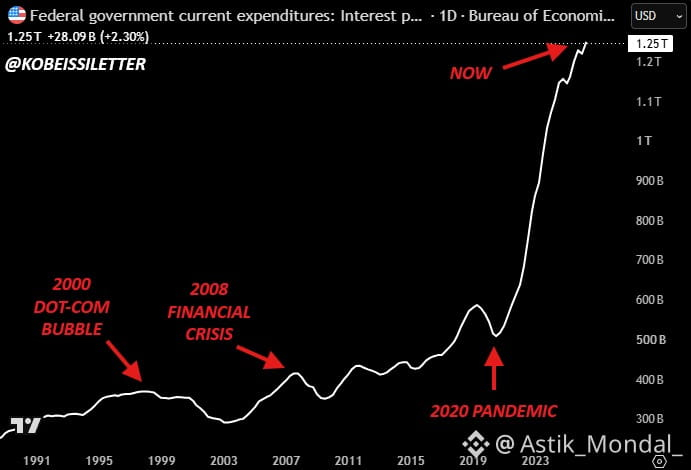
Das ist Bundesausgabeninteresse in jährlicher Hochrechnung, und es hat gerade die Marke von 1,25 Billionen US-Dollar überschritten. Keine Prognose. Aktuelles Tempo.
Schau dir die Form dieser Linie an. Dotcom-Blase im Jahr 2000, gerade mal ein kurzer Aussetzer. Die Finanzkrise 2008, ein größerer Ausschlag, aber immer noch in Grenzen. Die Pandemie 2020, ein echter Sprung. Und dann das: eine senkrechte Wand, die 2022 beginnt und seitdem unaufhörlich weiter nach oben klettert.
Die eigenen Zahlen des CBO untermauern auch, warum das so ist. Die Nettozinsen auf die Schulden erreichten im Haushaltsjahr bis einschließlich Juli rund 963 Milliarden US-Dollar und liefen nahe bei 3,2 Milliarden US-Dollar pro Tag. Das übersteigt bereits das, was die Regierung für nationale Verteidigung ausgibt.
Hier ist der Wendepunkt, den jeder im Blick haben sollte: Das CBO prognostiziert, dass die Zinskosten die Ausgaben für Medicare bis 2028 überholen werden. Wenn das Bedienungsschulden-Äquivalent mehr kostet als die Gesundheitsversorgung für Zehnmillionen von Seniorinnen und Senioren, dann ist das kein Rundungsfehler im Haushalt. Das ist eine strukturelle Veränderung dessen, was die Bundesregierung tatsächlich ist.
Die Mechanik ist brutal und selbstverstärkend. Rund 39,9 Billionen US-Dollar an Gesamtschulden, ständig refinanziert zu den heutigen höheren Zinssätzen statt zu den nahezu null Prozent der Jahre zuvor. Bei jeder Verlängerung wird eine größere Zinsrechnung festgeschrieben. Die Zinskosten als Anteil am BIP haben bereits den bisherigen Rekord gebrochen, der 1991 aufgestellt wurde.
Das Finanzministerium kann kurzfristige Finanzierung hin- und herschieben, sich an ausländische Käufer anlehnen oder die Fed um Hilfe bitten. Nichts davon ändert den Kurs. Es verschiebt nur die Zeitachse.
Wenn die Bedienung der Schulden von gestern anfängt, die Prioritäten von morgen zu verdrängen, ist die Frage nicht, ob daraus dieses Gespräch wird. Sondern wie lange Washington es noch über die Amtszeit von jemand anderem hinaus weiter anstößt.
#Debt #Economy #Interest #Bonds #Treasury
Das ist Bundesausgabeninteresse in jährlicher Hochrechnung, und es hat gerade die Marke von 1,25 Billionen US-Dollar überschritten. Keine Prognose. Aktuelles Tempo.
Schau dir die Form dieser Linie an. Dotcom-Blase im Jahr 2000, gerade mal ein kurzer Aussetzer. Die Finanzkrise 2008, ein größerer Ausschlag, aber immer noch in Grenzen. Die Pandemie 2020, ein echter Sprung. Und dann das: eine senkrechte Wand, die 2022 beginnt und seitdem unaufhörlich weiter nach oben klettert.
Die eigenen Zahlen des CBO untermauern auch, warum das so ist. Die Nettozinsen auf die Schulden erreichten im Haushaltsjahr bis einschließlich Juli rund 963 Milliarden US-Dollar und liefen nahe bei 3,2 Milliarden US-Dollar pro Tag. Das übersteigt bereits das, was die Regierung für nationale Verteidigung ausgibt.
Hier ist der Wendepunkt, den jeder im Blick haben sollte: Das CBO prognostiziert, dass die Zinskosten die Ausgaben für Medicare bis 2028 überholen werden. Wenn das Bedienungsschulden-Äquivalent mehr kostet als die Gesundheitsversorgung für Zehnmillionen von Seniorinnen und Senioren, dann ist das kein Rundungsfehler im Haushalt. Das ist eine strukturelle Veränderung dessen, was die Bundesregierung tatsächlich ist.
Die Mechanik ist brutal und selbstverstärkend. Rund 39,9 Billionen US-Dollar an Gesamtschulden, ständig refinanziert zu den heutigen höheren Zinssätzen statt zu den nahezu null Prozent der Jahre zuvor. Bei jeder Verlängerung wird eine größere Zinsrechnung festgeschrieben. Die Zinskosten als Anteil am BIP haben bereits den bisherigen Rekord gebrochen, der 1991 aufgestellt wurde.
Das Finanzministerium kann kurzfristige Finanzierung hin- und herschieben, sich an ausländische Käufer anlehnen oder die Fed um Hilfe bitten. Nichts davon ändert den Kurs. Es verschiebt nur die Zeitachse.
Wenn die Bedienung der Schulden von gestern anfängt, die Prioritäten von morgen zu verdrängen, ist die Frage nicht, ob daraus dieses Gespräch wird. Sondern wie lange Washington es noch über die Amtszeit von jemand anderem hinaus weiter anstößt.
#Debt #Economy #Interest #Bonds #Treasury