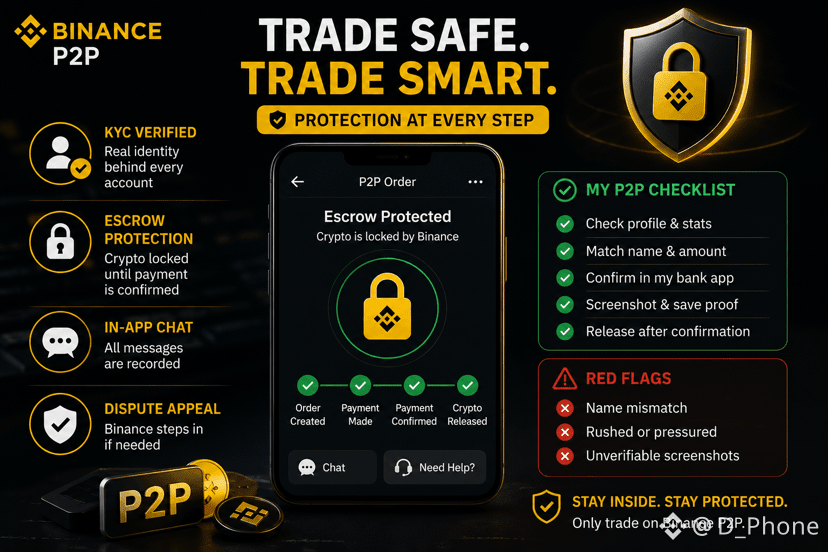
Binance P2P is Binance's own peer to peer marketplace for buying and selling crypto directly with other verified users, and its protection system works in layers. Every trader completes KYC before placing an order, so a real identity sits behind each account instead of an anonymous username. Once an order opens, the seller's crypto asset moves into escrow and stays there until both sides confirm the trade, which means funds cannot simply disappear mid transaction. The in-app chat keeps a full record of every message, and if a disagreement comes up, either side can file a dispute appeal for Binance to step in and review the evidence.
I remember my first order on Binance P2P clearly, mostly because I was nervous about sending money to someone I had never met. Before I paid anything, I opened the merchant's profile and checked three things: completion rate, total number of orders, and how long the account had existed. A profile with a 99% completion rate and thousands of trades behind it told me far more than any friendly message in chat ever could. When a different, much newer account later asked me to skip that same check and pay quickly, I canceled the order instead of ignoring the warning sign in front of me.
The habit that protects me most now is refusing to release crypto until payment is actually confirmed. I open my own banking app, not a screenshot someone sends me, and I check that the sender's name and the exact amount both match what the order expects. An edited confirmation image or a name that does not line up with the registered account is one of the clearest red flags on Binance P2P, and the fix is simple: pause the trade, verify independently, and reach out to Binance support if anything still feels wrong.
I also screenshot the final confirmation page before closing the app, since having my own copy of every completed order has saved me time whenever I needed to look something up later.
@Binance Vietnam #BinanceP2PAnToan $BTW $HEMI $PORTAL
I remember my first order on Binance P2P clearly, mostly because I was nervous about sending money to someone I had never met. Before I paid anything, I opened the merchant's profile and checked three things: completion rate, total number of orders, and how long the account had existed. A profile with a 99% completion rate and thousands of trades behind it told me far more than any friendly message in chat ever could. When a different, much newer account later asked me to skip that same check and pay quickly, I canceled the order instead of ignoring the warning sign in front of me.
The habit that protects me most now is refusing to release crypto until payment is actually confirmed. I open my own banking app, not a screenshot someone sends me, and I check that the sender's name and the exact amount both match what the order expects. An edited confirmation image or a name that does not line up with the registered account is one of the clearest red flags on Binance P2P, and the fix is simple: pause the trade, verify independently, and reach out to Binance support if anything still feels wrong.
I also screenshot the final confirmation page before closing the app, since having my own copy of every completed order has saved me time whenever I needed to look something up later.
@Binance Vietnam #BinanceP2PAnToan $BTW $HEMI $PORTAL