#dusk $DUSK @Dusk
Mein Mann schrieb mir das Thema und fragte mich, ob diese Neuigkeit gut für den Dusk-Holder ist. Die Validator-Set-Größe von Dusk im Vergleich zu seiner Beteiligungsquote am Staking in der letzten Woche – meine erste Annahme war, dass ein niedriger Umsatz eine geringe Interessenlage bedeutet. Diese Annahme hielt jedoch bei genauerem Hinsehen nicht stand.
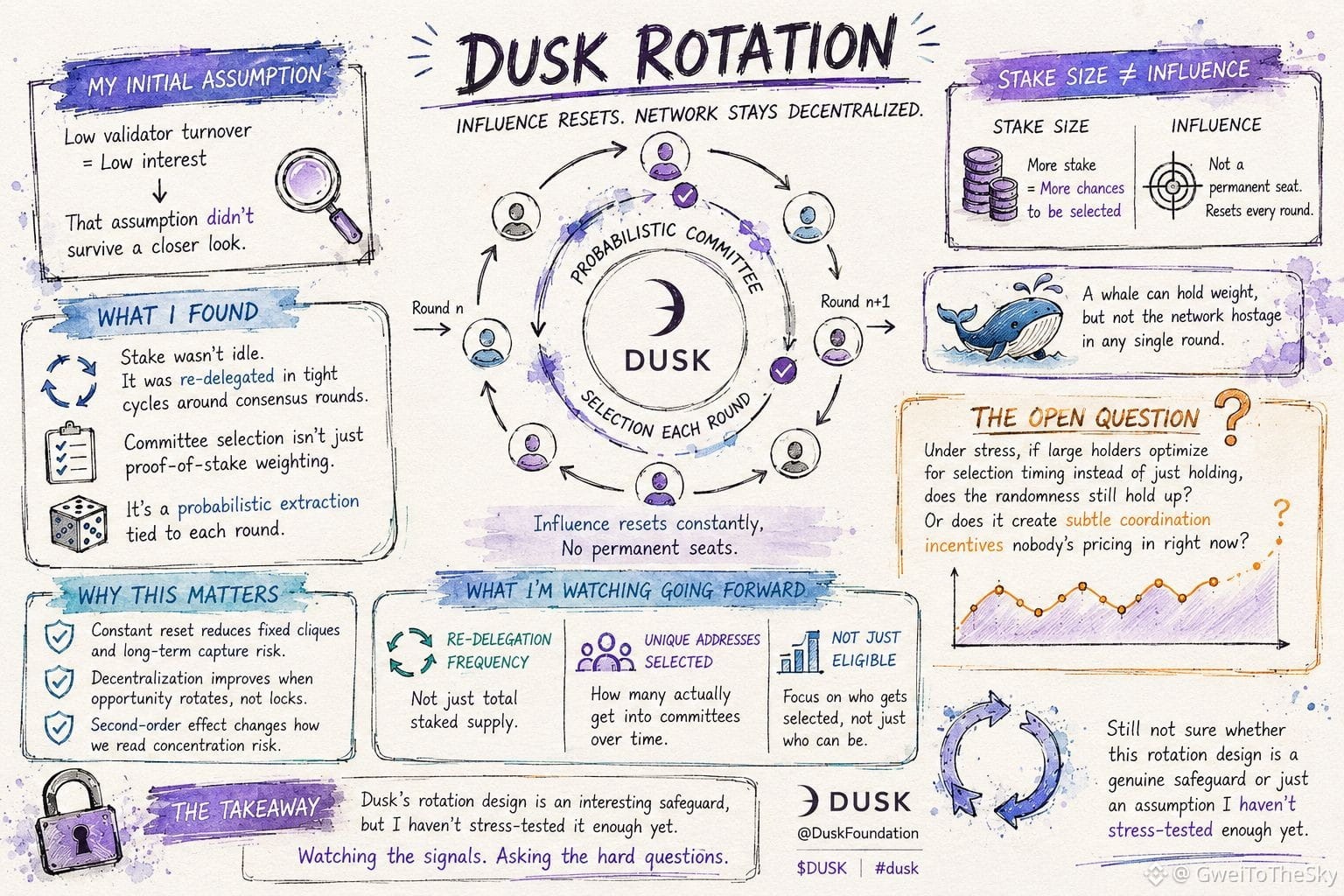
Als ich die Provisoner-Rotationsprotokolle überprüfte, stellte ich fest, dass das Staking nicht untätig herumlag. Es wurde in engen Zyklen rund um die Konsensrunden neu delegiert, statt statisch liegen zu bleiben. Das zeigte mir, wie die Komiteeauswahl von Dusk tatsächlich funktioniert: Es handelt sich nicht nur um eine proof-of-stake-gewichtete Auswahl, sondern um eine probabilistische Extraktion, die an jede Runde gebunden ist. Dadurch wird der Einfluss ständig zurückgesetzt – statt sich über eine feste Validator-Clique anzusammeln.
Dieser Unterschied ist wichtiger, als es klingt. Ich hatte „Staking-Größe“ und „Konsens-Einfluss“ für dieselbe Variable gehalten, aber dem ist nicht so. Eine große Staking-Menge gibt dir mehr Chancen, ausgewählt zu werden – aber keinen dauerhaften Sitz. Dieser Effekt zweiter Ordnung verändert, wie ich hier das Konzentrationsrisiko bewerte: Eine „Whale“ kann Gewicht halten, ohne das Netzwerk in irgendeiner einzelnen Runde als Geisel zu nehmen.
Was ich noch nicht klären kann, ist, wie sich das unter Stress verhält. Wenn große Halter anfangen, ihre Strategie auf den Auswahlzeitpunkt statt nur auf das Halten zu optimieren: Hält die Zufälligkeit dann immer noch stand, oder schafft sie subtile Koordinationsanreize, die im Moment niemand richtig einpreist?
In Zukunft beobachte ich die Häufigkeit der Neu-Delegation nicht nur die gesamte gestakte Menge, sondern auch, wie viele eindeutige Adressen tatsächlich über die Zeit in Komitees ausgewählt werden – und nicht nur „wahlberechtigt“ sind.
Ich bin immer noch nicht sicher, ob dieses Rotationsdesign eine echte Absicherung ist oder nur eine Annahme, die ich noch nicht genug mit Stresstests geprüft habe.
$BTW $ACE
Mein Mann schrieb mir das Thema und fragte mich, ob diese Neuigkeit gut für den Dusk-Holder ist. Die Validator-Set-Größe von Dusk im Vergleich zu seiner Beteiligungsquote am Staking in der letzten Woche – meine erste Annahme war, dass ein niedriger Umsatz eine geringe Interessenlage bedeutet. Diese Annahme hielt jedoch bei genauerem Hinsehen nicht stand.
Als ich die Provisoner-Rotationsprotokolle überprüfte, stellte ich fest, dass das Staking nicht untätig herumlag. Es wurde in engen Zyklen rund um die Konsensrunden neu delegiert, statt statisch liegen zu bleiben. Das zeigte mir, wie die Komiteeauswahl von Dusk tatsächlich funktioniert: Es handelt sich nicht nur um eine proof-of-stake-gewichtete Auswahl, sondern um eine probabilistische Extraktion, die an jede Runde gebunden ist. Dadurch wird der Einfluss ständig zurückgesetzt – statt sich über eine feste Validator-Clique anzusammeln.
Dieser Unterschied ist wichtiger, als es klingt. Ich hatte „Staking-Größe“ und „Konsens-Einfluss“ für dieselbe Variable gehalten, aber dem ist nicht so. Eine große Staking-Menge gibt dir mehr Chancen, ausgewählt zu werden – aber keinen dauerhaften Sitz. Dieser Effekt zweiter Ordnung verändert, wie ich hier das Konzentrationsrisiko bewerte: Eine „Whale“ kann Gewicht halten, ohne das Netzwerk in irgendeiner einzelnen Runde als Geisel zu nehmen.
Was ich noch nicht klären kann, ist, wie sich das unter Stress verhält. Wenn große Halter anfangen, ihre Strategie auf den Auswahlzeitpunkt statt nur auf das Halten zu optimieren: Hält die Zufälligkeit dann immer noch stand, oder schafft sie subtile Koordinationsanreize, die im Moment niemand richtig einpreist?
In Zukunft beobachte ich die Häufigkeit der Neu-Delegation nicht nur die gesamte gestakte Menge, sondern auch, wie viele eindeutige Adressen tatsächlich über die Zeit in Komitees ausgewählt werden – und nicht nur „wahlberechtigt“ sind.
Ich bin immer noch nicht sicher, ob dieses Rotationsdesign eine echte Absicherung ist oder nur eine Annahme, die ich noch nicht genug mit Stresstests geprüft habe.
$BTW $ACE