What if you could get paid today for agreeing to a possible future conversion?
That's the basic idea behind Dual Investment.
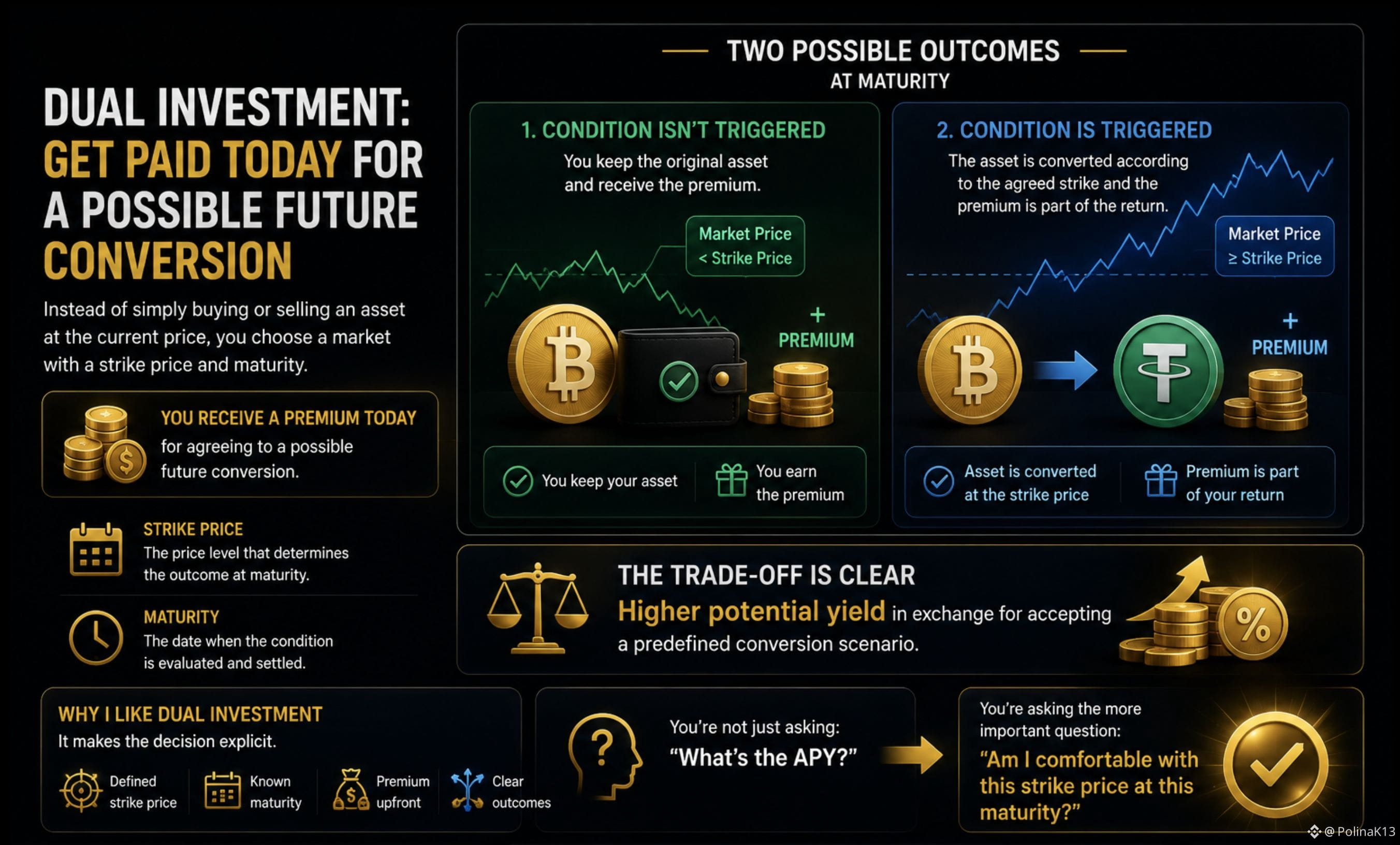
Instead of simply buying or selling an asset at the current price, you choose a market with a strike price and maturity.
Then there are two possible outcomes.
If the condition isn't triggered:
→ you keep the original asset
→ and receive the premium
If the condition is triggered:
→ the asset is converted according to the agreed strike
→ and the premium is part of the return.
So the trade-off is pretty clear:
higher potential yield in exchange for accepting a predefined conversion scenario.
I like this structure because it makes the decision explicit.
You're not just asking:
“What's the APY?”
You're asking:
“Am I comfortable with this strike price at this maturity?”
That is a much more useful question.
#termmax @TermMax
That's the basic idea behind Dual Investment.
Instead of simply buying or selling an asset at the current price, you choose a market with a strike price and maturity.
Then there are two possible outcomes.
If the condition isn't triggered:
→ you keep the original asset
→ and receive the premium
If the condition is triggered:
→ the asset is converted according to the agreed strike
→ and the premium is part of the return.
So the trade-off is pretty clear:
higher potential yield in exchange for accepting a predefined conversion scenario.
I like this structure because it makes the decision explicit.
You're not just asking:
“What's the APY?”
You're asking:
“Am I comfortable with this strike price at this maturity?”
That is a much more useful question.
#termmax @TermMax