Ich habe nachverfolgt, wie Dusk Blöcke über das Netzwerk bewegt, und dabei die übliche Klatsch-Flutgeschichte erwartet. Stattdessen fand ich etwas Schmaleres und Absichtsvolleres.
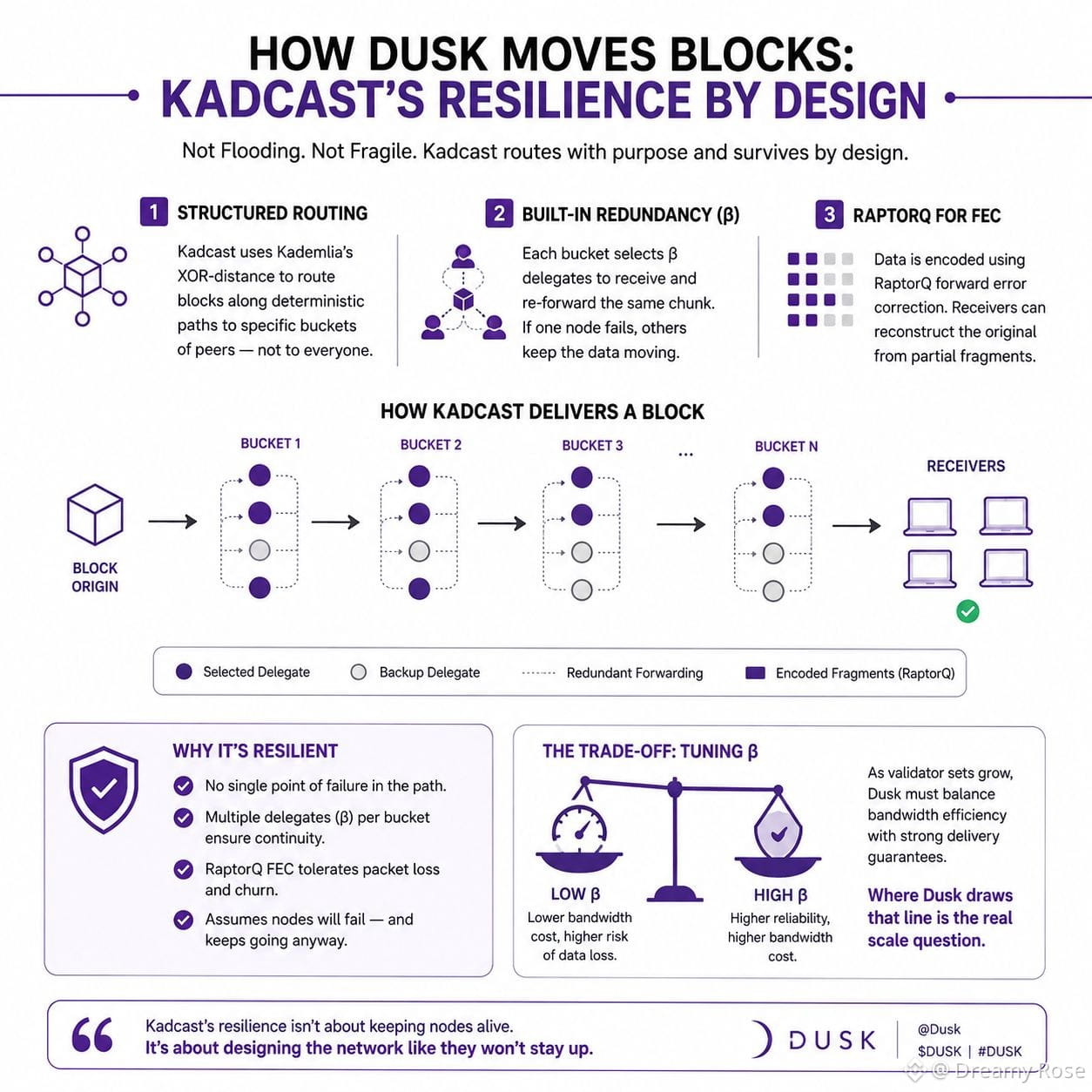
Kadcast flutet nicht. Es routet. Mithilfe der XOR-Distanzstruktur von Kademlia leitet jeder Knoten Daten entlang deterministischer Pfade zu bestimmten Buckets von Peers weiter, nicht zu allen. Das ist die Effizienzgeschichte, bei der die meisten Leute stehenbleiben.
Doch strukturiertes Routing hat eine offensichtliche Schwäche: Wenn ein Knoten auf dem Pfad offline geht, stirbt die Nachricht dann einfach dort? Genau dabei habe ich abgebremst. Kadcast verlässt sich nicht auf einen einzigen Pfad pro Bucket — es nutzt einen Redundanzparameter, β, der pro Bucket mehrere Delegierte auswählt, um denselben Chunk zu empfangen und erneut weiterzuleiten. Wenn einer ausfällt, tragen die anderen ihn weiter.
Dann gibt es RaptorQ, eingebettet als Vorwärtsfehlerkorrektur: Die Daten werden so codiert, dass ein Empfänger die Originaldaten aus unvollständigen Fragmenten rekonstruieren kann, ohne dass jedes Paket unversehrt ankommen muss.
Die Robustheit geht also eigentlich nicht darum, dass Knoten „online bleiben“. Es geht darum, dass das Protokoll annimmt, dass sie es nicht tun, und Redundanz in die Pfadstruktur selbst einbaut, statt sie in blindem Fluten unterzubringen.
Das bringt mich zum Nachdenken, wie β abgestimmt wird, wenn Validator-Sets wachsen: Mehr Redundanz kostet Bandbreite, weniger kostet Zuverlässigkeit. Wo zieht Dusk diese Grenze im Maßstab?
#dusk $DUSK @Dusk
Kadcast flutet nicht. Es routet. Mithilfe der XOR-Distanzstruktur von Kademlia leitet jeder Knoten Daten entlang deterministischer Pfade zu bestimmten Buckets von Peers weiter, nicht zu allen. Das ist die Effizienzgeschichte, bei der die meisten Leute stehenbleiben.
Doch strukturiertes Routing hat eine offensichtliche Schwäche: Wenn ein Knoten auf dem Pfad offline geht, stirbt die Nachricht dann einfach dort? Genau dabei habe ich abgebremst. Kadcast verlässt sich nicht auf einen einzigen Pfad pro Bucket — es nutzt einen Redundanzparameter, β, der pro Bucket mehrere Delegierte auswählt, um denselben Chunk zu empfangen und erneut weiterzuleiten. Wenn einer ausfällt, tragen die anderen ihn weiter.
Dann gibt es RaptorQ, eingebettet als Vorwärtsfehlerkorrektur: Die Daten werden so codiert, dass ein Empfänger die Originaldaten aus unvollständigen Fragmenten rekonstruieren kann, ohne dass jedes Paket unversehrt ankommen muss.
Die Robustheit geht also eigentlich nicht darum, dass Knoten „online bleiben“. Es geht darum, dass das Protokoll annimmt, dass sie es nicht tun, und Redundanz in die Pfadstruktur selbst einbaut, statt sie in blindem Fluten unterzubringen.
Das bringt mich zum Nachdenken, wie β abgestimmt wird, wenn Validator-Sets wachsen: Mehr Redundanz kostet Bandbreite, weniger kostet Zuverlässigkeit. Wo zieht Dusk diese Grenze im Maßstab?
#dusk $DUSK @Dusk