#dusk $DUSK @Dusk
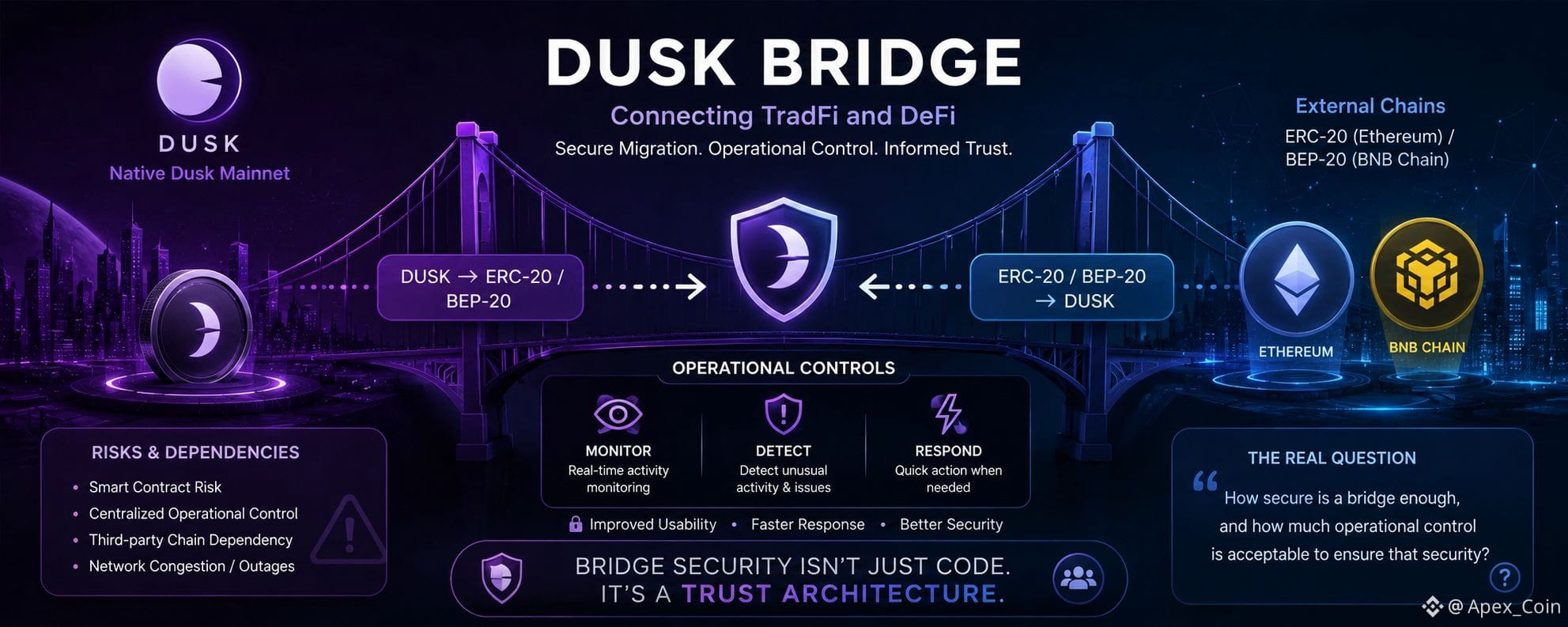
Ich habe angefangen, mir die @Dusk Bridge mit einer ziemlich einfachen Frage anzusehen:
Wie sicher kann $DUSK zwischen verschiedenen Ketten wechseln?
Zunächst wirkt eine Bridge wie nur eine Art Straße für Tokens. Verschiebe DUSK von Native Dusk in eine ERC-20- oder BEP-20-Darstellung und verschiebe es bei Bedarf wieder zurück.
Doch je tiefer ich geschaut habe,
desto mehr wurde mir klar, dass die Sicherheit einer Bridge nicht nur etwas mit Smart Contracts zu tun hat.
Es gibt noch eine zweite Ebene, die viele Menschen oft übersehen: die operative Kontrolle.
Ungewöhnliche Aktivitäten zu überwachen, technische Probleme zu erkennen und die Fähigkeit zu haben, schnell zu reagieren, kann eine Bridge natürlich sicherer machen. Wenn etwas schiefgeht, einfach abzuwarten, bis sich das Problem von selbst löst, ist aber keine Sicherheitsstrategie.
Doch hier kommt der spannende Interessenkonflikt.
Je mehr operative Macht eine Bridge hat, desto wichtiger wird die Frage: Wer kontrolliert diese Macht?
Ist es eine einzelne Partei? Ein Multisig? Sind Notfallaktionen eingeschränkt? Können Gelder tatsächlich eingefroren werden, oder kann das System nur neue Migrationen pausieren? Und sind diese Aktionen transparent genug, damit Nutzer sie überprüfen können?
Genau hier denke ich, wird Bridge-Sicherheit zu einem Problem der „Trust-Budget“.
Du kannst eine Art Risiko durch Monitoring und Eingriffe reduzieren, aber gleichzeitig möglicherweise eine andere Vertrauensannahme einführen.
Und das ist noch bevor man Smart-Contract-Risiken und die Abhängigkeit von externen Netzwerken wie Ethereum oder BNB Chain berücksichtigt. Wenn ein Teil dieser Kette mit Überlastung oder einem Ausfall konfrontiert ist, kann sich auch die Migrationserfahrung auswirken.
Daher glaube ich nicht, dass die richtige Frage einfach lautet:
„Ist die Dusk Bridge sicher?“
Ich würde eher fragen:
„Wem oder was genau vertraue ich, um diese Bridge sicher zu machen?“
Für mich bedeutet ein gutes Bridge-Design nicht zwangsläufig, dass es überhaupt keine operative Kontrolle gibt. Es geht darum, diese Kontrolle zu begrenzen, transparent zu machen und zur Rechenschaftspflicht zu machen.
Das ist der Teil der Dusk Bridge, über den ich noch immer nachdenke. 🤔
Ich habe angefangen, mir die @Dusk Bridge mit einer ziemlich einfachen Frage anzusehen:
Wie sicher kann $DUSK zwischen verschiedenen Ketten wechseln?
Zunächst wirkt eine Bridge wie nur eine Art Straße für Tokens. Verschiebe DUSK von Native Dusk in eine ERC-20- oder BEP-20-Darstellung und verschiebe es bei Bedarf wieder zurück.
Doch je tiefer ich geschaut habe,
desto mehr wurde mir klar, dass die Sicherheit einer Bridge nicht nur etwas mit Smart Contracts zu tun hat.
Es gibt noch eine zweite Ebene, die viele Menschen oft übersehen: die operative Kontrolle.
Ungewöhnliche Aktivitäten zu überwachen, technische Probleme zu erkennen und die Fähigkeit zu haben, schnell zu reagieren, kann eine Bridge natürlich sicherer machen. Wenn etwas schiefgeht, einfach abzuwarten, bis sich das Problem von selbst löst, ist aber keine Sicherheitsstrategie.
Doch hier kommt der spannende Interessenkonflikt.
Je mehr operative Macht eine Bridge hat, desto wichtiger wird die Frage: Wer kontrolliert diese Macht?
Ist es eine einzelne Partei? Ein Multisig? Sind Notfallaktionen eingeschränkt? Können Gelder tatsächlich eingefroren werden, oder kann das System nur neue Migrationen pausieren? Und sind diese Aktionen transparent genug, damit Nutzer sie überprüfen können?
Genau hier denke ich, wird Bridge-Sicherheit zu einem Problem der „Trust-Budget“.
Du kannst eine Art Risiko durch Monitoring und Eingriffe reduzieren, aber gleichzeitig möglicherweise eine andere Vertrauensannahme einführen.
Und das ist noch bevor man Smart-Contract-Risiken und die Abhängigkeit von externen Netzwerken wie Ethereum oder BNB Chain berücksichtigt. Wenn ein Teil dieser Kette mit Überlastung oder einem Ausfall konfrontiert ist, kann sich auch die Migrationserfahrung auswirken.
Daher glaube ich nicht, dass die richtige Frage einfach lautet:
„Ist die Dusk Bridge sicher?“
Ich würde eher fragen:
„Wem oder was genau vertraue ich, um diese Bridge sicher zu machen?“
Für mich bedeutet ein gutes Bridge-Design nicht zwangsläufig, dass es überhaupt keine operative Kontrolle gibt. Es geht darum, diese Kontrolle zu begrenzen, transparent zu machen und zur Rechenschaftspflicht zu machen.
Das ist der Teil der Dusk Bridge, über den ich noch immer nachdenke. 🤔