
Ein Bahnticket ist im Grunde ein kleines Versprechen, das an ein Ziel und eine Zeit gebunden ist.
Wenn ich TermMax genauer ansehe, denke ich, dass sein Fixed-rate Token mehr konzeptionelle Arbeit leistet, als die Headline „fixed-rate lending“ vermuten lässt.
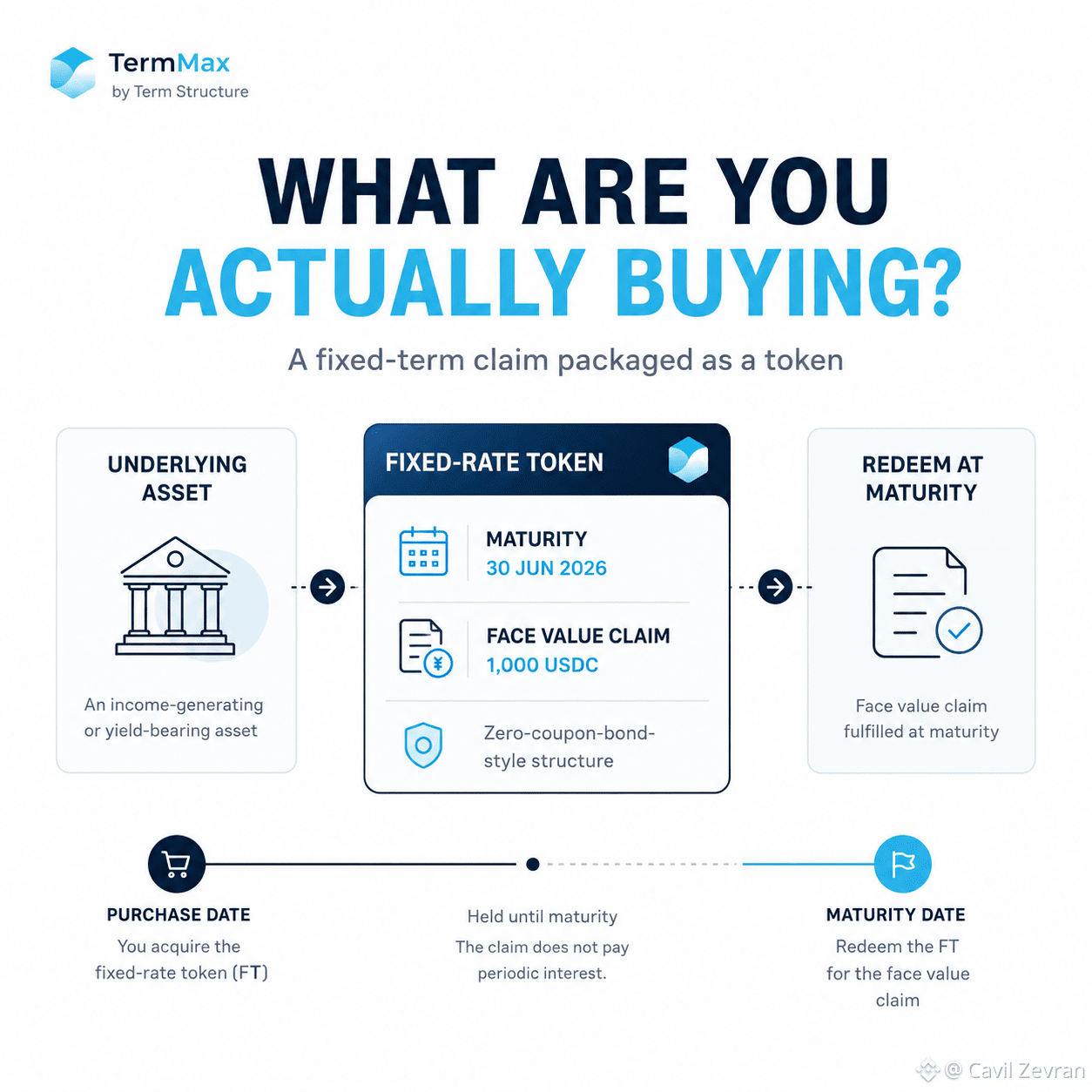
Ein FT steht für das Recht, den Nennwert einer Schuldposition bei Fälligkeit zurückzulösen. Das klingt nach Technik.
Für einen Käufer verändert das, was tatsächlich gekauft wird.
Du hinterlegst nicht einfach nur einen Vermögenswert und schaust zu, wie eine APY-Zahl stumm auf einem Dashboard sitzt. Die Festlaufzeit-Forderung selbst ist tokenisiert.
Halte das FT bis zur Fälligkeit und es kann gegen den zugrunde liegenden Wert eingelöst werden, den es repräsentiert. Das Protokoll beschreibt es in Begriffen von Zero-Coupon-Bonds.
Ich finde, das ist wichtiger als allein die Bezeichnung „fixed-rate“.
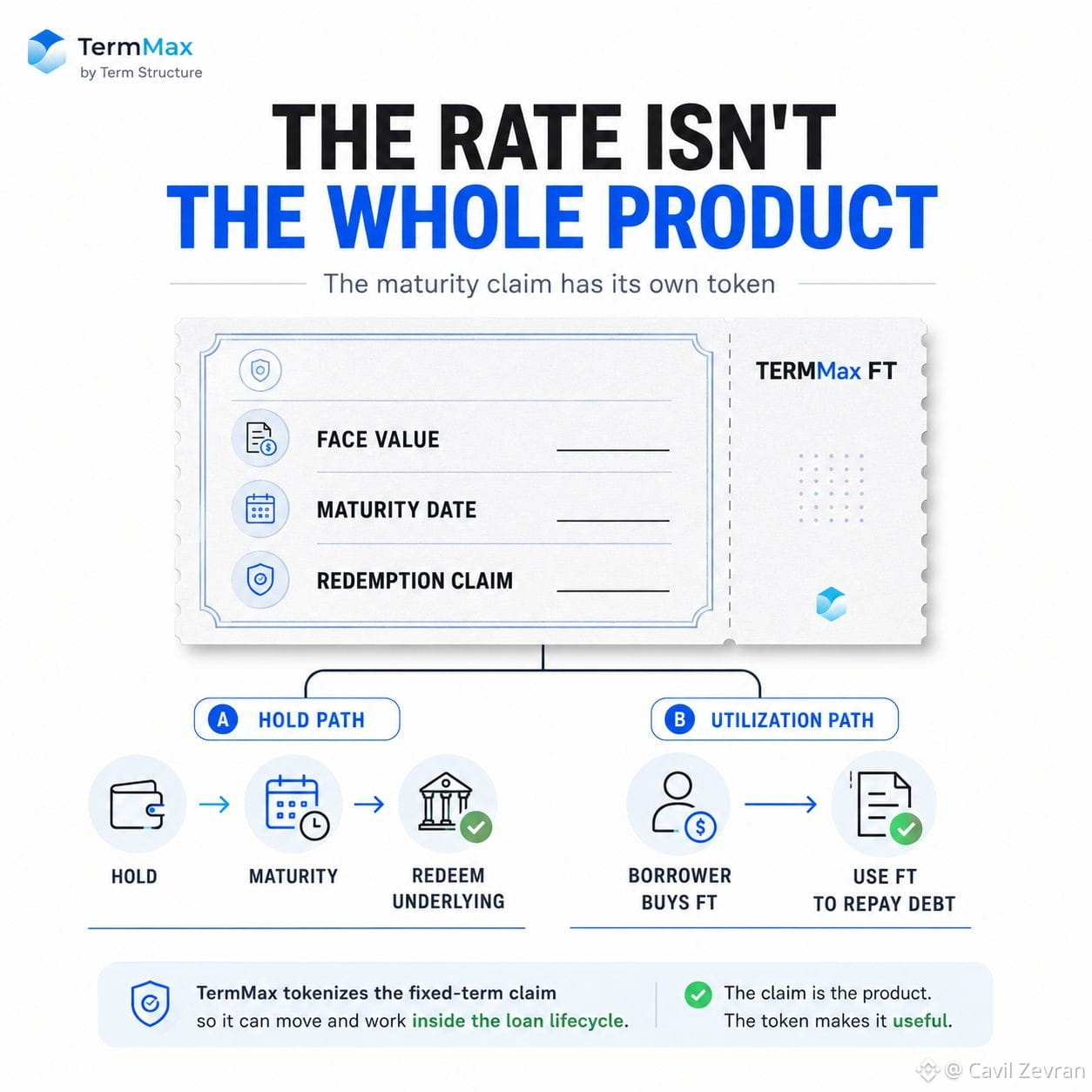
Denn sobald eine zukünftige Forderung als Token existiert, kann TermMax dieses FT auch an anderer Stelle im Kredit-Lebenszyklus verwenden. Kreditnehmer können entsprechende FTs vor der Fälligkeit erwerben und sie nutzen, um Schulden zurückzuzahlen – statt die Position so zu behandeln, als würde sie erst am Fälligkeitstag „verschwinden“.
Also der ruhigere Punkt hier ist die Tokenisierung der Laufzeit selbst.
Das Fälligkeitsdatum, die Rücklöseforderung und die fixed-rate-Ökonomik werden in etwas verpackt, das das Protokoll tatsächlich über seinen Markt bewegen kann.
Für einen Käufer macht das das Produkt leichter einzuordnen.
Nicht „welcher Ertrag wird heute beworben?“
Eher: „Welche Forderung kaufe ich – und was wird daraus bei Fälligkeit?“
Dieser Unterschied ist in der Oberfläche eher klein. Strukturell leistet er jedoch sehr viel Arbeit.
@TermMax #TermMax
Wenn ich TermMax genauer ansehe, denke ich, dass sein Fixed-rate Token mehr konzeptionelle Arbeit leistet, als die Headline „fixed-rate lending“ vermuten lässt.
Ein FT steht für das Recht, den Nennwert einer Schuldposition bei Fälligkeit zurückzulösen. Das klingt nach Technik.
Für einen Käufer verändert das, was tatsächlich gekauft wird.
Du hinterlegst nicht einfach nur einen Vermögenswert und schaust zu, wie eine APY-Zahl stumm auf einem Dashboard sitzt. Die Festlaufzeit-Forderung selbst ist tokenisiert.
Halte das FT bis zur Fälligkeit und es kann gegen den zugrunde liegenden Wert eingelöst werden, den es repräsentiert. Das Protokoll beschreibt es in Begriffen von Zero-Coupon-Bonds.
Ich finde, das ist wichtiger als allein die Bezeichnung „fixed-rate“.
Denn sobald eine zukünftige Forderung als Token existiert, kann TermMax dieses FT auch an anderer Stelle im Kredit-Lebenszyklus verwenden. Kreditnehmer können entsprechende FTs vor der Fälligkeit erwerben und sie nutzen, um Schulden zurückzuzahlen – statt die Position so zu behandeln, als würde sie erst am Fälligkeitstag „verschwinden“.
Also der ruhigere Punkt hier ist die Tokenisierung der Laufzeit selbst.
Das Fälligkeitsdatum, die Rücklöseforderung und die fixed-rate-Ökonomik werden in etwas verpackt, das das Protokoll tatsächlich über seinen Markt bewegen kann.
Für einen Käufer macht das das Produkt leichter einzuordnen.
Nicht „welcher Ertrag wird heute beworben?“
Eher: „Welche Forderung kaufe ich – und was wird daraus bei Fälligkeit?“
Dieser Unterschied ist in der Oberfläche eher klein. Strukturell leistet er jedoch sehr viel Arbeit.
@TermMax #TermMax