je mehr ich über deterministische Abwicklung nachdenke, desto mehr lande ich bei etwas, das wie ein Kompliment klingt, aber eigentlich eine komplizierte Frage ist
Instant Settlement wird in Krypto als reiner Gewinn dargestellt. Dusk beseitigt die Mehrdeutigkeit, mit der TradFi leben muss – kein T+1-Fenster mehr, in dem ein Trade zwar vereinbart ist, aber noch nicht final
also lautet die Frage nicht, ob das Entfernen dieses Fensters gut ist
offenbar ist es das. Mehrdeutigkeit ist der Ort, an dem Abwicklungsrisiko lebt
die Frage ist, ob das Entfernen des Fensters das Risiko entfernt, oder es früher verlagert – dorthin, wo es schwerer ist, es zu erkennen
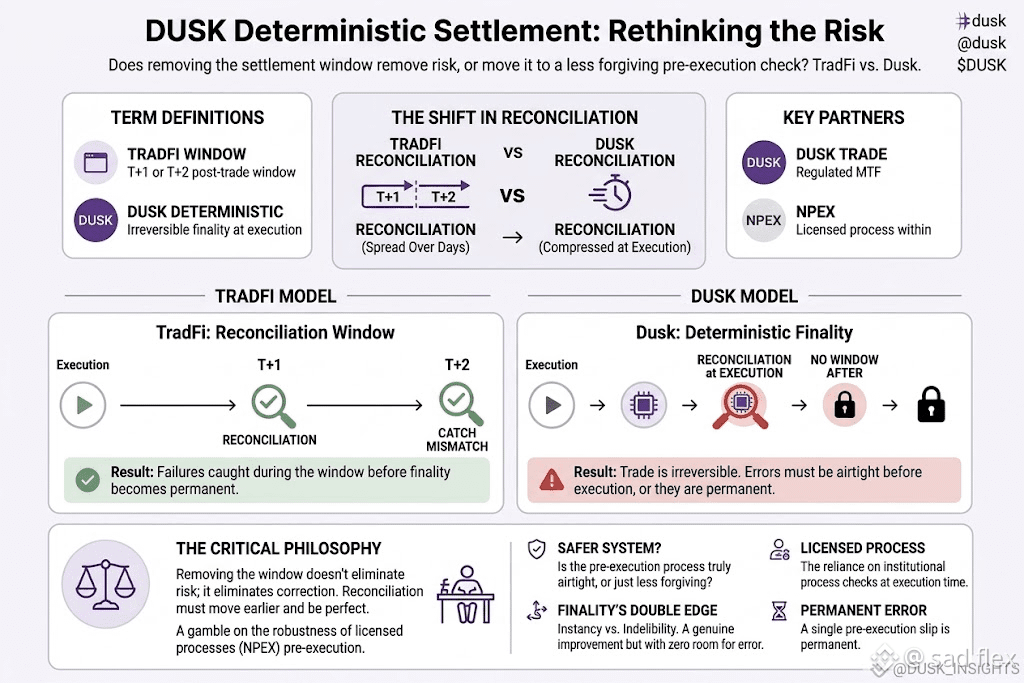
TradFi-Fenster existieren, weil die Abstimmung Zeit braucht. Gegenparteien bestätigen, dass ein Trade auf die gleiche Weise passiert ist, bevor er final wird. Diese Lücke ist es, in der Fehler entdeckt werden: Eine Unstimmigkeit zeigt sich während des Fensters, statt erst dann, wenn die Abwicklung unumkehrbar ist. Deterministische Abwicklung schließt diese Lücke: Der Trade ist final, sobald er passiert – das beseitigt Unsicherheit für Gegenparteien, die auf Bestätigung warten
das ist eine echte Verbesserung
aber die Abstimmung verschwindet nicht, nur weil die Abwicklung schneller ist. sie findet vor der Ausführung statt, statt danach. Eine Prüfung, die eine Unstimmigkeit während T+1 hätte erwischen können, muss jetzt bei der Ausführung absolut wasserdicht sein – kein Fenster mehr. Deterministische Abwicklung beseitigt die Abstimmung nicht; sie verlagert sie in einen einzigen engeren Moment mit null Spielraum für Korrekturen
das ist der Punkt, den die Geschwindigkeit allein dir nicht verrät
Dusk Trade arbeitet als reguliertes MTF nach EU-Regeln, NPEX bringt seinen lizenzierten Prozess mit, und darauf zu setzen, dass die Abstimmung bei der Ausführung solide ist
was ich noch nicht geklärt habe, ist, ob das sicherer ist – oder ob es weniger verzeihend für Fehler ist. Die TradFi-Fenster wurden gebaut, um genau solche Fehler abzufangen
Dusk hat die Geschwindigkeit, die lizenzierten Partner – ein echter Fall für Finalität bei der Ausführung statt Finalität nach einem Fenster
die Frage, zu der ich immer wieder zurückkomme, ist, ob das Entfernen des Fensters die Abwicklung sicherer macht – oder die letzte Chance nimmt, einen Fehler noch vor endgültiger Abwicklung zu erwischen,
#dusk $DUSK @Dusk
$币安人生
$AIO
Instant Settlement wird in Krypto als reiner Gewinn dargestellt. Dusk beseitigt die Mehrdeutigkeit, mit der TradFi leben muss – kein T+1-Fenster mehr, in dem ein Trade zwar vereinbart ist, aber noch nicht final
also lautet die Frage nicht, ob das Entfernen dieses Fensters gut ist
offenbar ist es das. Mehrdeutigkeit ist der Ort, an dem Abwicklungsrisiko lebt
die Frage ist, ob das Entfernen des Fensters das Risiko entfernt, oder es früher verlagert – dorthin, wo es schwerer ist, es zu erkennen
TradFi-Fenster existieren, weil die Abstimmung Zeit braucht. Gegenparteien bestätigen, dass ein Trade auf die gleiche Weise passiert ist, bevor er final wird. Diese Lücke ist es, in der Fehler entdeckt werden: Eine Unstimmigkeit zeigt sich während des Fensters, statt erst dann, wenn die Abwicklung unumkehrbar ist. Deterministische Abwicklung schließt diese Lücke: Der Trade ist final, sobald er passiert – das beseitigt Unsicherheit für Gegenparteien, die auf Bestätigung warten
das ist eine echte Verbesserung
aber die Abstimmung verschwindet nicht, nur weil die Abwicklung schneller ist. sie findet vor der Ausführung statt, statt danach. Eine Prüfung, die eine Unstimmigkeit während T+1 hätte erwischen können, muss jetzt bei der Ausführung absolut wasserdicht sein – kein Fenster mehr. Deterministische Abwicklung beseitigt die Abstimmung nicht; sie verlagert sie in einen einzigen engeren Moment mit null Spielraum für Korrekturen
das ist der Punkt, den die Geschwindigkeit allein dir nicht verrät
Dusk Trade arbeitet als reguliertes MTF nach EU-Regeln, NPEX bringt seinen lizenzierten Prozess mit, und darauf zu setzen, dass die Abstimmung bei der Ausführung solide ist
was ich noch nicht geklärt habe, ist, ob das sicherer ist – oder ob es weniger verzeihend für Fehler ist. Die TradFi-Fenster wurden gebaut, um genau solche Fehler abzufangen
Dusk hat die Geschwindigkeit, die lizenzierten Partner – ein echter Fall für Finalität bei der Ausführung statt Finalität nach einem Fenster
die Frage, zu der ich immer wieder zurückkomme, ist, ob das Entfernen des Fensters die Abwicklung sicherer macht – oder die letzte Chance nimmt, einen Fehler noch vor endgültiger Abwicklung zu erwischen,
#dusk $DUSK @Dusk
$币安人生
$AIO