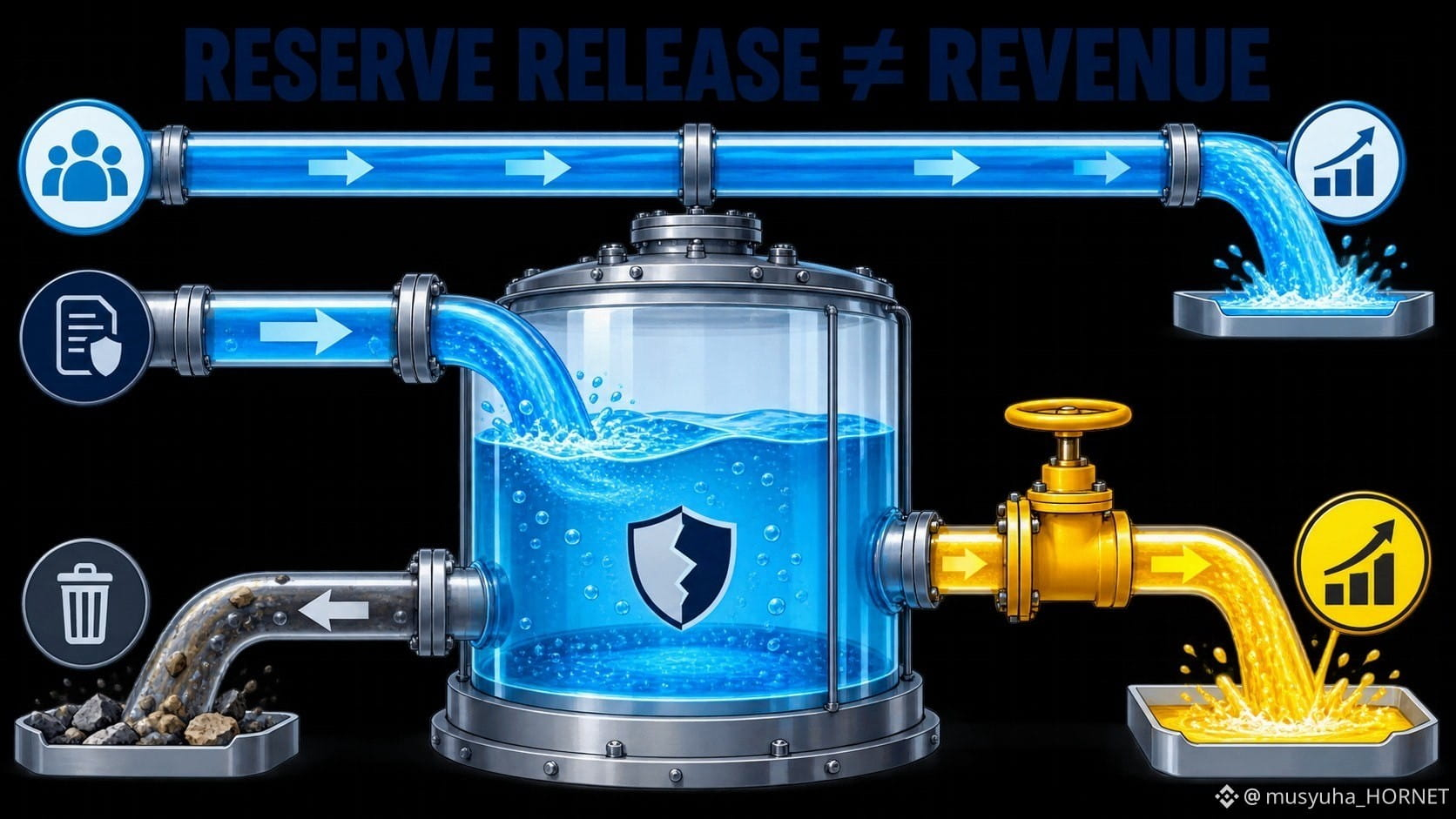
A bank can report a credit provision benefit without earning new customer revenue.
The allowance for credit losses is an estimate of expected losses. The provision adjusts that allowance through the income statement. Net charge-offs use the allowance when specific losses are recognized. If expected losses fall—or a portfolio is sold or reclassified—part of a previous reserve can be released, creating a benefit.
For $GSB, the useful roll-forward is:
opening allowance + provision − net charge-offs ± portfolio changes = closing allowance
This is why a negative provision can lift earnings while loan revenue is unchanged. It may reflect genuinely better credit expectations, but it can also come from a portfolio transaction or a change in assumptions.
My five checks are:
1. loan balances and mix;
2. allowance coverage;
3. provision expense or benefit;
4. charge-offs and recoveries;
5. portfolio sales, transfers or model changes.
The release is not fake. It reverses an estimate that affected prior earnings. But it should not be confused with recurring operating revenue.
@BinanceCIS #bStocksCIS
The allowance for credit losses is an estimate of expected losses. The provision adjusts that allowance through the income statement. Net charge-offs use the allowance when specific losses are recognized. If expected losses fall—or a portfolio is sold or reclassified—part of a previous reserve can be released, creating a benefit.
For $GSB, the useful roll-forward is:
opening allowance + provision − net charge-offs ± portfolio changes = closing allowance
This is why a negative provision can lift earnings while loan revenue is unchanged. It may reflect genuinely better credit expectations, but it can also come from a portfolio transaction or a change in assumptions.
My five checks are:
1. loan balances and mix;
2. allowance coverage;
3. provision expense or benefit;
4. charge-offs and recoveries;
5. portfolio sales, transfers or model changes.
The release is not fake. It reverses an estimate that affected prior earnings. But it should not be confused with recurring operating revenue.
@BinanceCIS #bStocksCIS