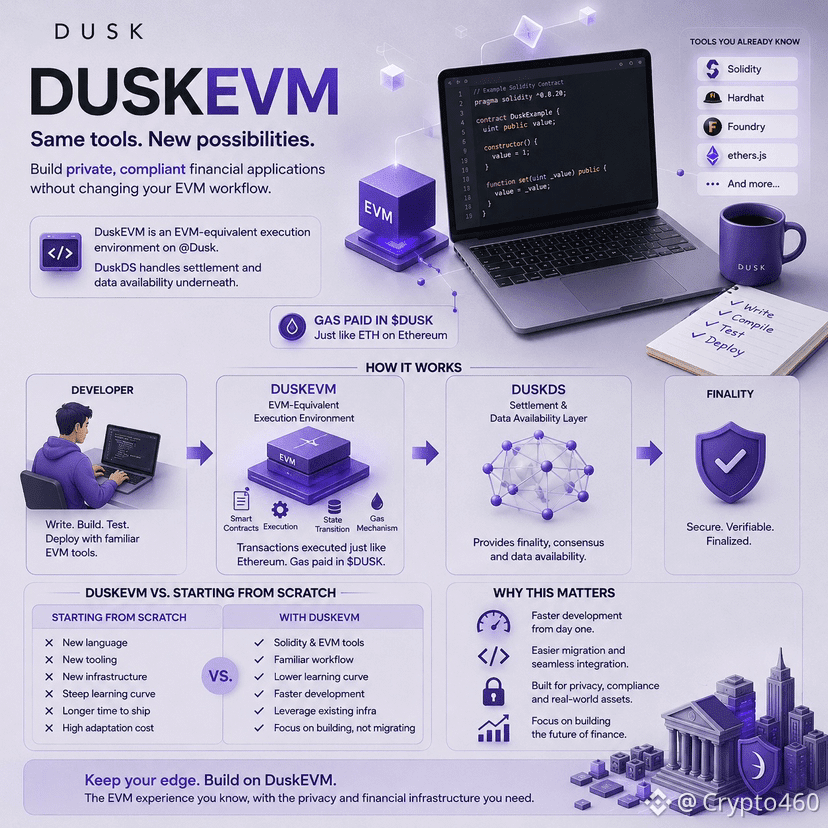
Ich hatte erwartet, dass DuskEVM einen komplett anderen Entwickler-Workflow erfordern würde….
Dann habe ich mir die Tools angesehen. 👍
Solidity bleibt vertraut.
Hardhat.
Foundry.
ethers.
Der übliche EVM-Entwicklungsstack gilt weiterhin.
Das hat meine Aufmerksamkeit geweckt, weil der Wechsel zu einer neuen Blockchain oft bedeutet, zuerst eine neue Umgebung zu lernen, bevor man etwas Nützliches bauen kann.
DuskEVM geht einen anderen Weg. Es bietet eine EVM-äquivalente Ausführungsumgebung auf @Dusk , während DuskDS darunter die Abwicklung und die Datenverfügbarkeit übernimmt…
Der Entwickler muss also den EVM-Workflow nicht wegwerfen, um im Netzwerk zu bauen, und Gas wird $DUSK auf dieselbe Weise bezahlt wie ETH auf Ethereum funktioniert.
Für mich verändert das die Frage der Akzeptanz.
Die Frage ist nicht mehr nur, ob Dusk die Funktionen hat, die Entwickler brauchen…
Sondern auch, wie viel bestehendes EVM-Wissen und welche Infrastruktur Entwickler mitbringen können.
Es gibt immer noch etwas, das ich testen möchte.
Kompatibilität in der Dokumentation ist das eine.
Eine echte Anwendung bereitzustellen, Verträge zu debuggen, Wallets zu verbinden und die Anwendung zu warten, ist etwas anderes.
Daran wird sich meiner Meinung nach zeigen, ob DuskEVM wirklich so reibungslos funktioniert, wie es die Architektur vermuten lässt. #dusk
Dann habe ich mir die Tools angesehen. 👍
Solidity bleibt vertraut.
Hardhat.
Foundry.
ethers.
Der übliche EVM-Entwicklungsstack gilt weiterhin.
Das hat meine Aufmerksamkeit geweckt, weil der Wechsel zu einer neuen Blockchain oft bedeutet, zuerst eine neue Umgebung zu lernen, bevor man etwas Nützliches bauen kann.
DuskEVM geht einen anderen Weg. Es bietet eine EVM-äquivalente Ausführungsumgebung auf @Dusk , während DuskDS darunter die Abwicklung und die Datenverfügbarkeit übernimmt…
Der Entwickler muss also den EVM-Workflow nicht wegwerfen, um im Netzwerk zu bauen, und Gas wird $DUSK auf dieselbe Weise bezahlt wie ETH auf Ethereum funktioniert.
Für mich verändert das die Frage der Akzeptanz.
Die Frage ist nicht mehr nur, ob Dusk die Funktionen hat, die Entwickler brauchen…
Sondern auch, wie viel bestehendes EVM-Wissen und welche Infrastruktur Entwickler mitbringen können.
Es gibt immer noch etwas, das ich testen möchte.
Kompatibilität in der Dokumentation ist das eine.
Eine echte Anwendung bereitzustellen, Verträge zu debuggen, Wallets zu verbinden und die Anwendung zu warten, ist etwas anderes.
Daran wird sich meiner Meinung nach zeigen, ob DuskEVM wirklich so reibungslos funktioniert, wie es die Architektur vermuten lässt. #dusk