There's a particular kind of quiet that shows up in infrastructure projects, and it's worth learning to read correctly. It's not the same as failure. But it's not obviously success either.
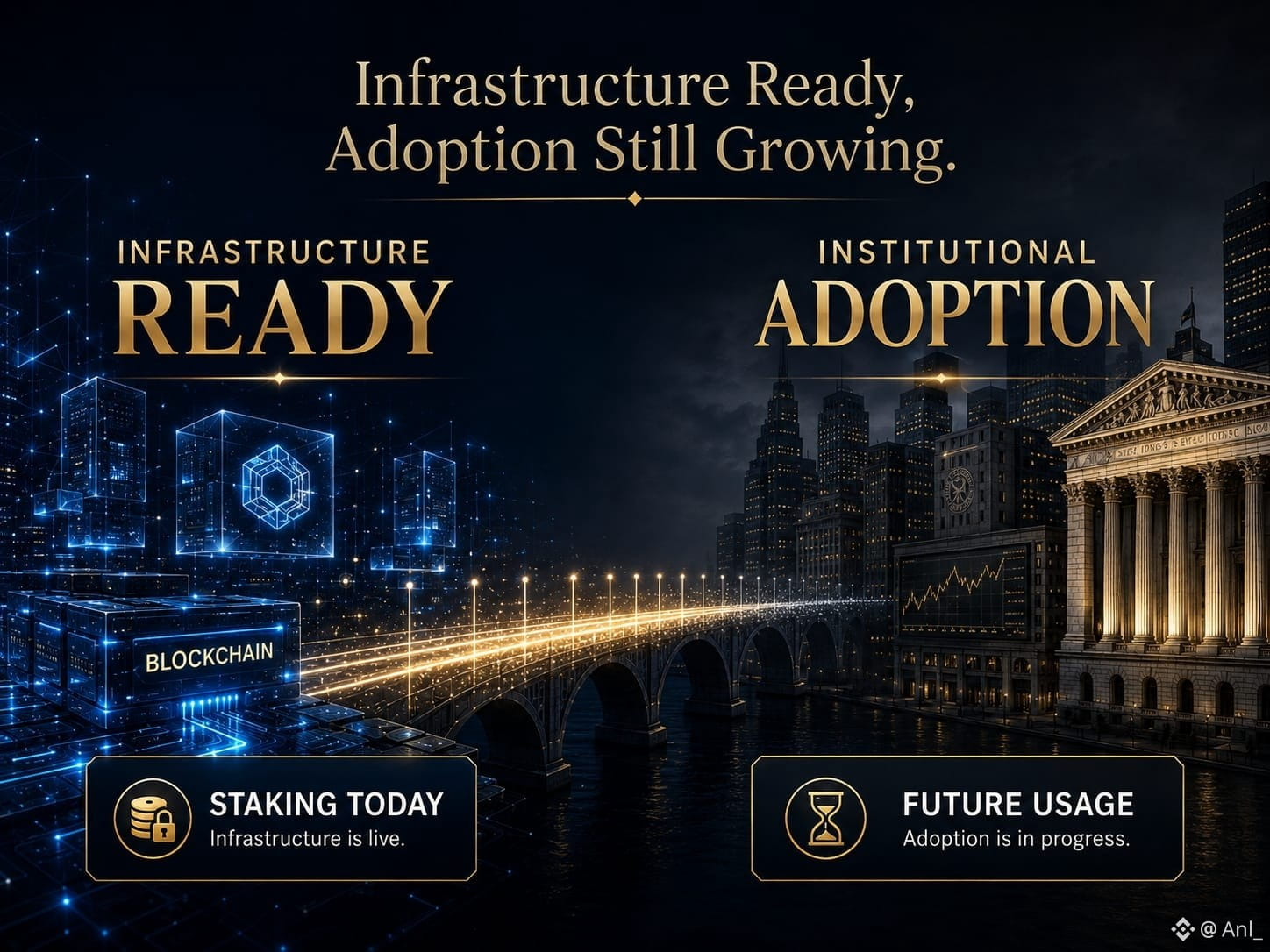
Dusk has been on mainnet for a while now. The technical case is coherent confidential smart contracts, the XSC standard, selective disclosure all built around a specific, real problem that regulated finance genuinely has. And yet, when you look at actual network activity, most of what's happening is staking. Confidential contracts, real securities issuance — still uncommon, by most available signals.
That gap between what the infrastructure is capable of and what's actually running on it deserves to be sat with, rather than explained away too quickly.
A few things do work in its favor, and they're worth naming plainly. Early vesting has already run its course, so there isn't a looming unlock event distorting supply expectations. Partnerships with licensed venues give the regulatory positioning something closer to grounding than aspiration. And by most technical accounts, the infrastructure layer itself isn't the weak point this doesn't read as a story
The harder question is about incentive alignment. The institutions best positioned to actually use this kind of privacy-and-compliance infrastructure may never need to hold large amounts of the token itself their exposure could stay minimal, just enough for operational use. Meanwhile, the people who do hold the token are absorbing ongoing emissions, waiting on volume that hasn't shown up yet in meaningful size. Two very different relationships to the same asset, without an obvious mechanism pulling them into alignment
That's not a criticism of the design. It's just an honest description of where things currently stand technically capable, financially still waiting on proof.
The question no one can really answer yet, including the project itself, is how long "the infrastructure is ready can remain a satisfying answer before the market starts demanding the infrastructure is being used.
@Dusk #dusk $DUSK
Dusk has been on mainnet for a while now. The technical case is coherent confidential smart contracts, the XSC standard, selective disclosure all built around a specific, real problem that regulated finance genuinely has. And yet, when you look at actual network activity, most of what's happening is staking. Confidential contracts, real securities issuance — still uncommon, by most available signals.
That gap between what the infrastructure is capable of and what's actually running on it deserves to be sat with, rather than explained away too quickly.
A few things do work in its favor, and they're worth naming plainly. Early vesting has already run its course, so there isn't a looming unlock event distorting supply expectations. Partnerships with licensed venues give the regulatory positioning something closer to grounding than aspiration. And by most technical accounts, the infrastructure layer itself isn't the weak point this doesn't read as a story
The harder question is about incentive alignment. The institutions best positioned to actually use this kind of privacy-and-compliance infrastructure may never need to hold large amounts of the token itself their exposure could stay minimal, just enough for operational use. Meanwhile, the people who do hold the token are absorbing ongoing emissions, waiting on volume that hasn't shown up yet in meaningful size. Two very different relationships to the same asset, without an obvious mechanism pulling them into alignment
That's not a criticism of the design. It's just an honest description of where things currently stand technically capable, financially still waiting on proof.
The question no one can really answer yet, including the project itself, is how long "the infrastructure is ready can remain a satisfying answer before the market starts demanding the infrastructure is being used.
@Dusk #dusk $DUSK