Je mehr ich über DuskEVM nachdenke, desto öfter lande ich bei etwas, das nach einem Kompliment klingt, aber eigentlich eine komplizierte Frage ist
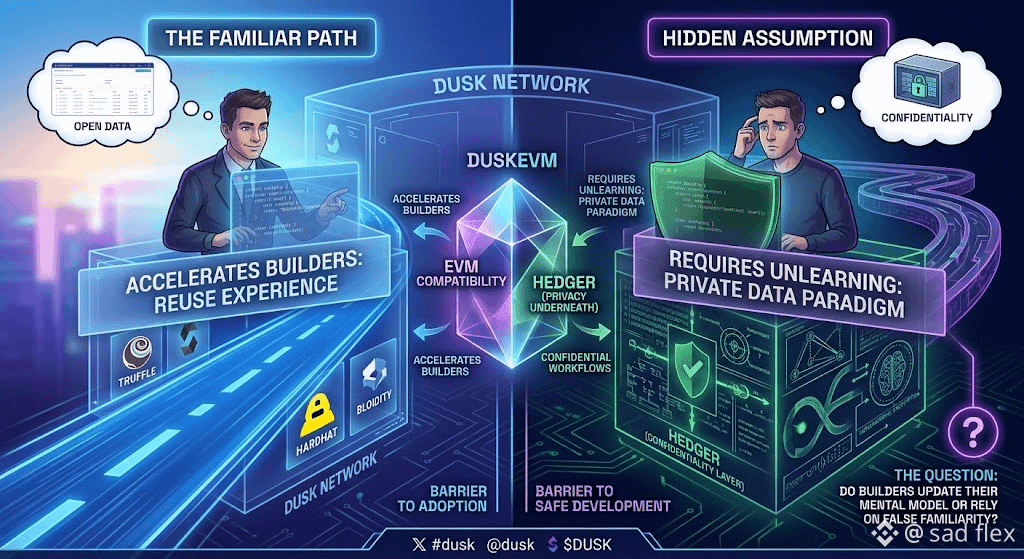
den Buildenden einen vertrauten Solidity-Weg nach Dusk zu geben, ist der naheliegende richtige Schritt. Niemand möchte für eine neue Chain einen Toolchain-Wechsel hinnehmen, und DuskEVM senkt diese Hürde: die gleiche EVM-Umgebung, die Entwickler kennen — unter der Haube übernimmt Hedger vertrauliche Workflows mit homomorpher Verschlüsselung und Zero-Knowledge-Beweisen
also ist die Frage nicht, ob EVM-Kompatibilität richtig war
die Frage ist, ob Vertrautheit hier neutral ist — oder stillschweigend Annahmen importiert, die nicht mehr gelten, sobald Vertraulichkeit ins Spiel kommt
auf der einen Seite ist EVM-Vertrautheit ein echter Beschleuniger. Entwickler bringen jahrelange Solidity-Erfahrung direkt auf DuskEVM, ohne ein neues mentales Modell lernen zu müssen. Das gibt Dusk Zeit, sich auf die schwierigere Aufgabe zu konzentrieren: regulierte Anwendungen korrekt zu bauen — statt einen Adoptionskampf nur wegen der Syntax zu führen
das ist ein echter Vorteil
auf der anderen Seite haben die meisten Solidity-Entwickler jahrelang angenommen, dass auf einer EVM-Chain alles standardmäßig öffentlich ist. Diese Transparenz ist in die Art eingebaut, wie man über die Sicherheit von Contracts nachdenkt. Hedger verändert diese Annahme darunter. Workflows bleiben vertraulich, bleiben aber dennoch nachweisbar korrekt. Wer Instinkte wie „alles ist öffentlich“ mit auf DuskEVM bringt, muss etwas verlernen, das die Schnittstelle nicht signalisiert, dass man es verlernen muss
diese Lücke ist leicht zu übersehen, weil die Tools so vertraut sind
was ich noch nicht geklärt habe, ist, ob Vertrautheit die echte Hürde für sicheres Entwickeln senkt — oder ob sie ein falsches Gefühl von Sicherheit erzeugt, das Buildende dazu bringt, über vertrauliche Contracts genauso nachzudenken wie zuvor über öffentliche.
Dusk hat EVM-Kompatibilität, die Kryptografie von Hedger darunter, und einen echten Grund, warum Buildende schneller auftauchen als auf einem ungewohnten Stack
die Frage, zu der ich immer wieder zurückkehre, ist, ob Entwickler auf DuskEVM ihr mentales Modell aktualisieren — oder ob Vertrautheit bedeutet, dass die meisten es nie wirklich vollständig tun
#dusk @Dusk $DUSK $SNDK $VELVET
den Buildenden einen vertrauten Solidity-Weg nach Dusk zu geben, ist der naheliegende richtige Schritt. Niemand möchte für eine neue Chain einen Toolchain-Wechsel hinnehmen, und DuskEVM senkt diese Hürde: die gleiche EVM-Umgebung, die Entwickler kennen — unter der Haube übernimmt Hedger vertrauliche Workflows mit homomorpher Verschlüsselung und Zero-Knowledge-Beweisen
also ist die Frage nicht, ob EVM-Kompatibilität richtig war
die Frage ist, ob Vertrautheit hier neutral ist — oder stillschweigend Annahmen importiert, die nicht mehr gelten, sobald Vertraulichkeit ins Spiel kommt
auf der einen Seite ist EVM-Vertrautheit ein echter Beschleuniger. Entwickler bringen jahrelange Solidity-Erfahrung direkt auf DuskEVM, ohne ein neues mentales Modell lernen zu müssen. Das gibt Dusk Zeit, sich auf die schwierigere Aufgabe zu konzentrieren: regulierte Anwendungen korrekt zu bauen — statt einen Adoptionskampf nur wegen der Syntax zu führen
das ist ein echter Vorteil
auf der anderen Seite haben die meisten Solidity-Entwickler jahrelang angenommen, dass auf einer EVM-Chain alles standardmäßig öffentlich ist. Diese Transparenz ist in die Art eingebaut, wie man über die Sicherheit von Contracts nachdenkt. Hedger verändert diese Annahme darunter. Workflows bleiben vertraulich, bleiben aber dennoch nachweisbar korrekt. Wer Instinkte wie „alles ist öffentlich“ mit auf DuskEVM bringt, muss etwas verlernen, das die Schnittstelle nicht signalisiert, dass man es verlernen muss
diese Lücke ist leicht zu übersehen, weil die Tools so vertraut sind
was ich noch nicht geklärt habe, ist, ob Vertrautheit die echte Hürde für sicheres Entwickeln senkt — oder ob sie ein falsches Gefühl von Sicherheit erzeugt, das Buildende dazu bringt, über vertrauliche Contracts genauso nachzudenken wie zuvor über öffentliche.
Dusk hat EVM-Kompatibilität, die Kryptografie von Hedger darunter, und einen echten Grund, warum Buildende schneller auftauchen als auf einem ungewohnten Stack
die Frage, zu der ich immer wieder zurückkehre, ist, ob Entwickler auf DuskEVM ihr mentales Modell aktualisieren — oder ob Vertrautheit bedeutet, dass die meisten es nie wirklich vollständig tun
#dusk @Dusk $DUSK $SNDK $VELVET