


Es gibt Momente, in denen du merkst, dass ein Projekt, dem du innerhalb des Tezos-Ökosystems gefolgt bist, langsam auch weit darüber hinaus wahrgenommen wird. Dass metals.io diese Woche in der Financial Times vorgestellt wurde, war so ein Moment. Wir haben beobachtet, wie die Plattform von tokenisiertem Uran zu einem deutlich breiteren Rohstoffangebot gewachsen ist – und dass sie nun Teil einer ernsthaften Diskussion darüber wird, in welche Richtung sich globale Rohstoffmärkte bewegen könnten, hat sich entsprechend bedeutsam angefühlt.
Dieses Gefühl von Entdeckung zieht sich auch durch den Rest der Ausgabe dieser Woche. Cryptonio ist mit Teil VI seiner Hidden-Gems-Reihe zurück – und findet irgendwie fünf weitere von der Community gebaute Tezos-Tools, die sich lohnen, zu deinen Lesezeichen hinzuzufügen. Außerdem decken wir Arts & Culture im Tezos-Ökosystem ab. Wir geben allen noch einmal den Hinweis, sich das Datum für Responsive Signals im Museum of the Moving Image während der Armory Week diesen September vorzumerken.
Insgesamt ist das diese Woche eine schöne Mischung: ein Tezos-Projekt, das es auf die Seiten der FT geschafft hat, Entwickler, die nützliche Tools für die Community schaffen, und Künstler, die sich darauf vorbereiten, sich in New York wiederzutreffen. Also schnapp dir deinen Kaffee, mach es dir bequem – und lass mich dich auf den Stand bringen, was diese Woche rund um Tezos passiert ist.
Metals.io landet in der Financial Times
Wenn du in den vergangenen Monaten The Baking Sheet gelesen hast, ist dir wahrscheinlich aufgefallen, wie oft metals.io in diesen Seiten auftaucht. Was mit tokenisiertem Uran begann, hat sich stetig auf Gold, Nickel, Kobalt und einen Korb strategischer Metalle ausgeweitet – und jede weitere Ergänzung macht die größere Ambition hinter der Plattform ein Stück klarer. Diese Woche hat diese Geschichte ein deutlich breiteres Publikum erreicht.
Die Financial Times hat metals.io in einem breiteren Beitrag über die wachsende Überschneidung zwischen Rohstoffen und Krypto vorgestellt. Dabei wurde untersucht, wie Tokenisierung Anlegern neue Wege eröffnen könnte, um physische Metalle zu erschließen und zu handeln. Für ein Tezos-basiertes Projekt, dem wir eng folgen, ist das Erscheinen in der FT – zusammen mit einer breiteren Diskussion über die Zukunft der Rohstoffmärkte – ein ziemlich bedeutender Moment.
Der Artikel nimmt sich ziemlich viel Zeit für ein Problem, das metals.io von Anfang an anzugehen versucht. Commodity-Investments können sich auch für Alltagsinvestoren überraschend schwierig gestalten – vor allem, sobald man sich von vertrauten Assets wie Gold entfernt. Die Märkte für Uran und Kobalt stützten sich traditionell stark auf bilaterale Abkommen und langfristige Verträge, während der Nickelhandel über die London Metal Exchange nie wirklich für Retail-Investoren konzipiert wurde. Metals.io geht dieses Problem an, indem es Anlegern eine direkte Beteiligung an physischen Rohstoffen ermöglicht – ohne dass sie die vielen Kosten und die Komplexität bewältigen müssen, die mit traditionellen Futures-Märkten verbunden sind.
Die FT sprach mit Ben Elvidge, Head of Alternative Assets bei Trilitech. Er erklärte, dass die Nachfrage von krypto-nativen Investoren kommt, die sich diversifizieren und in reale Assets investieren wollen – ergänzt durch das Interesse institutioneller Gruppen. Die über metals.io angebotenen Tokens für Uran, Nickel und Kobalt werden durch physisches Metall abgesichert, und berechtigte Inhaber können das zugrunde liegende Commodity zurückfordern – vorbehaltlich der notwendigen Genehmigungen.
Hinter der Plattform stecken schon jetzt einige interessante Zahlen. Laut der FT hat metals.io seit Dezember 2024 insgesamt ungefähr 24 Millionen US-Dollar an kumuliertem Handel verzeichnet – bei rund 9.000 Token-Inhabern. Sein tokenisiertes Uran ist außerdem über die metals.io-Plattform selbst hinausgewachsen und wird inzwischen an Börsen gehandelt, darunter Kraken, Gate und KuCoin. Das gibt Anlegern mehrere unterschiedliche Wege, um auf ein Asset zuzugreifen, das für Einzelpersonen historisch gesehen schwer direkt zugänglich war.
Was ich am FT-Artikel schätze, ist, dass er nicht davon ausgeht, dass Tokenisierung bereits jedes Problem gelöst hat. Der Artikel wirft berechtigte Fragen zu Nachfrage, Zugänglichkeit und Interoperabilität auf – zusätzlich zu der Komplexität, die bei Industriemetallen hinzukommt. Im Unterschied zu Gold können Spezifikationen wie Reinheit und Herkunft für den späteren Käufer erheblich ins Gewicht fallen. Ben betont, dass diese Komplexität langfristig Teil der Chance werden könnte: Unterschiedliche Spezifikationen und Qualitäten eines Metalls könnten – wenn diese Märkte reifen – jeweils ihre eigene Onchain-Preisbildung entwickeln.
Diese breitere Einordnung macht die Berichterstattung besonders spannend für Tezos: Tokenisierte Rohstoffe finden inzwischen zunehmend Eingang in Gespräche, die weit über den Kryptobereich hinausgehen – und metals.io wird nun zusammen mit etablierten Rohstoffmärkten, Bergbauunternehmen, Regulierungsbehörden und traditionellen Finanzprodukten untersucht. Nachdem man gesehen hat, wie sich die Plattform in den vergangenen Monaten ausgeweitet hat, fühlt es sich an wie ein weiterer bedeutsamer Schritt auf diesem Weg, dass sie nun auch im Financial Times thematisiert wird.
Der vollständige Artikel der Financial Times liegt hinter einer Paywall, aber es lohnt sich für alle, die wissen möchten, wohin tokenisierte Rohstoffe möglicherweise steuern – und welche Fragen die Branche noch beantworten muss.
Diese Woche im Tezos-Ökosystem
 Hidden Gems of the Tezos Ecosystem kehrt für Teil VI zurück
Wie viele Tezos-Websites hast du aktuell mit Lesezeichen gespeichert? Wenn du schon länger im Ökosystem unterwegs bist, ist die Wahrscheinlichkeit ziemlich hoch, dass die Antwort mehr ist, als du dir überhaupt merken kannst. Ab und zu taucht noch ein weiteres nützliches kleines Tool auf, das ein Problem löst, von dem man gar nicht wusste, dass jemand es schon längst angegangen ist.
Genau diese wachsende Sammlung hat Cryptonios Reihe „Hidden Gems of the Tezos Ecosystem“ inspiriert – und diese Woche ist er mit Teil VI zurück auf Tezos Spotlight. Dabei fügt er fünf weitere, von der Community gebaute Tools zur Liste hinzu. Was er bereits 2024 als eine Reihe begonnen hat, die vielleicht nur drei oder vier Ausgaben dauern würde, hat inzwischen 30 verschiedene Tezos-Tools abgedeckt – das sagt einiges darüber, wie viel rund um das Ökosystem entsteht, also jenseits der Projekte, von denen wir jeden Tag hören.
Diese neueste Ausgabe hat eine besonders unterhaltsame Mischung:
colleKT macht aus jeder Tezos-Wallet, Sammlung oder Objkt-Kuration eine interaktive 3D-Galerie, die du in deinem Browser durchlaufen kannst.
Teztree bietet Tezos-Nutzern ein anpassbares Zuhause für ihre Links, NFTs, die neuesten Mintings, tez-Tipps und ausgewählte Kunst – ergänzt um eine neue Crowdfunding-Funktion, die Beiträge direkt an die Macher der Kampagnen sendet.
ELEVEN ist ein wunderbar simples Editor im 11x11-Pixel-Art-Format, in dem das fertige Kunstwerk vollständig onchain gespeichert wird. Sein größerer Bruder TWENFIDDY erweitert die Leinwand auf 25x25.
TEZGOV, von TezCapital gebaut, bringt Layer-1- und Etherlink-Governance in eine einzige Oberfläche und gibt Delegatoren sowie Stakern eine Möglichkeit, ihren Wahlpräferenzen gegenüber Bäckern Signale zu geben.
Der Event Manager von NFTBiker ermöglicht es Künstlern und Organisatoren, eigene Tezos-Kunst-Eventseiten zu erstellen, Tags und Teilnahme-Details festzulegen und automatisch alle qualifizierenden geminteten Werke an einem Ort einzusammeln.
Ein paar dieser Namen dürften regelmäßigen Leserinnen und Lesern bekannt vorkommen. Wir haben hier in der Baking Sheet kürzlich sowohl colleKT als auch TEZGOV beleuchtet – es war also schön zu sehen, wie sie in Cryptonios neuester Sammlung zusammen mit drei weiteren Tools auftauchen, die ebenfalls einen Blick wert sind.
Ich glaube, genau das hat die Hidden-Gems-Reihe so nützlich gemacht, um ihr zu folgen. Diese Projekte sind nicht unbedingt die Ankündigungen, die deine Timeline dominieren, aber oft sind es die Tools, die man nach der Entdeckung tatsächlich offen im Browser-Tab behält. Nach sechs Ausgaben wartet Cryptonio irgendwie immer noch mit einer weiteren Liste für Teil VII auf.
Du kannst „Hidden Gems of the Tezos Ecosystem [Teil VI]“ in voller Länge auf Tezos Spotlight lesen – und wenn du die früheren Ausgaben verpasst hast, arbeite dich wieder durch alle bislang vorgestellten 30 von der Community gebauten Tools.
Kunst & Kultur
 Save the Date: Responsive Signals kommt diesen September ins MoMI
Wir haben Responsive Signals letzte Woche in der Baking Sheet erwähnt, aber da September näher rückt, verdient es einen weiteren Platz im Kalender. Die Partnerschaft zwischen dem Museum of the Moving Image und der Tezos Foundation gibt uns über die Jahre hinweg jede Menge Dinge, denen wir folgen können – und das nächste Treffen bringt wieder eine interessante Gruppe von Künstlern während der Armory Week in New York zusammen.
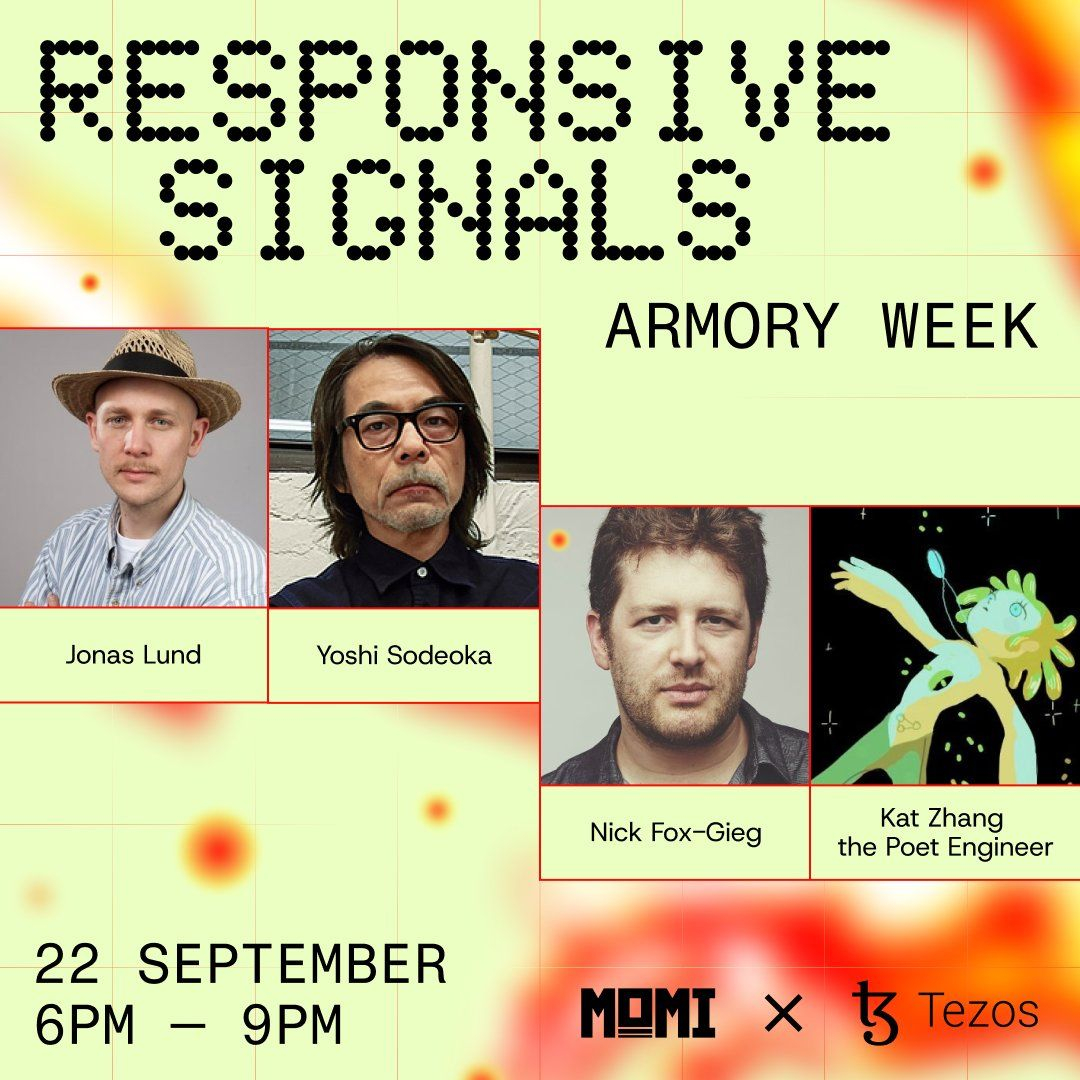
Presented by the Museum of the Moving Image and Art on Tezos: Responsive Signals wird ein Abend aus Artist Talks, Demonstrationen und interaktiven Installationen. Jonas Lund und Yoshi Sodeoka werden Terms of Agreement besprechen – ihre derzeit im MoMI Media Wall zu sehende Commission – während Nick Fox-Gieg eine neue interaktive Arbeit uraufführt, die mit Telidon/NAPLPS erstellt wurde, einem frühen Vektor-Graphics-Format für netzwerkbasierte Kommunikation, das Ende der 1970er-Jahre entwickelt wurde.
Kat Zhang, The Poet Engineer, wird außerdem zwei interaktive Arbeiten präsentieren, die sich mit Geste, Codierung und maschinellem Gedächtnis beschäftigen – gefolgt von einem Gespräch und einer Vorführung ihrer Praxis. Das ist ein Line-up, das besonders interessant werden dürfte, vor allem wenn du verfolgt hast, auf welche unterschiedlichen Weise Künstler in der Tezos-Community mit Technologie experimentieren – jenseits der üblichen digitalen Leinwand.
Das ist das zweite von zwei Events, die MoMI und die Tezos Foundation im Rahmen ihrer jährlichen Partnerschaft organisieren, und außerdem Teil der Open-Worlds-2026-Programmierung des Museums. Betrachte das also als unsere freundliche Erinnerung von letzter Woche: Wenn du diesen September während der Armory Week in New York bist, setze Responsive Signals auf deine Liste. Du kannst hier RSVP senden.
 🔴 Jetzt streamen: Ben Elvidge | metals.io
Wir haben die aktuelle Ausgabe der Baking Sheet damit eröffnet, dass metals.io seinen Weg in die Financial Times gefunden hat. Da passt es gut, zum Abschluss zu einer Unterhaltung zurückzukehren, die die Gedanken hinter der Plattform beleuchtet hat, noch bevor diese jüngste Aufmerksamkeit angekommen ist.
In TezTalks Radio 123 setzt sich Moderator Brandon Langston mit Ben Elvidge zusammen, um über die Entwicklung von Uranium.io zu metals.io zu sprechen – und über die größere Idee, physische Rohstoffe leichter für Alltagsinvestoren zugänglich zu machen. Das Gespräch behandelt Gold, Uran und strategische Metalle, die Infrastruktur, die physische Assets mit ihren Onchain-Pendants verbindet, und warum Tezos Teil dieser Gleichung wurde.
Wenn dich die FT-Story neugierig gemacht hat, wie metals.io hierhergekommen ist und wohin das Team tokenisierte Rohstoffe als Nächstes entwickeln bzw. führen möchte, ist diese Episode ein großartiger Begleit-Spot zu den heutigen Schlagzeilen.
Jetzt auf YouTube im Livestream.
Powered by beehiiv